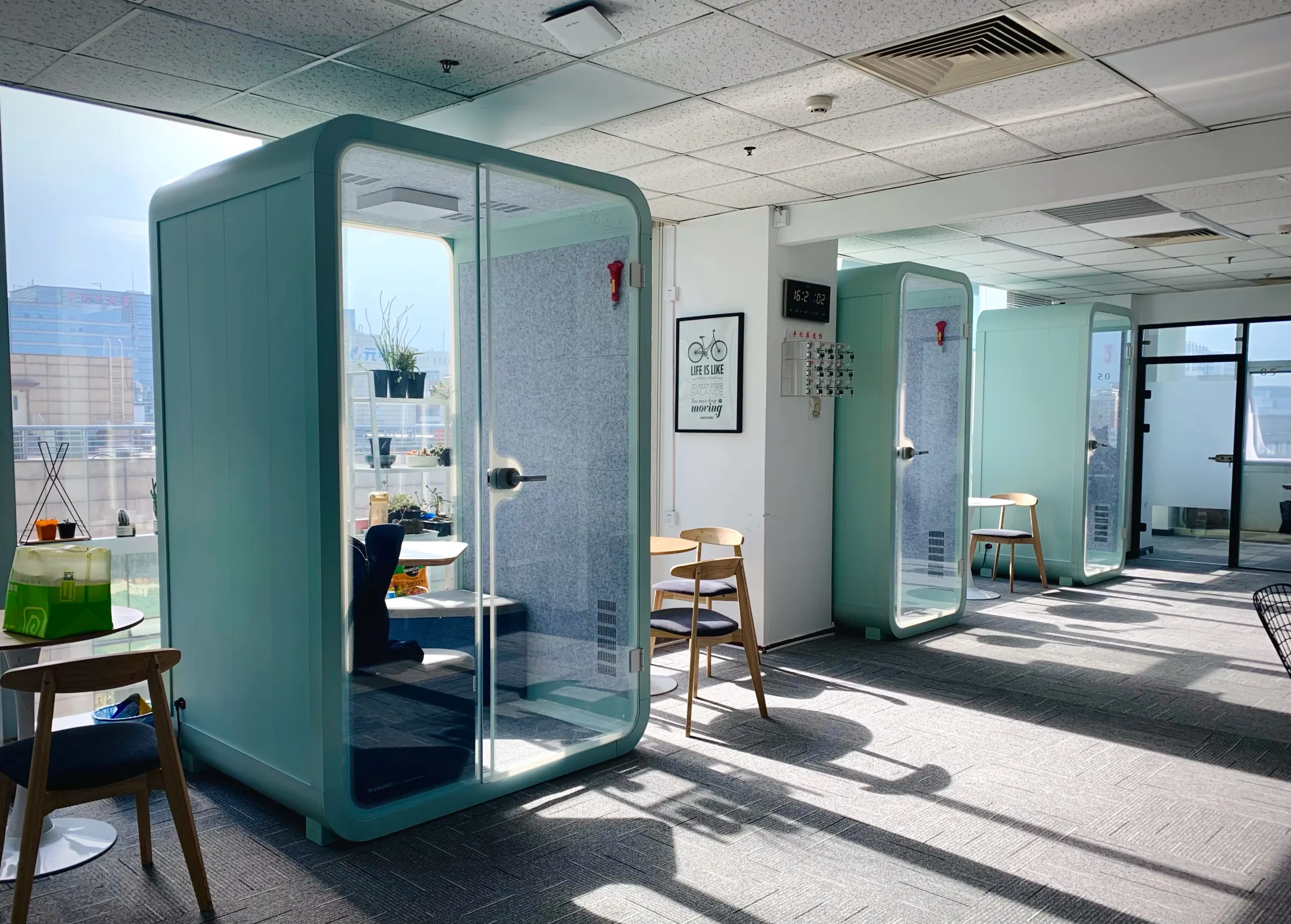
Office privacy includes visual privacy, speech privacy and protection of information on devices and systems. Each requires different controls.
Identify sensitive activities
Begin by mapping activity that involve confidential or personal information. These may include HR discussions, customer calls, legal work, health information and commercially sensitive meetings. Record who could see or overhear the activity and where it currently takes place.
Improve visual privacy
Use layout, sightlines, screen positioning, blinds or appropriate glazing treatments. Check safety, daylight, accessibility and supervision needs before obscuring glass or changing partitions.
Improve speech privacy
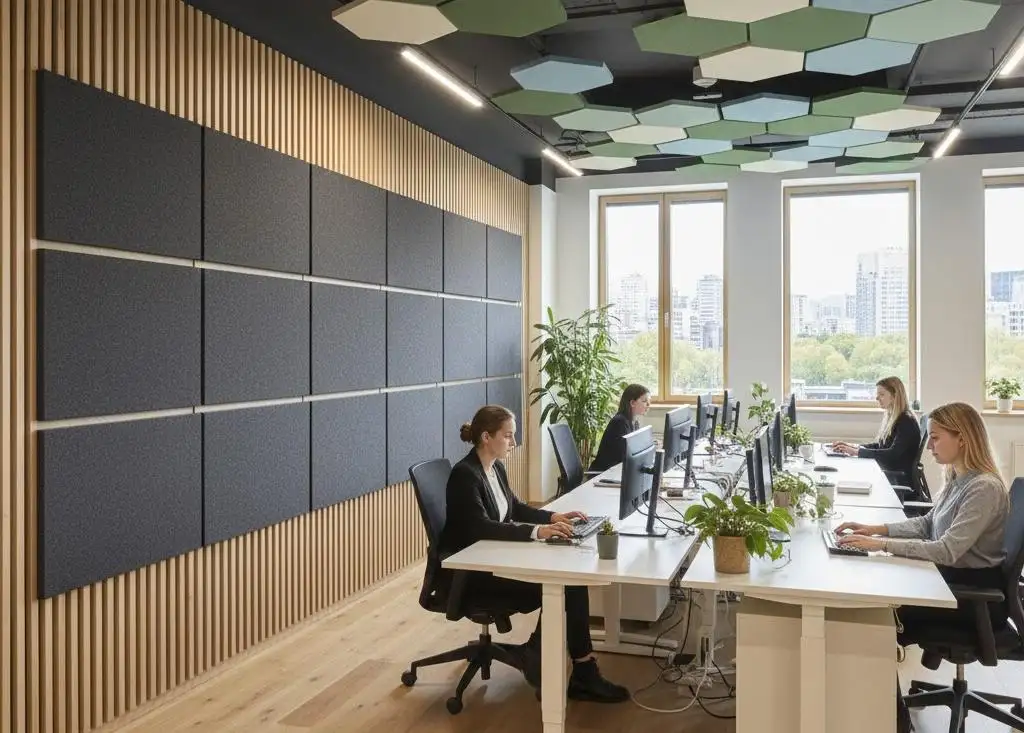
Distance, background sound, enclosure and sound isolation affect how far speech remains intelligible. Absorptive finishes can reduce reflection but do not create a sealed room.
When a privacy pod may help
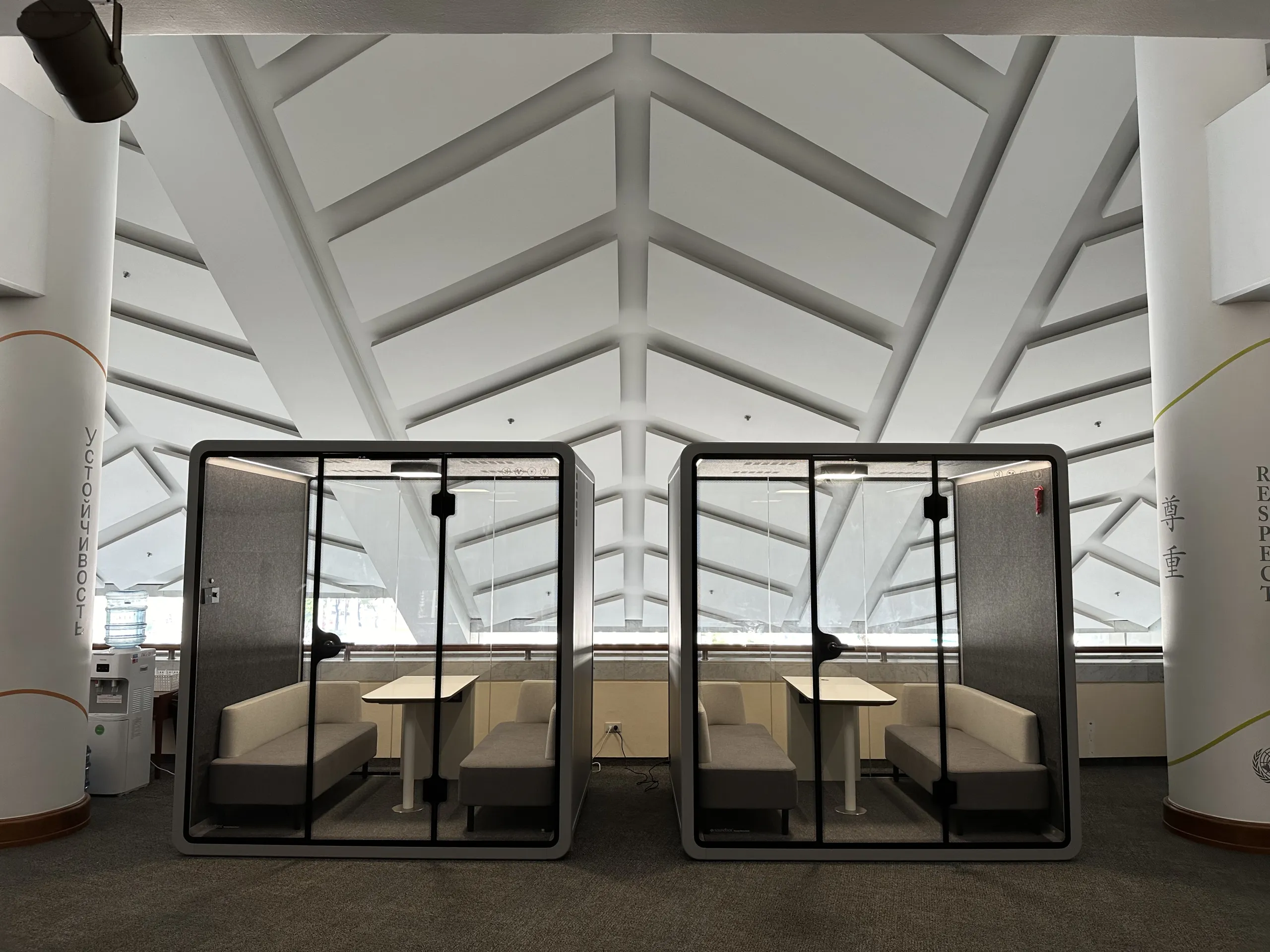
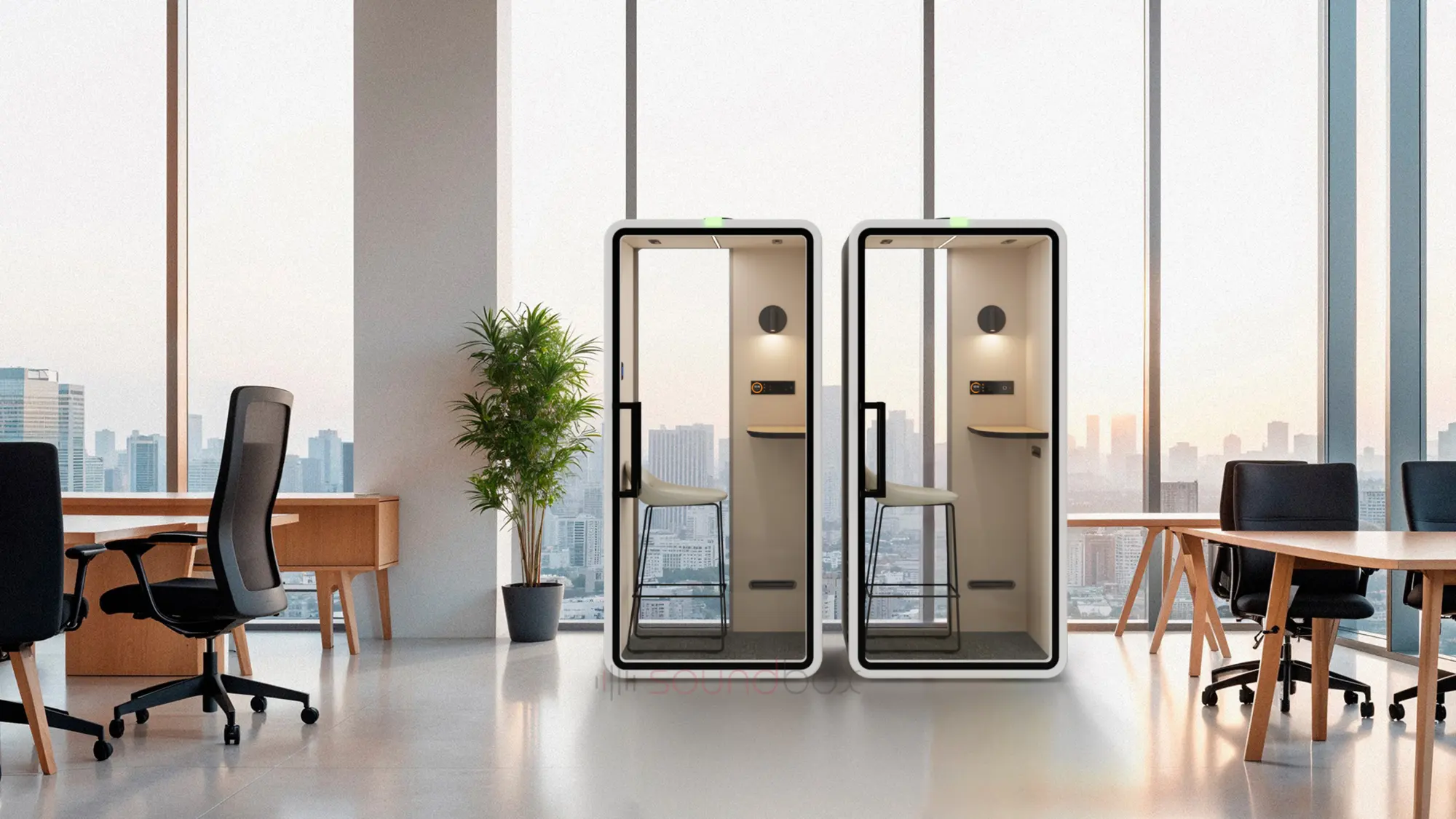
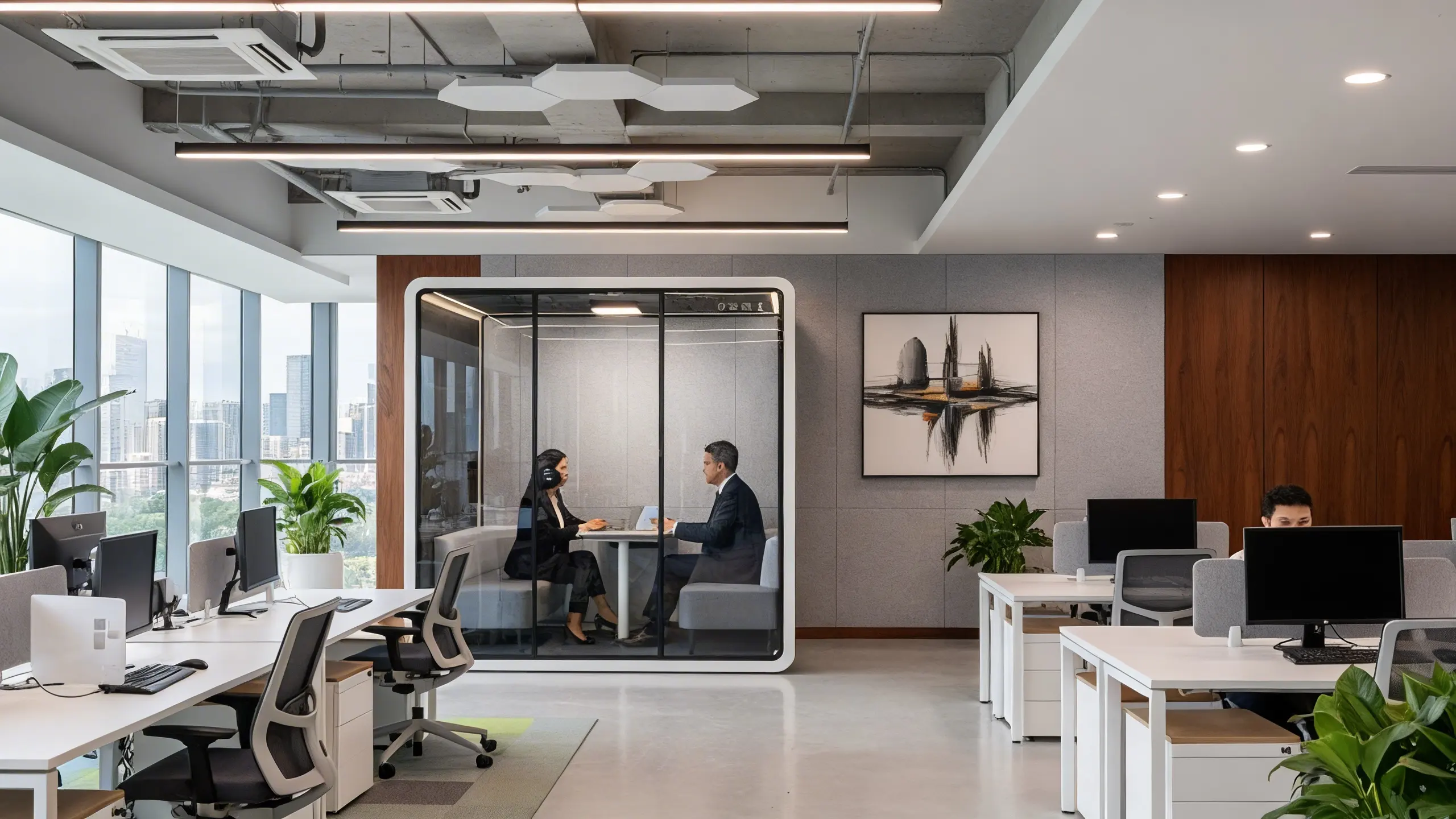
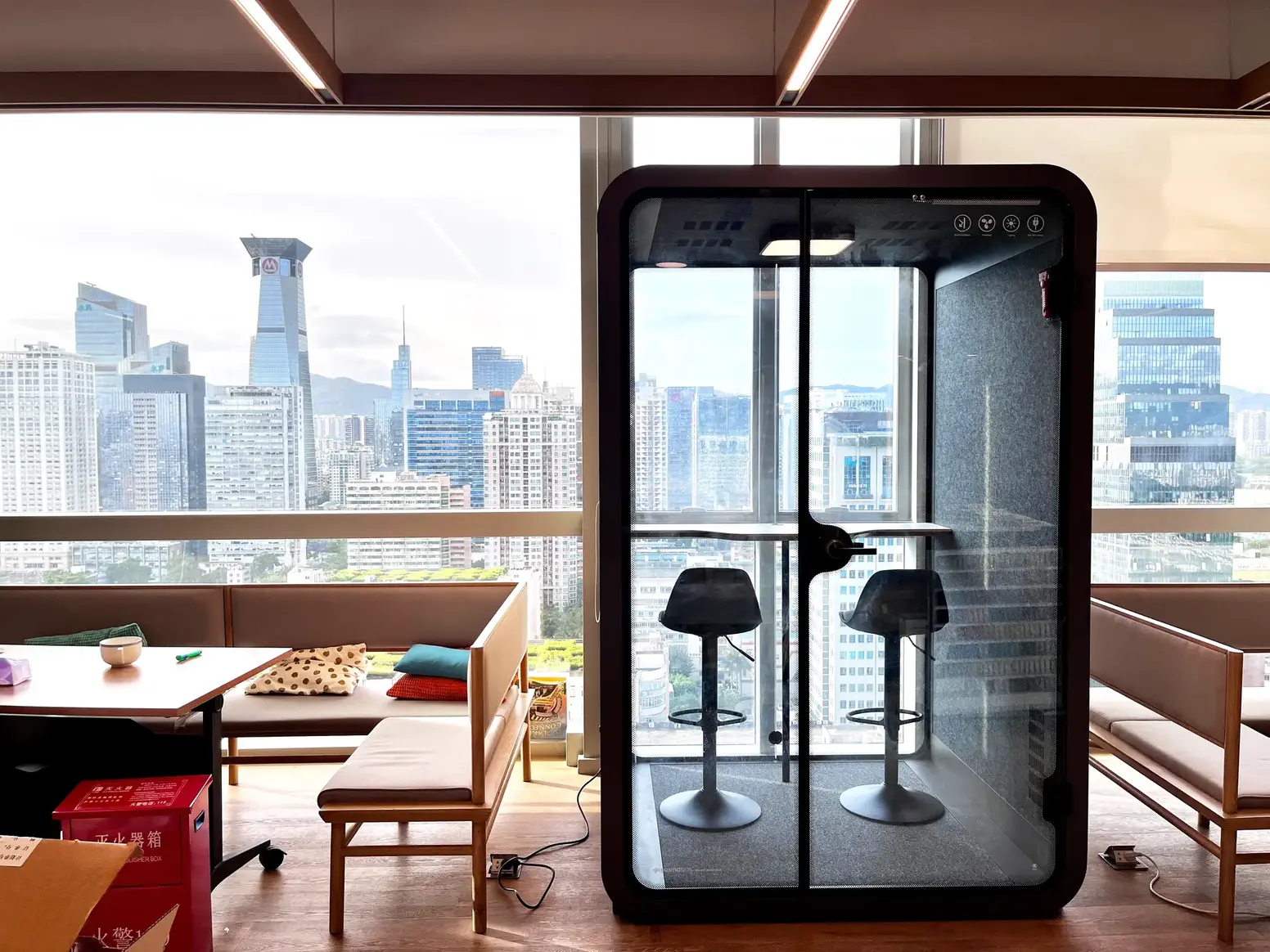
A privacy pod can provide an enclosed location for calls,virtual meetings or individual tasks when existing rooms are unavailable. Define the required occupancy, duration and privacy level, then review dimensions, ventilation, accessibility, power, fire and egress conditions, delivery and acoustic evidence.
Assessing a privacy pod
Ask what type of conversation will take place, what level of speech privacy is required and from whom. Obtain the model-specific acoustic test report and confirm the test method and tested configuration.
Then consider the surrounding background sound, distance, nearby workstations and expected user voice level. A product test supports comparison between models, but whether the required privacy is achieved should be assessed in the installed workplace.
For highly sensitive work, commission a site-specific privacy assessment and consider whether a purpose-built room is more appropriate.
Protect digital information
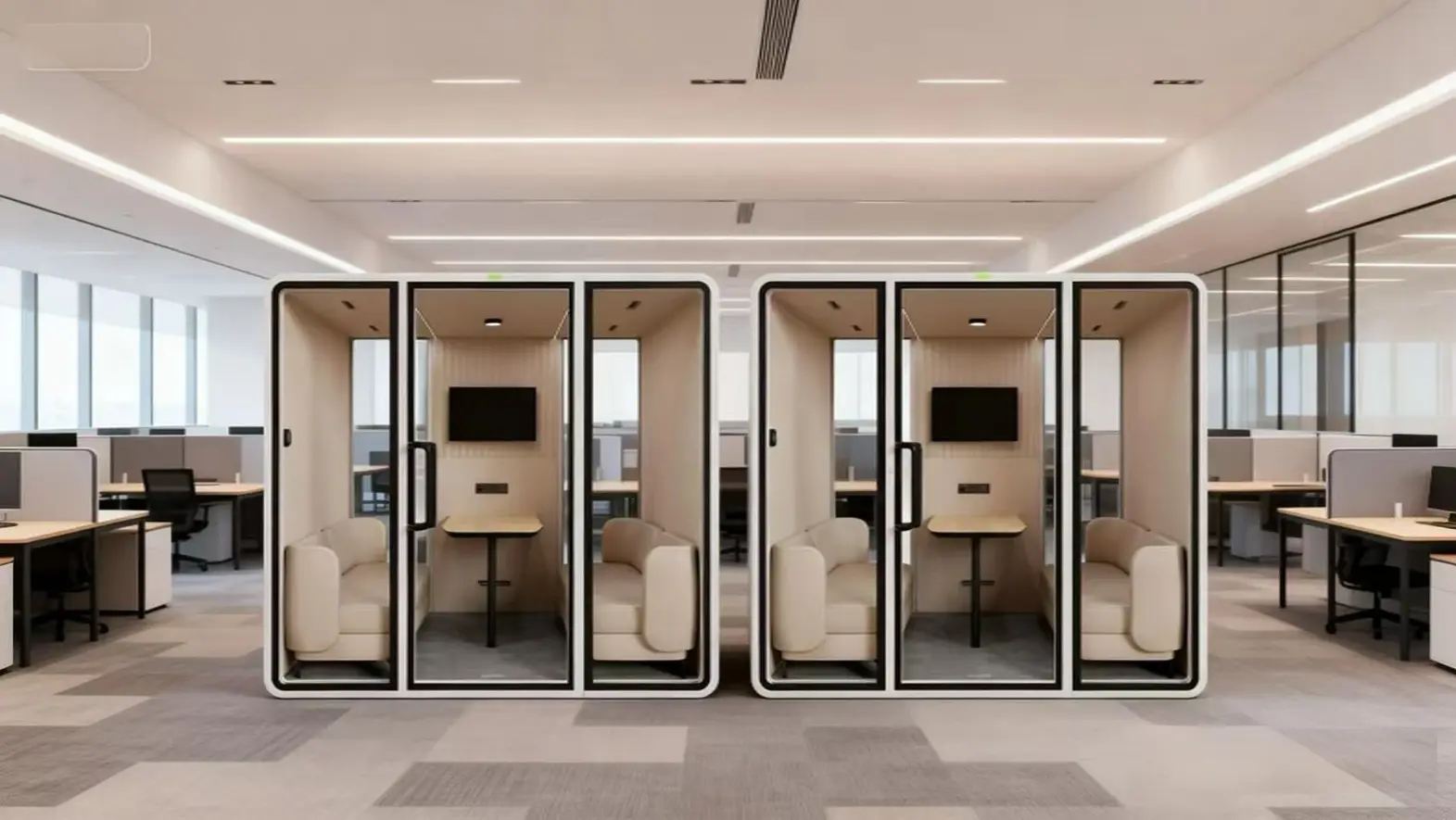
Use approved systems, access controls, screen locks and retention rules. A private-looking room does not secure software, recordings or booking data.
Set policy and verify
Define where sensitive activities should occur, how monitoring is disclosed and how employees report concerns. Test the actual space and seek legal or specialist advice where risk is high.