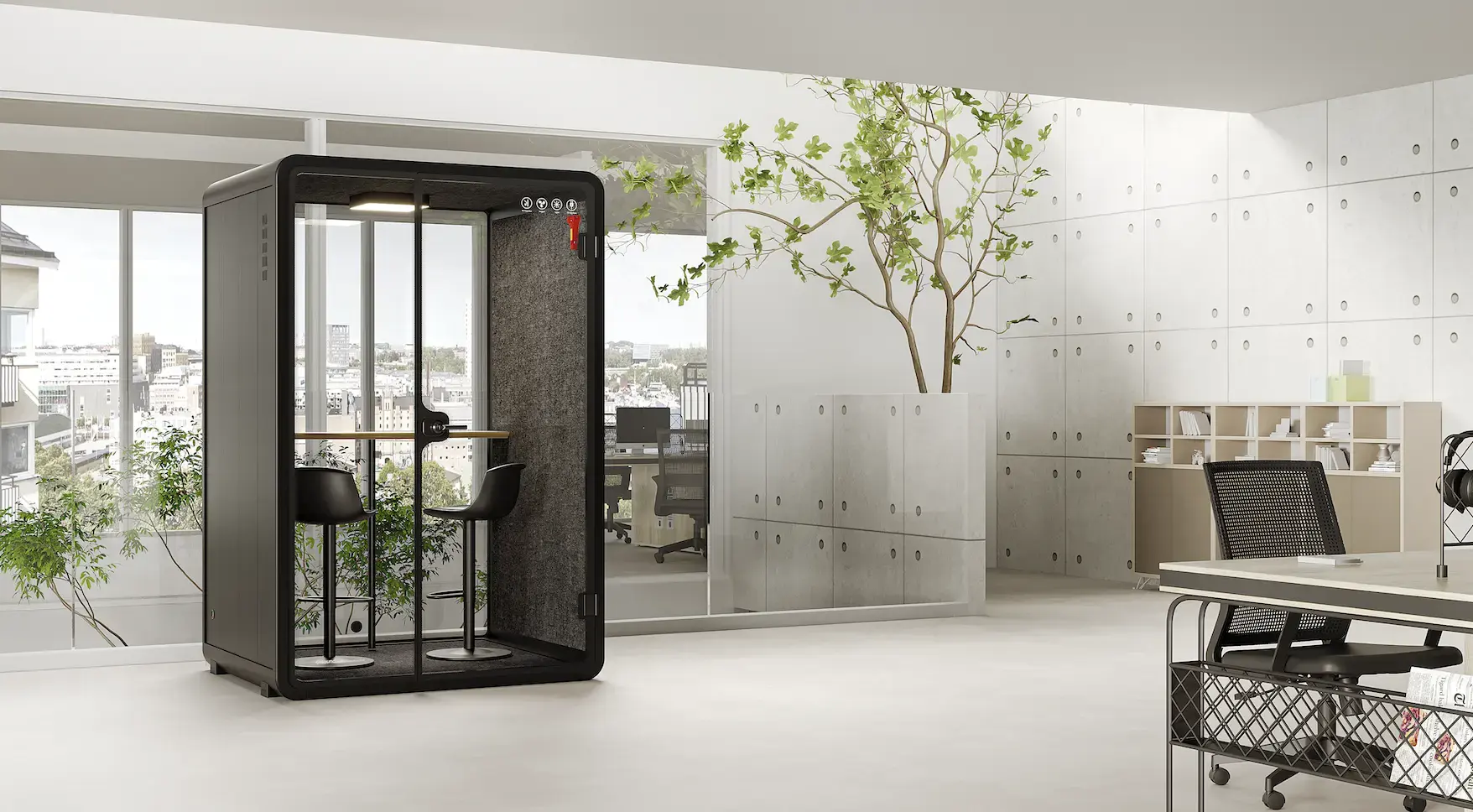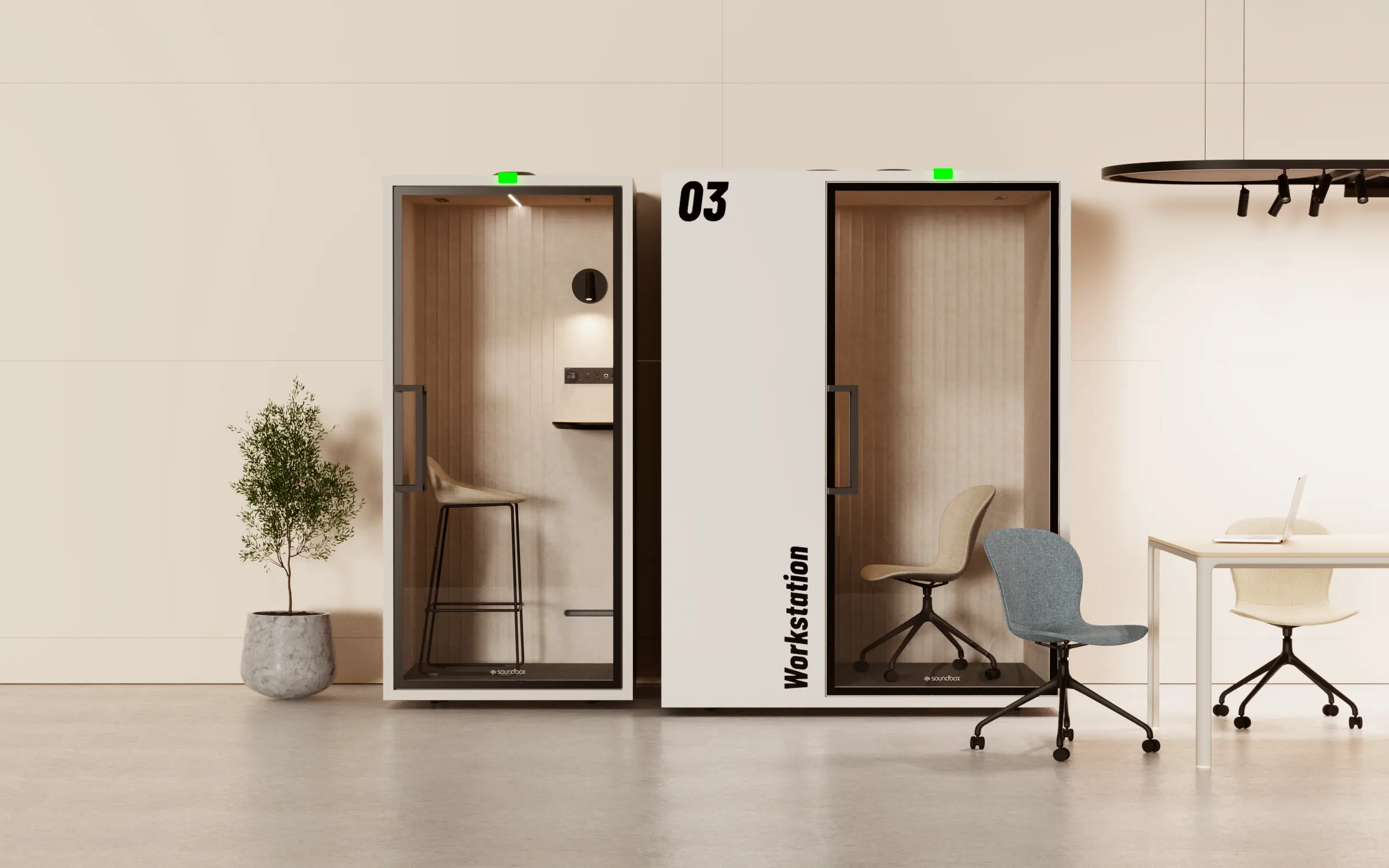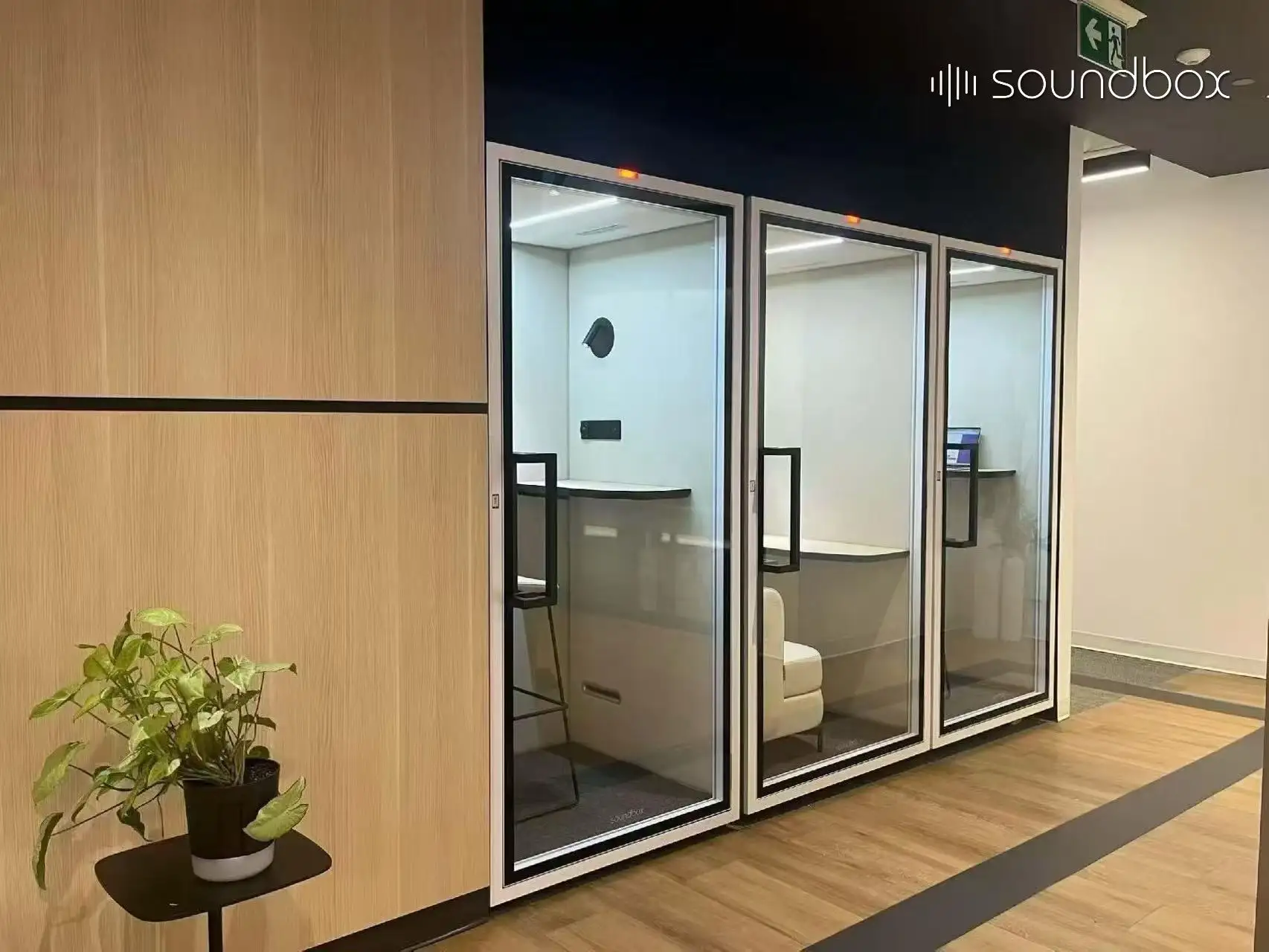
Meeting pods can add enclosed capacity where permanent meeting rooms are fully booked, oversized for the groups using them or poorly located for day-to-day collaboration. The right choice depends on more than the number of seats shown in a product description.
Start with a written brief based on actual meeting patterns. Record the usual group size, session length, type of work, technology requirements and privacy needs, then compare models by usable interior space, full-occupancy ventilation, accessibility, acoustic evidence and installation requirements.
Use demand data
Review meeting-room bookings together with workplace observations. Booking data can show when demand occurs and which room sizes are requested, but it does not confirm that a reserved room was occupied or that it suited the activity.
Record:
- Typical and peak group sizes
- Typical and longest meeting lengths
- Peak demand periods
- Mix of in-person and hybrid meetings, including any need for confidential discussions
Compare booking records with observed use. A reserved room may remain empty, while a small group occupying a large room may indicate either a capacity mismatch or a booking problem. Identify whether unmet demand results from room size, location, equipment or availability before adding another enclosed space.
Choose pod capacity around the group sizes that occur regularly rather than the largest meeting that might occasionally take place. Where most unmet demand involves calls or small discussions, several smaller spaces may serve the workplace better than one large pod.
Plan the interior
A nominal capacity does not show how well the interior supports a meeting. Review the internal dimensions and proposed furniture layout rather than relying only on the number of occupants listed for the model.
For in-person collaboration, check that participants have:
- Comfortable seating, adequate legroom and practical access to the table
- Space for laptops, documents and personal belongings
- Clear sightlines to one another and to any shared display
- Access to sockets and charging ports without cables crossing the floor
The table should fit the intended activity. A short discussion may require only a compact surface, while project reviews involving several laptops or drawings need more usable table area. Confirm whether furniture is included, optional or supplied separately, and assess the interior using the furniture that will actually be installed.
For hybrid meetings, review the screen, camera, microphone and lighting as one arrangement. All participants should be visible to the camera and able to see the shared display without turning awkwardly or blocking one another. Confirm that the microphone captures speech clearly from every seat and that remote audio can be heard without distracting echo.
Confirm the routes for power, display, camera and network cables. Cables should not obstruct the doorway, reduce legroom or interfere with ventilation openings. If wireless connectivity is essential, test Wi-Fi and mobile reception in the proposed location; the enclosure does not automatically improve the building’s existing signal.
Lighting should work for both face-to-face and video meetings. Review facial illumination from each seating position, reflections in glazing and glare on laptops or displays. If brightness or color temperature is adjustable, confirm the available range and the location of the controls.
Glazing can improve visibility and help people outside the pod see whether it is occupied. However, screen position, sightlines and the sensitivity of information displayed inside should also be considered where visual privacy matters.
Review air and access
Ventilation should be assessed at the pod’s intended occupancy, not only when it is empty or occupied by one person. Ask the supplier for the model-specific airflow or air-change figure, the units, the operating mode used and the related fan-noise information.
Airflow and fan noise answer different questions. A low fan noise figure does not establish that enough air is delivered at full occupancy, while a high airflow figure does not show whether occupants will find the air movement comfortable.
Where possible, conduct a trial with the expected number of users for a period representative of normal meetings. Ask participants about airflow, temperature, fan noise and comfort near the beginning and end of the session. Check that furniture, screens, coats and bags do not block air inlets or outlets.
A user trial helps evaluate the proposed layout, but it does not replace technical ventilation documentation.
Review the approach route, door opening, threshold, internal maneuvering space and access to the table, seating, controls and sockets with the proposed furniture installed.
Capacity alone is not evidence that a pod is accessible. The project team should confirm the requirements that apply in the installation country and to the intended workplace.
Compare acoustic evidence
Meeting pods have two related acoustic tasks. They should provide an interior in which participants can understand one another, while reducing the amount of speech transmitted to surrounding work areas.
Group meetings may include overlapping conversation, video-call audio and periods of raised speech. Excessive internal reverberation can make conversation harder to follow inside the pod and cause remote participants to hear unclear or echoing audio. At the same time, the enclosure’s walls, door, glazing, seals and ventilation paths influence how much speech reaches the surrounding workplace.
Request the acoustic report for the exact model and tested configuration. Record:
- Test method and edition
- Measured result and unit
- Test date and laboratory
- Product model and size
- Door, glazing, seals, and ventilation configuration
- Furniture and internal finishes included in the test
ISO 23351-1:2020 specifies a laboratory method for comparing how furniture ensembles and enclosures reduce the speech level of an occupant speaking inside them. A result obtained using this method should be described as speech level reduction under the stated test conditions. It should not be presented as a universal reduction for every type of sound.
Do not combine results from different test methods as though they measure the same property. Speech level reduction, sound isolation and internal reverberation describe different aspects of acoustic performance.
Laboratory evidence also does not guarantee confidentiality in the completed workplace. Installed speech privacy depends on speaking level, surrounding background sound and the pod’s position relative to nearby desks, quiet work areas, waiting areas and circulation routes. Visibility through glazing and information displayed on screens should be assessed separately.
Soundbox meeting pod models:
Soundbox offers ML and L meeting pod configurations for different group sizes. The following figures are taken from the current product pages and should be confirmed against the latest technical documents for the destination market and ordered configuration.
| Model | Capacity | Exterior dimensions(W x D x H) | Interior dimensions(W x D x H) | Footprint | Manufacturer-reported ISO 23351-1 result |
|---|---|---|---|---|---|
| VRT ML | 2–4 people | 2200 × 1240 × 2100 mm | 2090 × 1125 × 1960 mm | 2.7 m² | Ds,A 30.6 dB |
| ART ML | 2–4 people | 2200 × 1240 × 2100 mm | 2090 × 1125 × 1960 mm | 2.7 m² | Ds,A 30.4 dB |
| VRT L | 4–6 people | 2200 × 1640 × 2100 mm | 2090 × 1525 × 1960 mm | 3.6 m² | Ds,A 31.0 dB |
| ART L | 4–6 people | 2200 × 1640 × 2100 mm | 2090 × 1525 × 1960 mm | 3.6 m² | Ds,A 30.4 dB |
Coordinate installation
Show the proposed pod on the floor plan and confirm the external dimensions, door movement, operating clearances and access to electrical and ventilation components.
Review the complete delivery route, including entrances, corridors, load limits, packaged dimensions and the space required for unpacking and assembly. A modular pod may be assembled on site, but its panels and glazing must still reach the installation area.
Coordinate power, data, sprinklers, alarms, fire protection, accessibility and egress with the responsible project team. Clarify responsibility for delivery, assembly, electrical connection and commissioning, and request an itemized quotation for the exact model and configuration.
If future relocation is expected, confirm the required labor, replacement components, recommissioning work and any effect on the warranty or documented acoustic performance.
To discuss a Soundbox meeting pod project, contact our team with the installation country, floor plan, typical group size, expected session length and AV requirements. The team can help identify relevant ML or L configurations and provide the current drawings and available technical documentation.