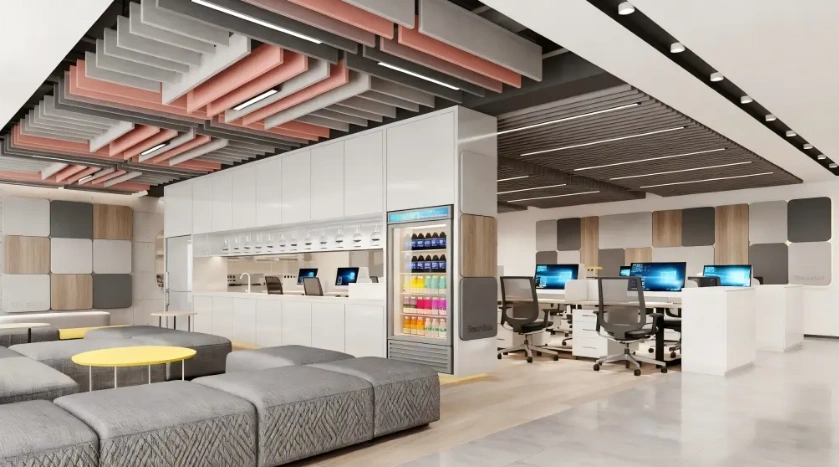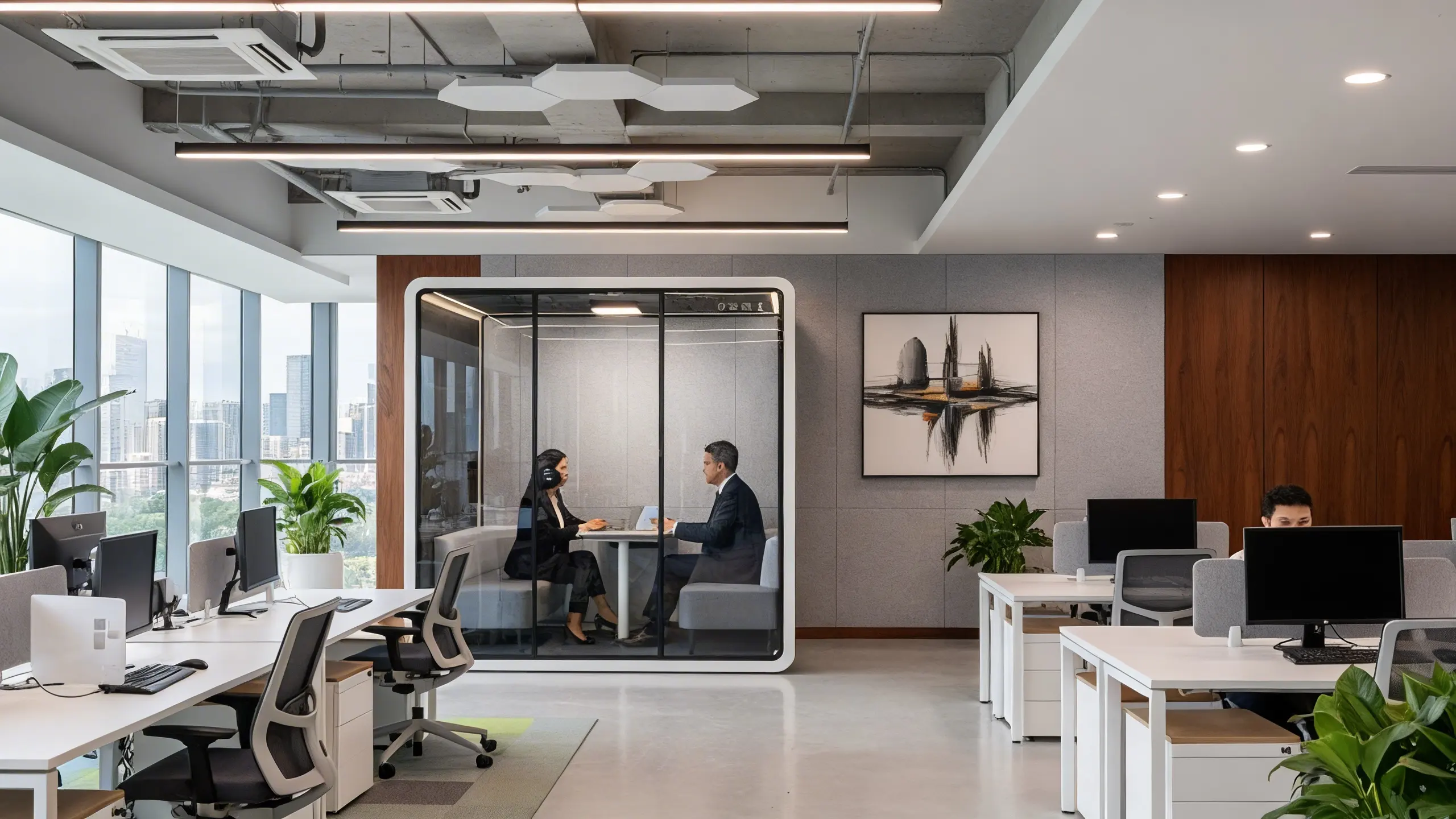
People move between calls, focused tasks, collaboration and breaks throughout the working day, and these activities do not always require the same conditions. Team discussions may benefit from space for interaction, while some people may prefer fewer interruptions for focused work or more privacy for sensitive calls. No single type of workspace will suit every task or every employee.
Research on activity-based workplaces suggests that the fit between an activity, the work setting and an employee’s need for privacy can influence satisfaction with the work environment and, for some tasks, performance. The findings also showed a particularly poor fit when people with a higher need for privacy performed complex tasks in open-office settings. Providing a range of work settings can therefore give employees more choice to find a space that suits the task at hand.
Observe where work breaks down
Start by asking employees where the workspace makes everyday activities difficult or uncomfortable. The CBE Occupant Survey, developed by the University of California, Berkeley’s Center for the Built Environment, covers acoustic quality, office layout, furnishings, lighting and thermal comfort. These categories provide a useful starting point for discussing how the workspace supports everyday activities.
The questions below are practical examples informed by those categories and relevant workplace-adjustment guidance. They are not the original survey questions or a mental-health assessment.
| Area to explore | Questions for employee feedback | Reference |
|---|---|---|
| Noise and speech privacy | When does surrounding speech interrupt your work? Are you concerned about conversations being overheard? | CBE: Acoustic Quality |
| Layout and furnishings | Is there enough usable space for your task? Does the furniture support the way you need to work? | CBE: Office Layout and Office Furnishings |
| Lighting and thermal comfort | Are lighting, temperature or air movement making the space uncomfortable to use? | CBE: Lighting and Thermal Comfort |
| Quieter settings and breaks | Would a quieter work area or a separate place to take a break help? What makes those options difficult to use? | Acas: Mental health adjustments |
Use the feedback to identify which space changes to assess first, alongside any adjustments to working arrangements.

Provide a range of settings
Use employee feedback to identify where additional space choices would help. This might mean separating discussion areas from quiet workspaces, providing an enclosed place for calls, or making a separate break area easier to access. Review whether existing rooms can meet these needs through changes to layout, equipment or use.
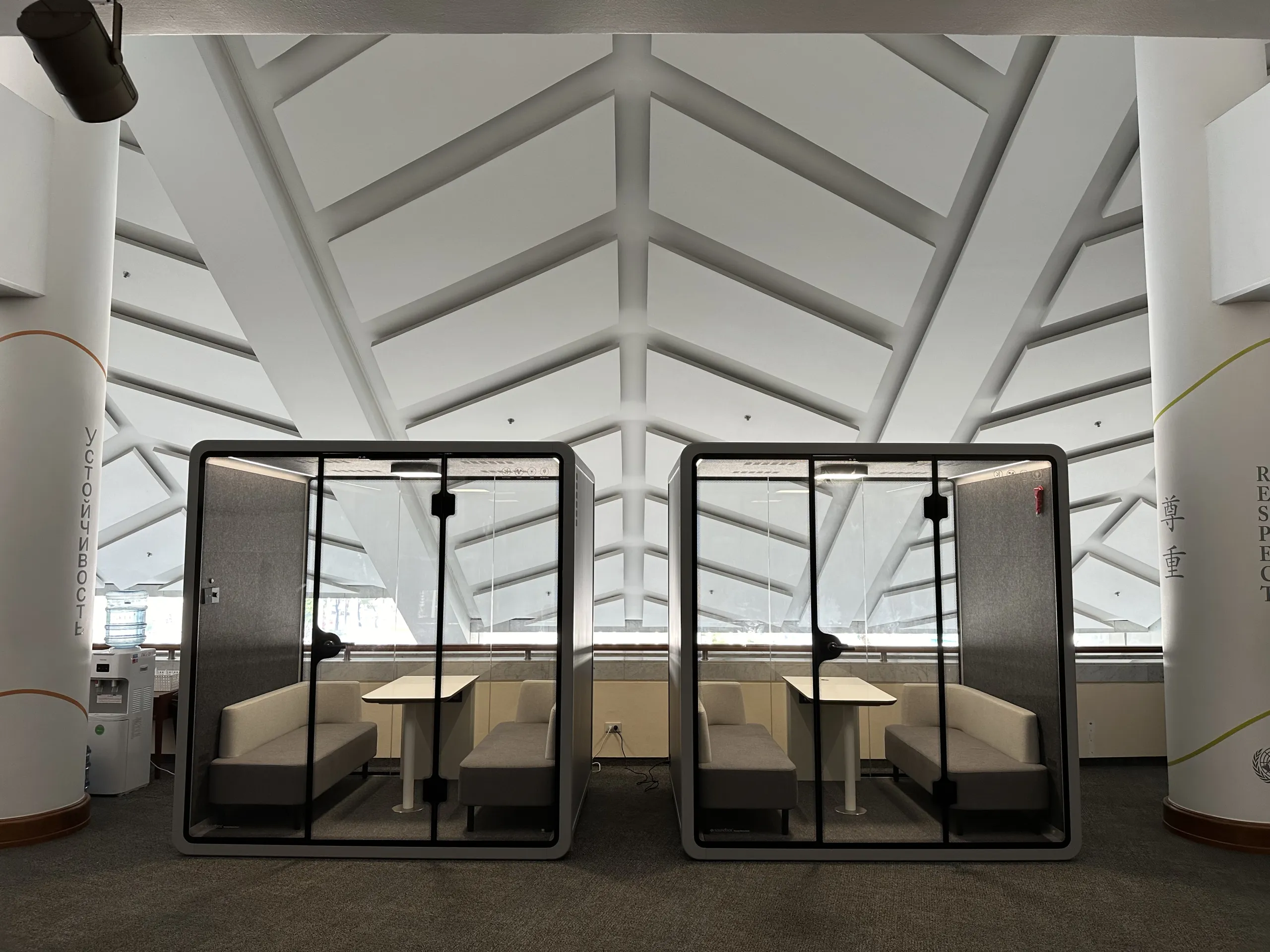
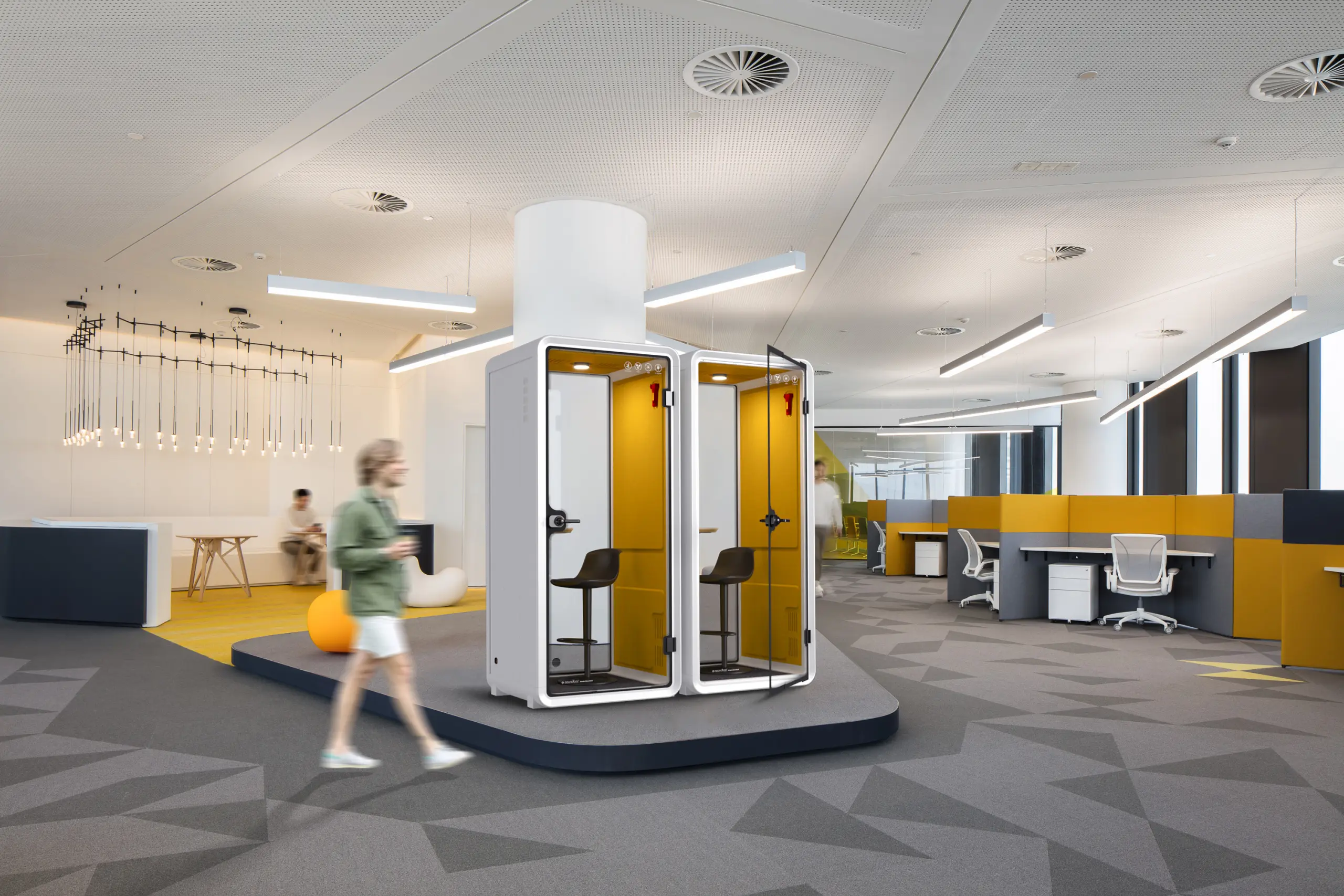
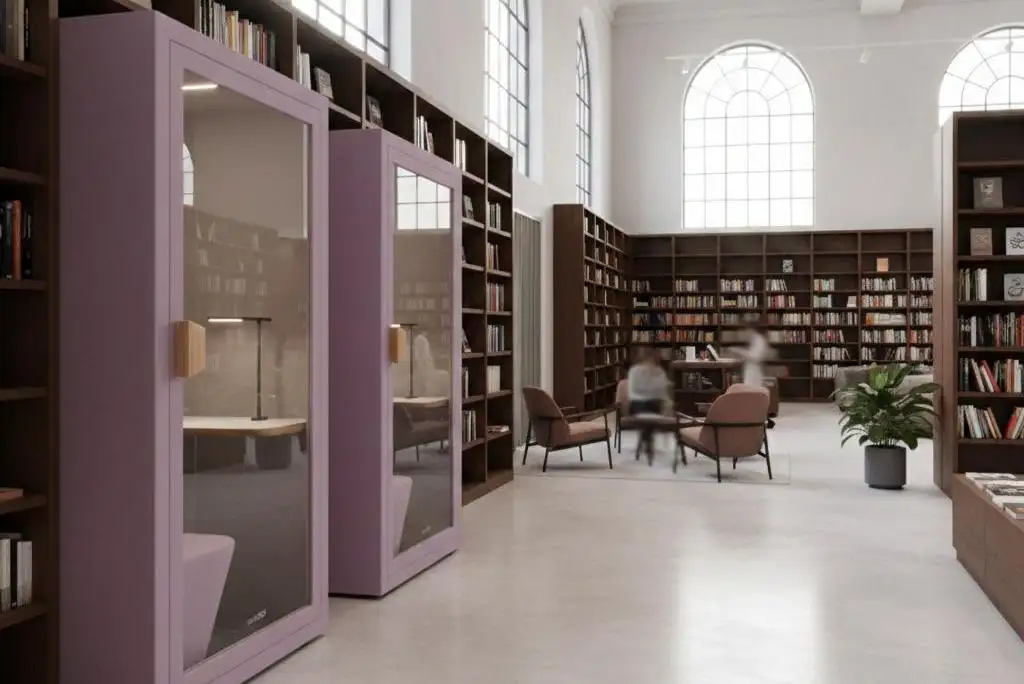
Where an additional enclosed workspace is needed, Soundbox acoustic pods offer an option for individual work and small meetings. The VRT pod combines an acoustic enclosure with lighting, ventilation and integrated power. Its smart control panel lets users adjust light brightness, colour temperature and airflow to suit their preferences. Desk and seating configurations should suit the intended tasks and equipment. Confirm the features included with the chosen model and configuration.
For individual calls or focused laptop tasks, consider the single-person Soundbox VRT S. For one-to-one discussions or shared video calls, consider the Soundbox VRT ML, listed for two to four people.
Make each space’s purpose clear, including whether calls are allowed and whether booking is required. Before adding a pod, check its accessibility, acoustic evidence and suitability for the intended session length. Where possible, invite employees to try the proposed furniture and equipment setup.
Protect privacy and fairness
Give employees a way to request a suitable space without sharing personal or health information in public booking calendars. Use neutral booking titles and provide a private contact for discussing individual needs.
For sensitive calls, consider both whether speech can be overheard and whether screens or documents are visible from outside. An enclosed room or pod should be assessed for the privacy the activity requires.
Keep booking rules clear, and review whether recurring reservations prevent others from accessing the space. Where connected booking systems or occupancy sensors are used, explain what information is collected, how it is used and who can access it.

Measure the experience
Return to the issues identified through employee feedback. After changing the layout or adding a Soundbox pod, ask whether people can find a suitable place for calls, work with fewer interruptions and access the spaces they need. For pod users, ask about seating, lighting, airflow and ease of using the controls.
Compare feedback before and after the change using the same questions where possible, and record the review period and method. Review booking information alongside employee comments: frequent use alone does not show that a space meets people’s needs. Use the findings to adjust placement, equipment or booking rules. Report improvements as workplace experience findings; they do not establish that a pod has improved mental health.