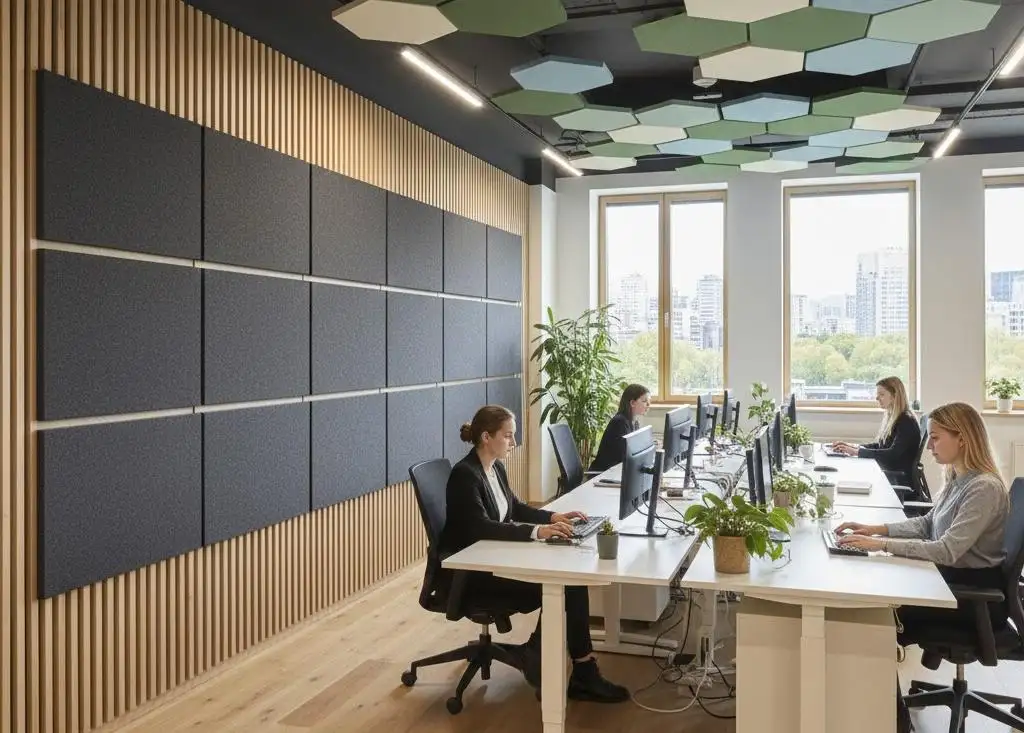
“Acoustic panel” and “soundproof panel” are often used as if they mean the same thing. In practice, many decorative acoustic panels are designed to absorb reflected sound within a room. Sound isolation aims to reduce sound passing between spaces.
When absorption helps
Hard surfaces can create excessive reflection and long reverberation. Suitable absorptive treatments on ceilings or walls can make speech and other sounds decay more quickly. The design depends on room volume, existing finishes, activity and target acoustic conditions.

When isolation is required
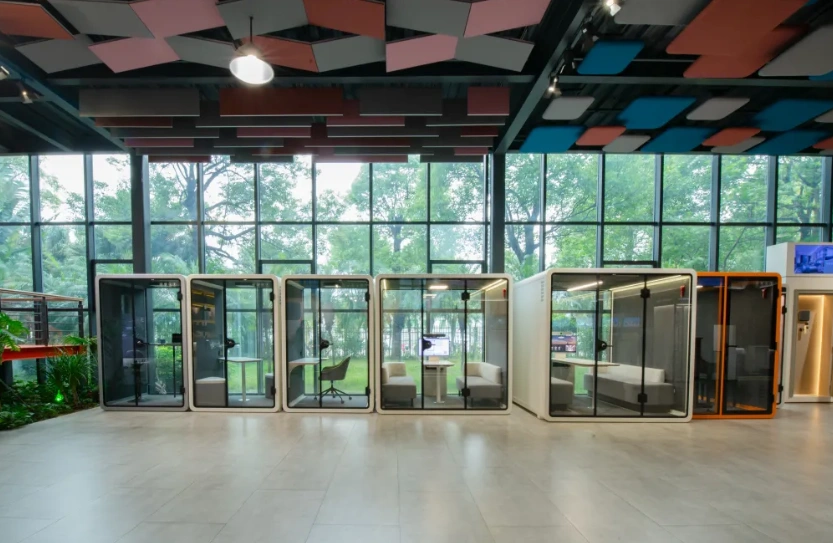
Sound travelling through a wall, door, ceiling, floor or ventilation path needs an enclosure approach. Mass, layers, cavities, seals and junction details matter. Even a strong partition can underperform if sound bypasses it through an untreated door or flanking path.
How to specify a product
For absorption, ask for test data that identifies the product, thickness, mounting condition and test method. For sound isolation, ask for assembly-level evidence and details for doors, glazing and penetrations. Avoid comparing a single absorption coefficient with a partition sound-reduction rating.
A practical assessment
Describe the source, receiver, path and activity affected. Measure the room or arrange professional testing where performance matters. Then select products and construction details that address the diagnosed problem.