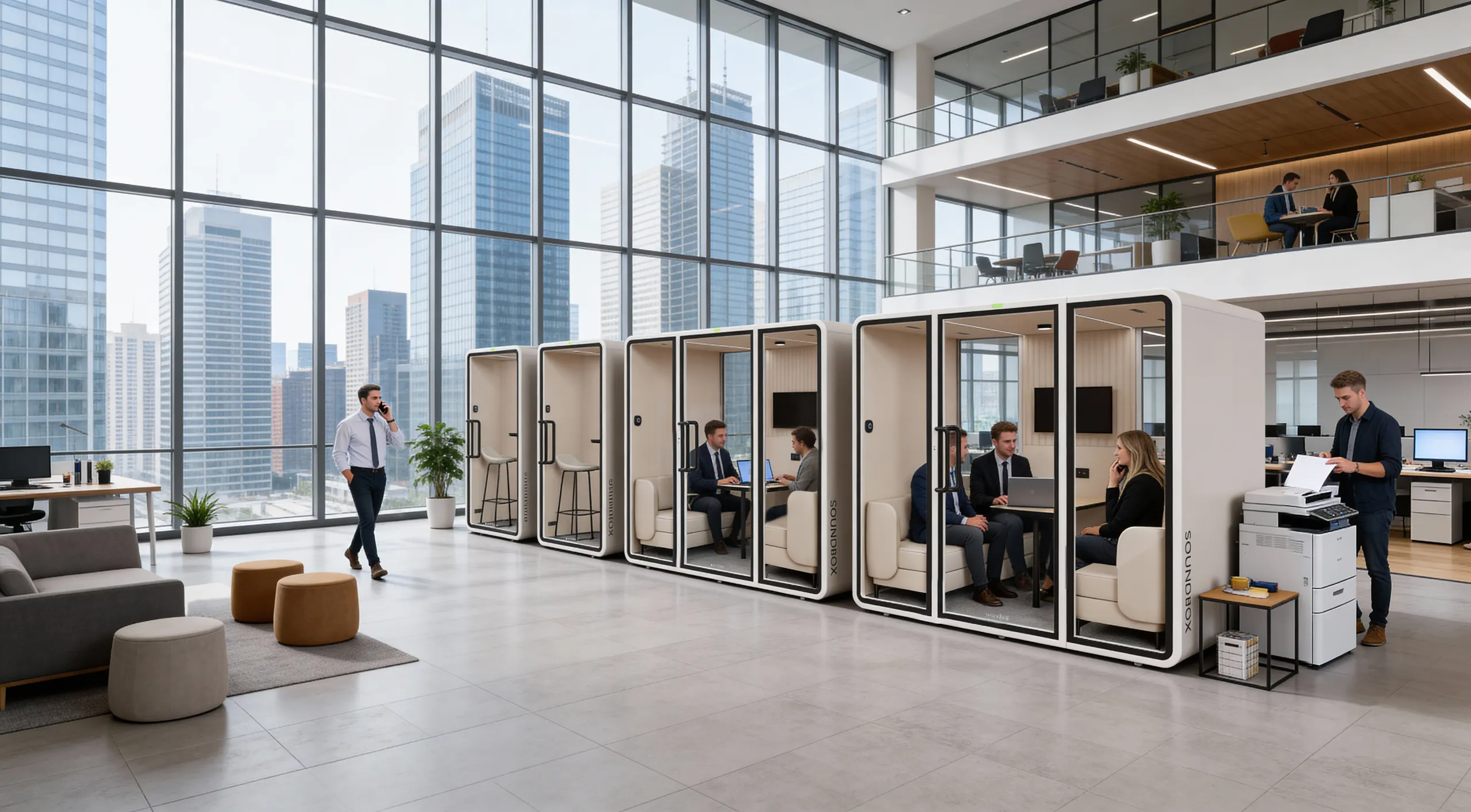
Die Auswahl einer Büro-Telefonzelle beginnt mit einem klaren Verständnis darüber, wie sie genutzt werden soll und welche Voraussetzungen der Projektstandort bietet. Bevor Sie Modelle miteinander vergleichen, legen Sie die vorgesehenen Aktivitäten, die typische Sitzungsdauer, die erforderliche Ausrüstung sowie den vorgeschlagenen Standort und die Installationsbedingungen fest.
Bewerten Sie jedes Modell anhand derselben schriftlichen Aufgabenstellung, damit der Vergleich konsistent bleibt. Marketingbegriffe wie „schalldicht“, „smart“ und „Plug-and-Play“ können nicht die Stelle von messbaren Leistungsdaten, klar definierten Lieferumfängen oder dokumentierten Standort- und Installationsanforderungen einnehmen.
Das Briefing sollte vier Bereiche abdecken: vorgesehene Nutzung und Ausstattung; Abmessungen, Zugänglichkeit und Anlieferweg; Belüftungs-, Beleuchtungs-, Stromversorgungs- und akustische Anforderungen; sowie die Gesamtkosten des Projekts, einschließlich Anlieferung, Installation, Instandhaltung und etwaiger künftiger Standortwechsel.
Definieren Sie die Nutzungsdauer und die Sitzungslänge.
Beginnen Sie mit dem Anwendungsfall, nicht mit dem Produktnamen. Ein Arbeitsplatz, der hauptsächlich für kurze Telefonate gedacht ist, könnte eine andere Aufteilung und Ausstattung erfordern als einer, der regelmäßig für Videokonferenzen oder konzentriertes Arbeiten am Laptop genutzt wird.
| Beabsichtigte Tätigkeit | Was zu bewerten ist |
|---|---|
| Telefonanrufe | Sitz- oder Stehanwendung, Flächenbedarf und Anforderungen an die Sprachprivatsphäre |
| Videokonferenzen | Kamera- und Bildschirmposition, Gesichtsbeleuchtung, Stromversorgung und Konnektivität |
| Konzentrierte Laptop-Arbeit | Arbeitsflächengröße, Sitzgelegenheiten, Beinfreiheit, Lademöglichkeiten und Sitzungsdauer |
| Sensible Gespräche | Modellspezifische akustische Nachweise, Verglasung, Standort der Kabine und umgebender Hintergrundschall |
Dokumentieren Sie sowohl die typische als auch die längste erwartete Sitzungsdauer. Mit zunehmender Dauer von Sitzungen gewinnen Sitzgelegenheiten, die Arbeitshaltung, Luftzirkulation, thermischer Komfort, Beleuchtung und der Zugang zu Stromversorgung immer mehr an Bedeutung.
Berücksichtigen Sie die Ausrüstung und persönlichen Gegenstände, die Nutzer voraussichtlich in die Kabine mitbringen werden. Laptops, Headsets, Notizbücher, Taschen und Mäntel nehmen allesamt Platz ein und dürfen den Eingang, Bedienelemente, Steckdosen oder Lüftungsöffnungen nicht blockieren.
Nutzen Sie Mitarbeiterfeedback, Buchungsdaten und Beobachtungen am Arbeitsplatz, um den Bedarf zu ermitteln. Anrufe, die von Schreibtischen aus getätigt werden, können auf einen Mangel an Telefonkabinen hinweisen, aber sie können auch darauf hindeuten, dass die vorhandenen Kabinen ungünstig positioniert sind, schwer zu buchen oder für die jeweilige Aufgabe nicht geeignet sind. Vermeiden Sie die Anwendung eines standardisierten Verhältnisses von Arbeitsplätzen zu Mitarbeitern, es sei denn, dies wird durch Erkenntnisse aus dem Arbeitsumfeld gestützt.
Abmessungen und Zugang prüfen
Die Kapazität allein gibt keinen Aufschluss darüber, wie viel nutzbarer Raum ein Stand bietet. Bewerten Sie vier Messreihen:
| Messung | Warum es wichtig ist |
|---|---|
| Außenmaße | Prüfen Sie, ob der Stand in den vorgesehenen Standort passt. |
| Innenmaße | Beeinflusst Sitzposition, Arbeitshaltung, Nutzung der Arbeitsfläche und Bewegungsabläufe. |
| Betriebsabstände | Lassen Sie ausreichend Platz für die Türbedienung, die Belüftung und die Wartung. |
| Verpackungsmaße | Ermitteln Sie, ob die Komponenten die Lieferstrecke passieren können. |
Zeigen Sie den Messestand im Lageplan, einschließlich der geöffneten Tür oder des Türschwenkbereichs. Prüfen Sie die Beziehung zur Erschließungsstruktur, zu nahegelegenen Möbeln, Säulen und technischen Anlagen und berücksichtigen Sie die vom Hersteller vorgeschriebenen Freiräume.
Überprüfen Sie die gesamte Lieferroute, bevor Sie bestellen. Vergleichen Sie die Verpackungsmaße und -gewichte mit den Zugängen zum Einsatzort, den Türöffnungen, den Fluren, den Aufzügen sowie den jeweils geltenden Traglastgrenzen, und stellen Sie sicher, dass ausreichend Platz für das Ausladen, Auspacken und die Montage vorhanden ist. Ein modularer Messestand kann vor Ort montiert werden, doch seine einzelnen Paneele und Verglasungen müssen dennoch durch die Anlieferungsroute passen.
Bewerten Sie die Barrierefreiheit unter Verwendung der vorgeschlagenen Möbel- und Ausstattungsanordnung. Überprüfen Sie die Zufahrtsroute, die freie Türöffnung, die Schwelle, den internen Bewegungsraum, die Arbeitsfläche sowie die Bedienelemente und Steckdosen. Für US-Projekte konsultieren Sie die jeweils geltenden ADA-Zugänglichkeitsstandards. Für andere Märkte bestätigen Sie die jeweils geltenden lokalen Anforderungen bitte mit dem Projektteam. Die Möglichkeit, die Kabine zu betreten, ist nur ein Aspekt bei der Beurteilung, ob die gesamte Einrichtung barrierefrei ist.
Überprüfen Sie die Belüftung, Beleuchtung und Stromversorgung.
Bewerten Sie die Belüftung, Beleuchtung und Stromversorgung im Hinblick auf die beabsichtigte Nutzung und die typische Sitzungsdauer. Veröffentlichte Spezifikationen sind nur dann aussagekräftig, wenn sie das genaue Modell, die Einheiten und die Betriebsbedingungen angeben.
| System | Zur Bestätigung vorzulegende Informationen | Was während der Nutzung zu überprüfen ist |
|---|---|---|
| Belüftung | Luftvolumenstrom bzw. Luftwechselrate, Einheiten, Betriebsparameter, Lüftergeräuschdaten, Zu- und Abluftanschlussstellen sowie Wartungszugänge | Luftbewegung, thermische Behaglichkeit und Lüftergeräusch während einer typischen Sitzung |
| Beleuchtung | Position der Leuchten, Helligkeitsbereich, einstellbare Farbtemperatur und Lage der Bedienelemente | Gesichtsbeleuchtung, Bildschirmblendung und Reflexionen bei sitzenden oder stehenden Nutzern |
| Leistung und Konnektivität | Versorgungsspannung, Frequenz, Steckertyp, Steckdosen, Ladeanschlüsse, Nennleistung, Kabelwege und verfügbare Datenanschlüsse | Ob alle erforderlichen Geräte angeschlossen werden können, ohne dass Kabel den Eingangsbereich oder die nutzbare Fläche queren. |
Die Lüftungsleistung kann entweder als volumetrischer Luftvolumenstrom, beispielsweise in Litern pro Sekunde oder Kubikmetern pro Stunde, oder als Luftwechsel pro Stunde angegeben werden. Da die ACH anhand des Innenvolumens der Kabine berechnet wird, kann sie nicht direkt mit einer Luftvolumenstromrate verglichen werden, es sei denn, das Volumen und die Berechnungsmethode sind ebenfalls bekannt.
Berücksichtigen Sie Luftstrom und Lüftergeräusch getrennt. Ein niedriger Lüftergeräuschwert gibt keine Auskunft darüber, ob das System ausreichend Luft fördert, während eine hohe Luftdurchflussrate nicht darauf hinweist, ob die Nutzer die Luftbewegung oder den Geräuschpegel als angenehm empfinden.
Wenn möglich, testen Sie die Kabine so lange wie eine typische Sitzung. Erkundigen Sie sich bei den Nutzern nach dem Luftstrom, dem thermischen Komfort, der Beleuchtung und dem Lärmpegel des Ventilators, und notieren Sie, ob sich ihre Erfahrungen während der Testphase ändern. Benutzerfeedback kann bei der Bewertung des vorgeschlagenen Systems hilfreich sein, ersetzt jedoch nicht die technische Lüftungs- oder Elektrodokumentation.
Bestätigen Sie, wer die Standanlage an die Stromversorgung des Gebäudes anschließt, und prüfen Sie, ob die elektrischen Spezifikationen für das jeweilige Installationsland geeignet sind. Wenn Anrufe über WLAN oder Mobilfunk abgewickelt werden, testen Sie die Netzabdeckung am vorgesehenen Standort, anstatt davon auszugehen, dass die Telefonkabine das verfügbare Signal verbessert.
Akustische Beweise vergleichen
Fordern Sie das akustische Prüfprotokoll für das jeweils betrachtete genaue Modell und die konkrete Konfiguration an. Beachten Sie bei der Prüfung des Berichts:
- Testreferenz: Die Prüfmethode und -ausgabe, das Prüfdatum und das Laboratorium
- Gemeldetes Ergebnis: Der gemessene Wert, die Einheiten und jede anwendbare Klassifizierung
- Getestetes Produkt: Das Modell, die Produktgröße, die Möbel und die Innenausstattung
- Getestete Konfiguration: Die im Test enthaltene Tür-, Verglasungs- und Lüftungsanordnung
ISO 23351-1:2020 Es wird eine Labormethode beschrieben, mit der vergleichend ermittelt werden kann, wie wirksam Möbelgruppen und geschlossene Räume den Sprachpegel einer darin sprechenden Person reduzieren.
Das Ergebnis ist als schallpegelbezogene Dämpfung gemäß der angegebenen Prüfmethode darzustellen. Betrachten Sie dies nicht als die gesamte „Dezibelreduktion“ der Kabine für jede Art von Geräusch oder als Beweis dafür, dass Gespräche außerhalb der Kabine stets unverständlich sein werden.
Ergebnisse, die mit unterschiedlichen Normen oder Prüfverfahren ermittelt wurden, können verschiedene Eigenschaften erfassen und sollten nicht zu einer einzigen Vergleichs- oder Rangfolge zusammengeführt werden.
Ein Laborbericht beschreibt die Leistung unter den getesteten Bedingungen. Der Schallschutz in Bezug auf die Vertraulichkeit von Gesprächen hängt nach der Installation auch vom umgebenden Arbeitsumfeld ab. Berücksichtigen Sie die Position der Kabine in Bezug auf nahegelegene Schreibtische, ruhige Arbeitsbereiche, Wartebereiche, Laufwege und andere Besprechungsräume. Hintergrundgeräusche, die Sichtbarkeit durch Verglasungen, die Lautstärke des Sprechens sowie die Intimität des Gesprächs können ebenfalls den erforderlichen Grad an Privatsphäre beeinflussen.
Ein Demonstrationsanruf kann Nutzern helfen, die Gesprächsqualität am vorgeschlagenen Standort zu beurteilen, ist jedoch kein Ersatz für einen modellspezifischen Laborbericht.
Berechnen Sie die Gesamtkosten.
Der Kaufpreis ist nur ein Teil der Gesamtkosten einer Bürotelefonzelle. Vergleichen Sie die Angebote auf einer vergleichbaren Grundlage, unter Verwendung derselben Produktkonfiguration, des gleichen Leistungsumfangs und derselben Projektvoraussetzungen.
| Kostenkategorie | Zu enthaltende Artikel |
|---|---|
| Produkt und Optionen | Stand, Möbel, Oberflächen, Beleuchtung, Belüftung, Stromversorgung, Steuerungen und optionales Zubehör |
| Logistik | Verpackung, Fracht, Transportversicherung, Zölle, lokale Abwicklung und Lieferung an den vereinbarten Ort |
| Standort und Installation | Entladen, Bodenschutz, Montage, Elektroarbeiten, Anschluss, Prüfung und Entfernung der Verpackung |
| Betrieb und Instandhaltung | Reinigung, Filter, Ersatzteile, Inspektionen, Software-Abonnements und geplante Wartung |
| Zukünftige Änderungen | Demontage, Umsiedlung, Austausch von Komponenten, Wiedermontage und Inbetriebnahme |
Erfassen Sie das Angebotsdatum, die Währung, die steuerliche Behandlung und die Gültigkeitsdauer. Klären Sie, wo die Lieferverantwortung des Lieferanten endet: am Gebäudeeingang, an der Laderampe, in der vorgeschriebenen Etage oder an der endgültigen Installationsposition.
Verwenden Sie veröffentlichte Marktpreisspannen zur vorläufigen Budgetierung nur, wenn die Quelle, das Datum, das Land sowie die enthaltenen Konfigurationen eindeutig angegeben sind. Es handelt sich nicht um verbindliche Angebote. Fracht, Zölle, Installation und lokale Elektroarbeiten können die endgültigen Projektkosten erheblich beeinflussen.
Wenn eine künftige Verlagerung Teil des Plans ist, erkundigen Sie sich, welche Arbeitskräfte, Werkzeuge und Ersatzteile benötigt würden und ob die Demontage oder Wiedermontage die Garantie beeinträchtigen würde. Ein modulares Messestandmodul kann für den Umzug konzipiert sein, doch die tatsächlichen Kosten hängen vom Lieferweg, den lokalen Lohnkosten sowie dem Zustand der Komponenten nach der Demontage ab.
Fordern Sie ein vollständiges Angebot an.
Übermitteln Sie jedem Lieferanten denselben Projektbrief, damit die Angebote konsistent verglichen werden können. Einschließen:
- Projektumfang: Installationsland und Standortadresse, benötigte Menge, vorgesehene Verwendung, typische und maximale Sitzungsdauer sowie etwaige Anforderungen an Möbel oder Ausrüstung
- Website-Details: Grundriss, vorgesehener Standort, Anlieferungsroute, örtliche Einschränkungen und Zugänglichkeitsanforderungen
- Projektzeitplan: Geforderte Liefer- und Installationsdaten sowie alle weiteren zeitlichen oder standortspezifischen Anforderungen
Bitten Sie Lieferanten, ihre Angebote in vier Bereiche zu gliedern:
- Produktkonfiguration: Genaueres Modell und die Konfiguration, Standard- und Sonderausstattungen, Außen-, Innen- und Verpackungsmaße, Komponentengewichte sowie relevante Zeichnungen.
- Technische Dokumentation: Belüftungs-, Beleuchtungs- und Elektro‑Spezifikationen, Akustikprüfberichte, Informationen zur Barrierefreiheit sowie alle für das Projekt erforderlichen Material-, Emissions- oder Brandschutzdokumente.
- Lieferung und Support: Durchlaufzeit, Zuständigkeiten für Lieferung und Montage, Installationszeitplan, Garantieumfang und -ausschlüsse, Wartungsanforderungen sowie Verfügbarkeit von Ersatzteilen.
- Handelsbedingungen: Aufschlüsselung der Preise, Währung, steuerliche Behandlung, Gültigkeit des Angebots sowie etwaige ausgeschlossene Leistungen oder zusätzliche Gebühren.
Stellen Sie sicher, dass im Angebot eindeutig gekennzeichnet ist, ob Möbel, Beleuchtung, Lüftung, Steckdosen, Bedienelemente sowie Installationsleistungen enthalten, optional oder ausgeschlossen sind. Gehen Sie nicht davon aus, dass etwas, das auf einem Produktbild oder in einem Messestand gezeigt wird, in der angegebenen Konfiguration enthalten ist.
Um zu diskutieren, ein Soundbox Büro-Telefonzelle für Ihr Projekt, Kontaktieren Sie unser Team. und geben Sie das Installationsland, den Grundriss, die beabsichtigte Nutzung, die Menge sowie den erforderlichen Zeitplan an. Sie können außerdem aktuelle Modellzeichnungen, die verfügbare Prüfdokumentation sowie ein detailliertes Angebot für die vorgeschlagene Konfiguration anfordern.