

Office noise can create two different problems. Sound may be loud enough to raise a hearing-safety concern, or it may be moderate in level yet disruptive to concentration, privacy and communication. These situations call for different assessments and should not be described with the same threshold.
When noise becomes a hearing-safety issue
Workplace hearing guidance is based on sound level and duration. The US National Institute for Occupational Safety and Health recommends an occupational-noise exposure limit of 85 dBA as an eight-hour time-weighted average. OSHA sets its own legal requirements for occupational noise exposure in the United States.
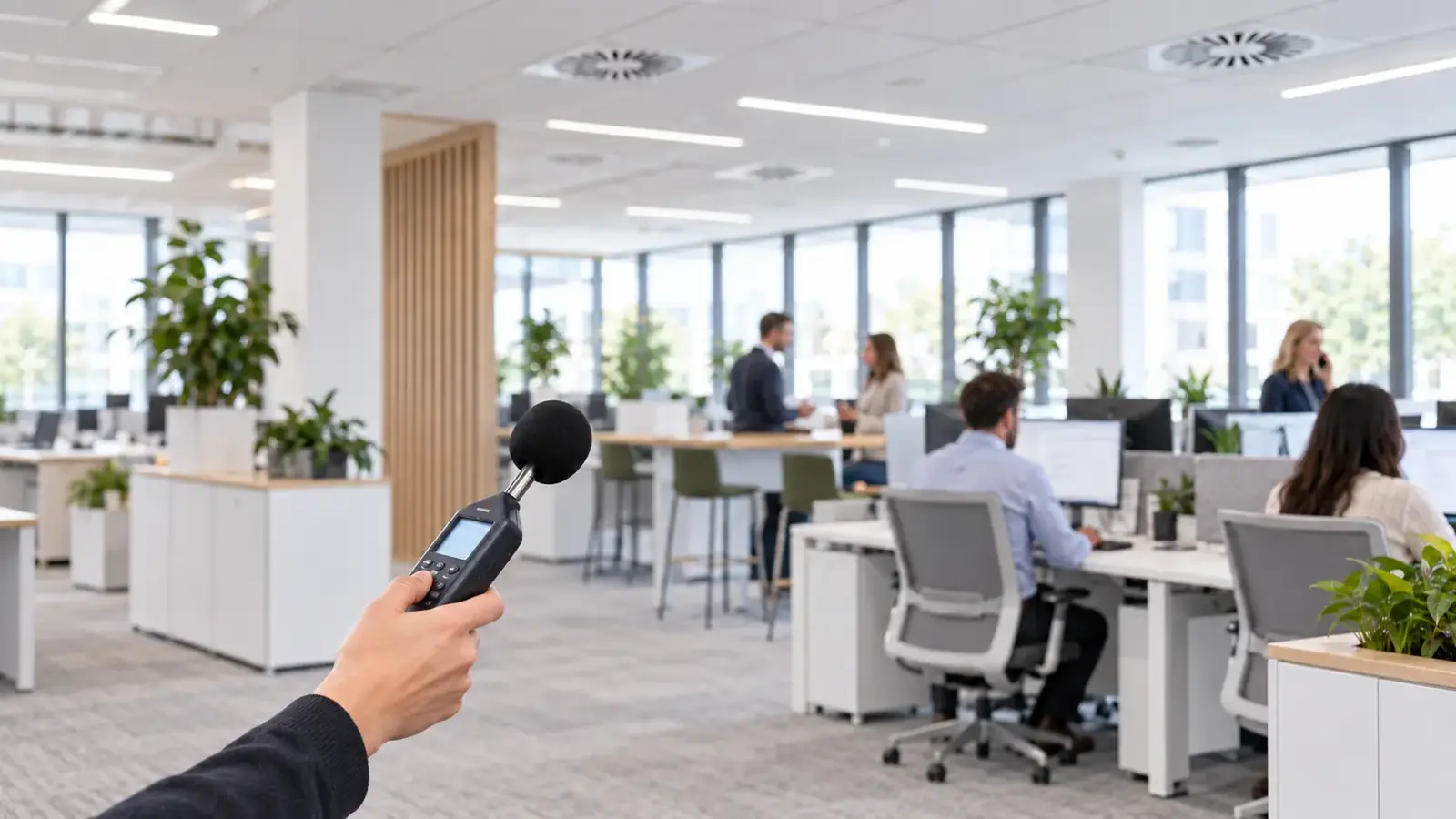
An app reading or a single spot measurement cannot establish an employee’s daily exposure. Where loud equipment, workshops, production areas or long exposure periods are involved, use suitable instruments and arrange an occupational-noise assessment by a competent professional.
Why ordinary office sound can still be disruptive
Ordinary office complaints may concern speech, calls, alerts, movement or conversations being overheard rather than hearing damage. Experimental research indicates that intelligible background speech can disrupt performance on some office tasks. Speech that remains understandable to unintended listeners also presents a speech-privacy concern.
The effect depends on the activity, layout, background sound, distance and frequency of interruption. Avoid diagnosing the whole space from one decibel reading. Start by recording where the disturbance occurs, what source causes it, which task is affected and when it happens.
A practical control sequence
1. Reduce noise at the source
Maintain noisy equipment, lower alert volumes where safe, move speakerphones away from focused work and set clear expectations for calls in shared areas.
2. Change the path
Increase distance, use layout and enclosed rooms, seal unintended gaps, and add suitable absorption where excessive reflection is part of the problem. Absorption and sound isolation solve different problems, so the treatment must match the diagnosis.
3. Protect the activity
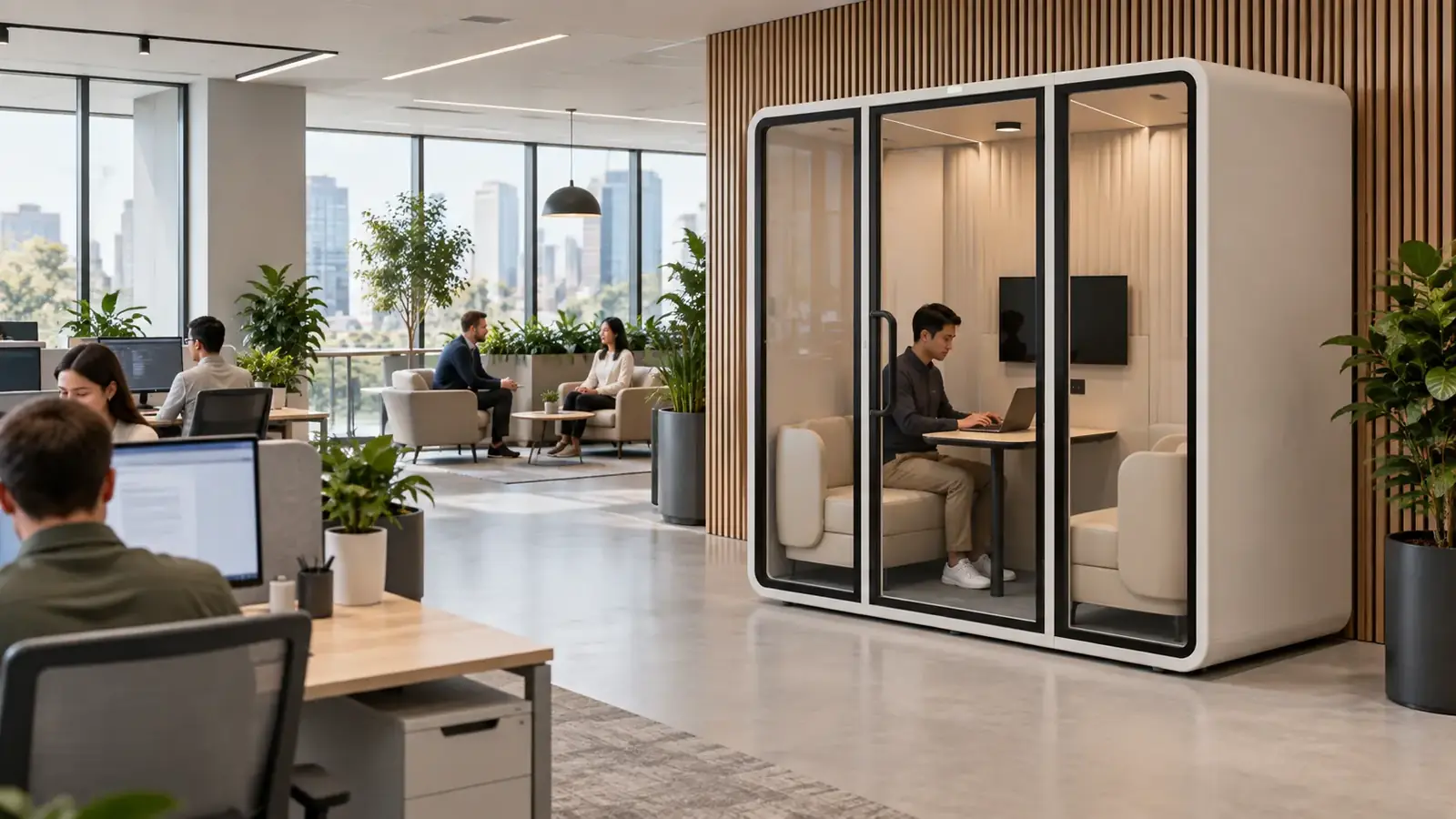
Provide quiet rooms or enclosed pods for calls and focused work, schedule noisy activities, and give teams a clear way to report recurring issues. Where hazardous exposure remains, follow an appropriate occupational-noise programme, including the necessary controls and hearing-loss prevention measures. Hearing protection is not the default response to ordinary office distraction.
What to document
Record the source, location, affected activity, time pattern and action taken. If a pod or enclosed room is being considered, review capacity, ventilation, accessibility, power, fire and egress requirements, installation conditions and model-specific acoustic test information.