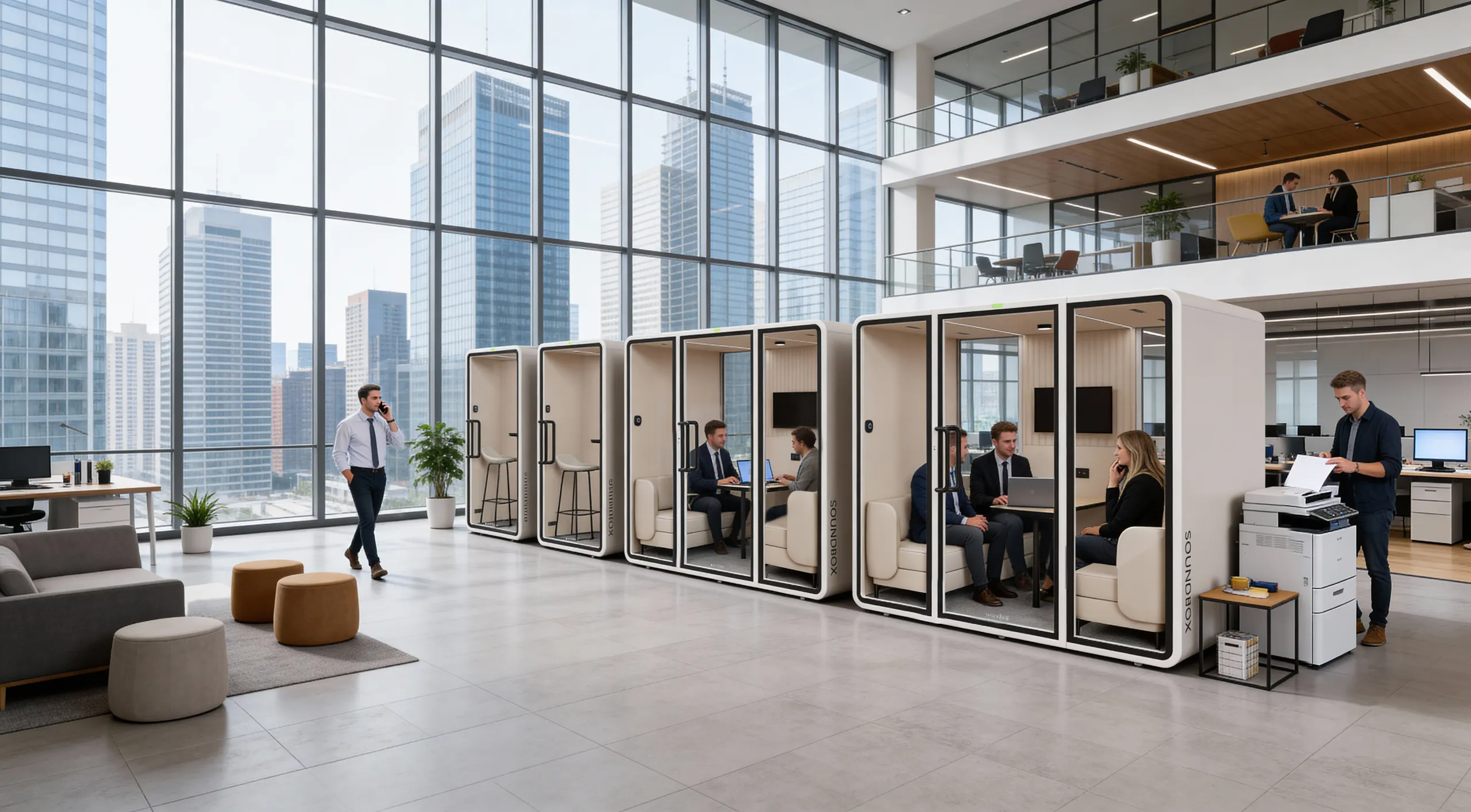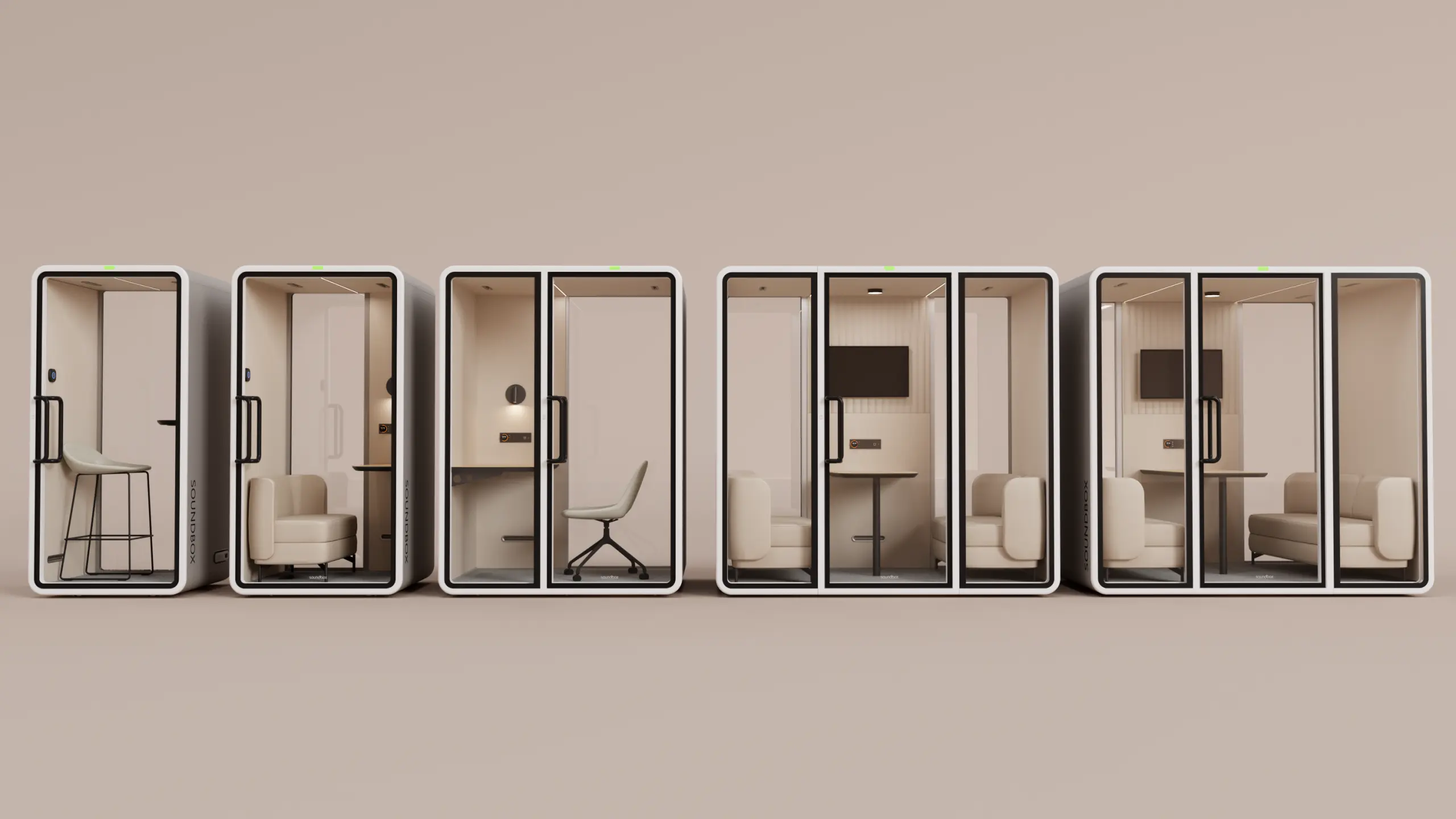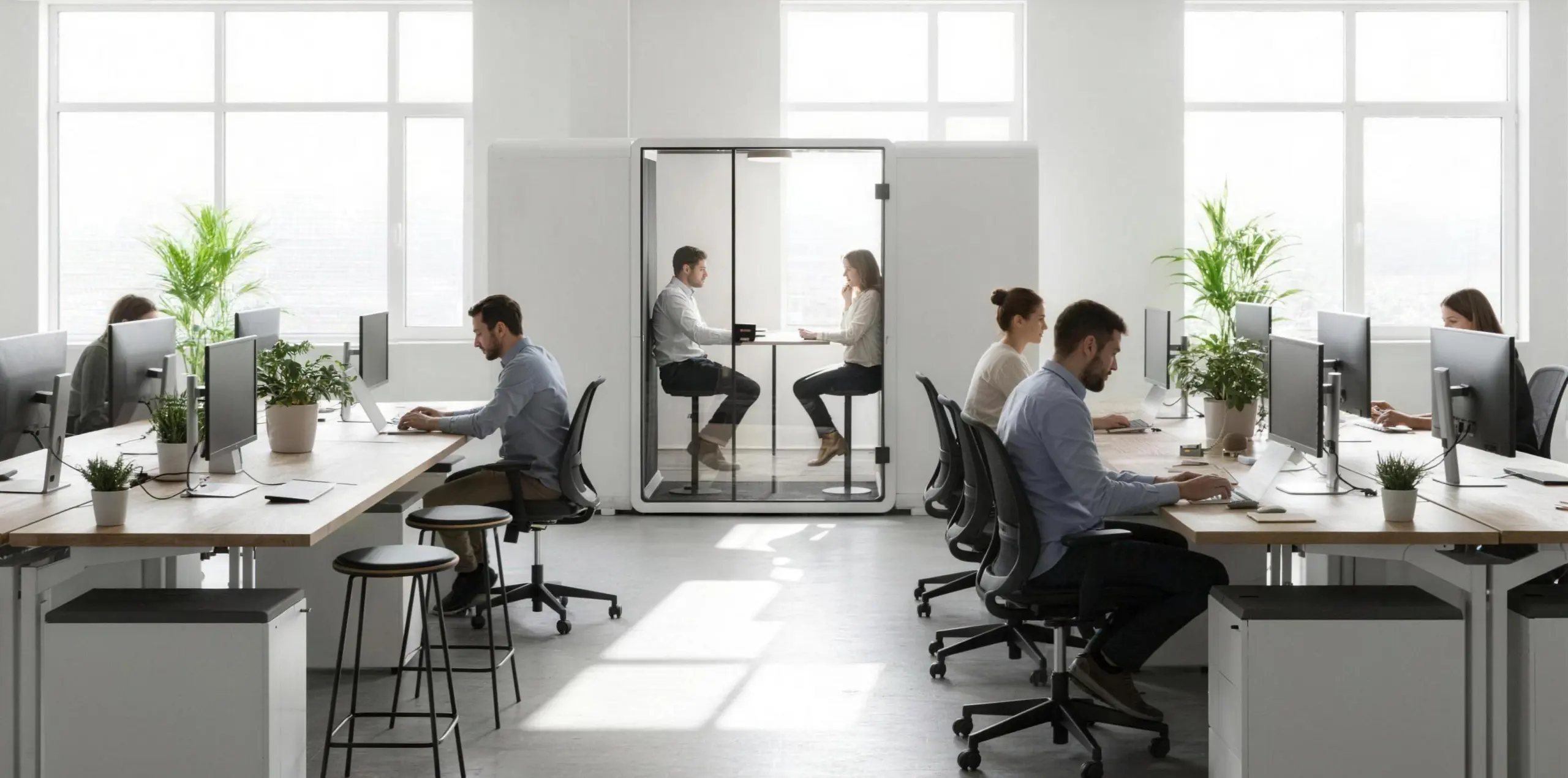
A two-person office pod can support one-to-one meetings, interviews and video calls with both users joining from the same space. Start with the actual activity, expected session length and equipment both users will need.
Decide whether users should sit face to face, work side by side or appear together on a video call. A layout that suits a conversation may not provide enough table space for two laptops or a suitable position for a shared screen.
Check usable space
Review a dimensioned layout showing the proposed seats and table. Check whether two open laptops and any shared documents fit on the usable tabletop, with legroom for both users. With one person seated, check whether the other can enter, reach their seat and leave without moving the table or requiring the seated person to stand.
Confirm internal dimensions and the external footprint separately. Allow for the supplier’s specified installation and maintenance clearances, as well as the space needed to open the door.
Review comfort and technology
Ask for ventilation figures with units and the operating setting they describe. Confirm how the system is intended to operate with two occupants and how users control lighting and airflow.
Where possible, trial the pod with two people for a session representative of your intended use. Check seating comfort, airflow and fan noise during conversation. A trial helps assess the experience but does not replace technical performance evidence.
For shared video calls, check that both seated users fit within the camera frame and can read the shared screen without repeatedly turning or leaning. Ask a remote participant to check speech pickup from each seat. Check that power sockets are accessible from both seats and that cables do not obstruct entry or movement.
Assess access and privacy
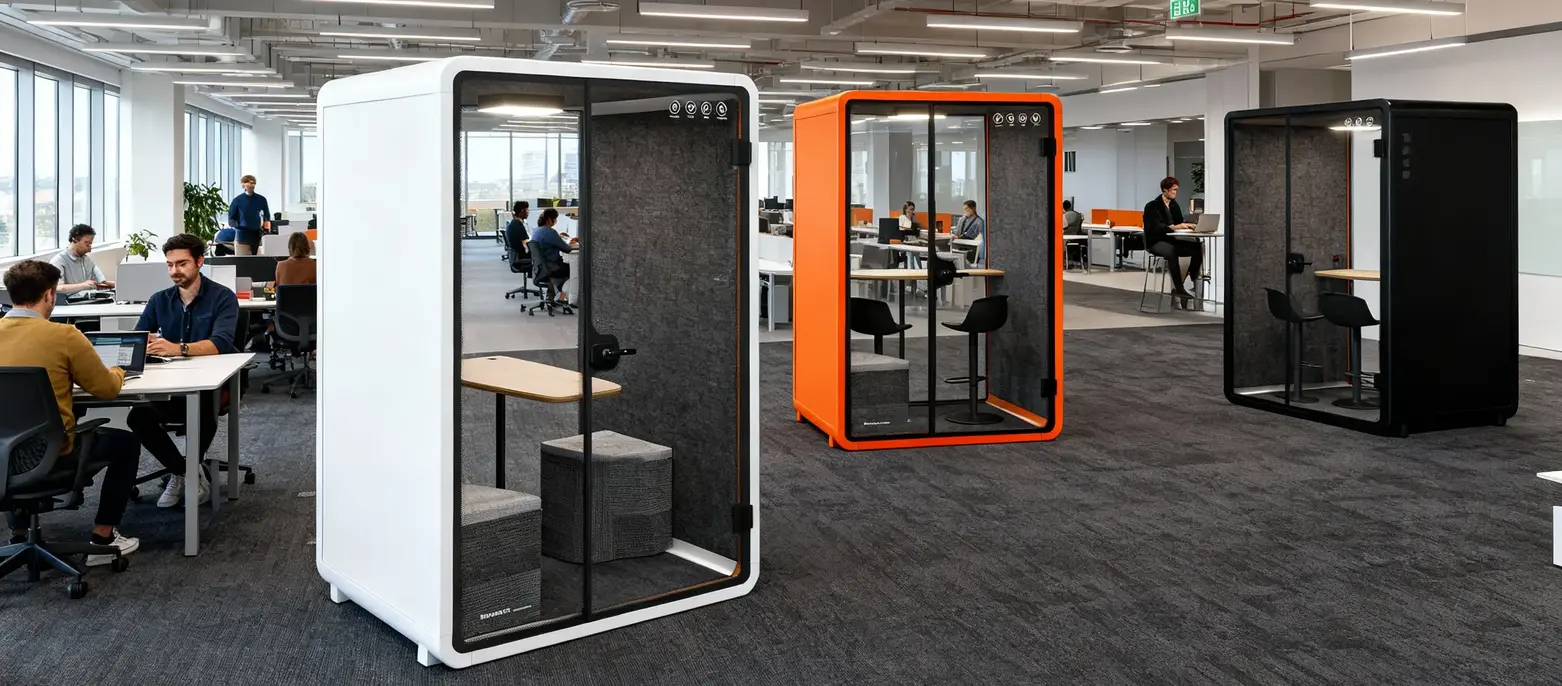
Review the clear doorway width, threshold, space around the entrance and access to controls against the project’s accessibility requirements. Assess these with the proposed furniture in place, and confirm applicable local requirements with the project team.
Request the exact model’s acoustic report, including the test method, measured result and tested configuration. ISO 23351-1:2020 provides a laboratory method for comparing speech-level reduction by complete furniture ensembles and enclosures. Compare results obtained using the same method under comparable conditions.
Consider the installation location separately, including nearby desks, corridors and screen visibility through glazing. A laboratory acoustic result alone does not establish confidentiality in the installed workplace. For sensitive conversations, agree the required privacy level and how it will be assessed before selecting the space.
Plan installation and cost
Confirm power requirements, delivery access, packaged dimensions, assembly responsibilities and checks before handover. Have the proposed location reviewed for applicable fire and escape-route requirements.
Compare quotations for the same two-person furniture and equipment configuration. Confirm what is included in the price, including seating, the table, delivery, installation and accessories. Check any recurring charges, warranty exclusions and repair arrangements separately.
Compare shortlisted 2-person pods
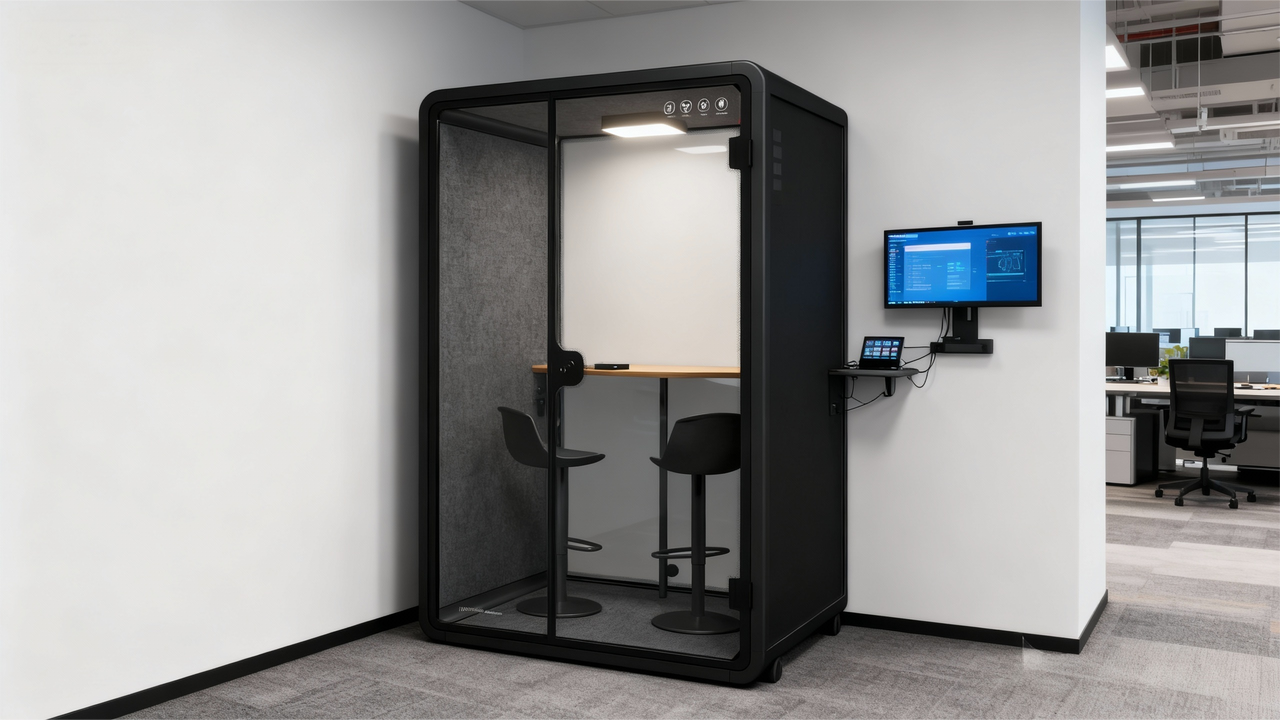
Record the exact model and furniture configuration for each candidate, then compare them against the same intended activity.
- Set essential requirements. Identify what the pod must accommodate, such as two laptops, a shared screen or a particular seating arrangement.
- Check unresolved items. Use drawings and technical documents to verify specifications, and a two-person trial to assess layout and comfort. Record anything still awaiting supplier confirmation.
- Compare suitable options. Once essential requirements are confirmed, compare complete installed cost, warranty and repair support. Document any trade-offs before selecting a model.
For a Soundbox project, share your intended activities, typical session length, installation country and available floor plan with our team. Confirm which two-person configurations and supporting documents are available for your review.