Healthcare environments contain many competing sounds: conversations, alarms, equipment, doors, trolleys and building services. Acoustic planning can support clearer communication, appropriate speech privacy and a more comfortable environment for patients, visitors and staff.
Start with the activity and risk
A reception desk, consultation room, ward, staff area and plant room each need a different response. Map the sources, sensitive receivers and paths between them. Identify where confidential speech occurs and where safety-critical sounds must remain audible.
England’s HTM 08-01: Acoustics addresses background noise, sound insulation, room acoustics and the intelligibility of audio systems in healthcare premises. Use the relevant project guidance to set objectives for each activity. Record the expected users, duration and privacy needs, including whether the activity involves patient care.
Use the right acoustic control
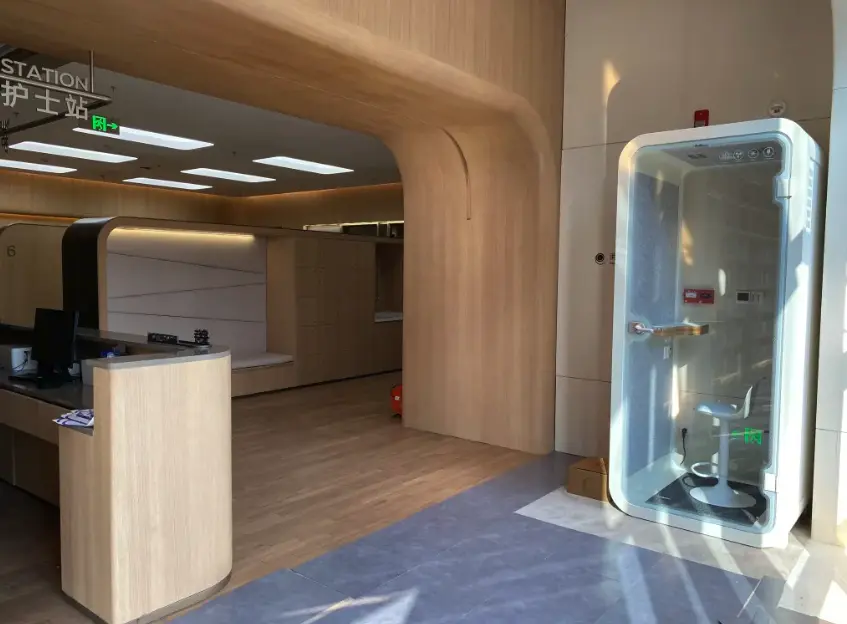
Source control may include equipment selection and maintenance. Layout and distance can separate noisy and sensitive activities. Absorptive finishes can reduce excessive reflected sound, while partitions, doors, seals and flanking-path control contribute to sound isolation. A qualified acoustic consultant should develop criteria and verify performance for complex or regulated facilities.
Keep infection control and operations in view
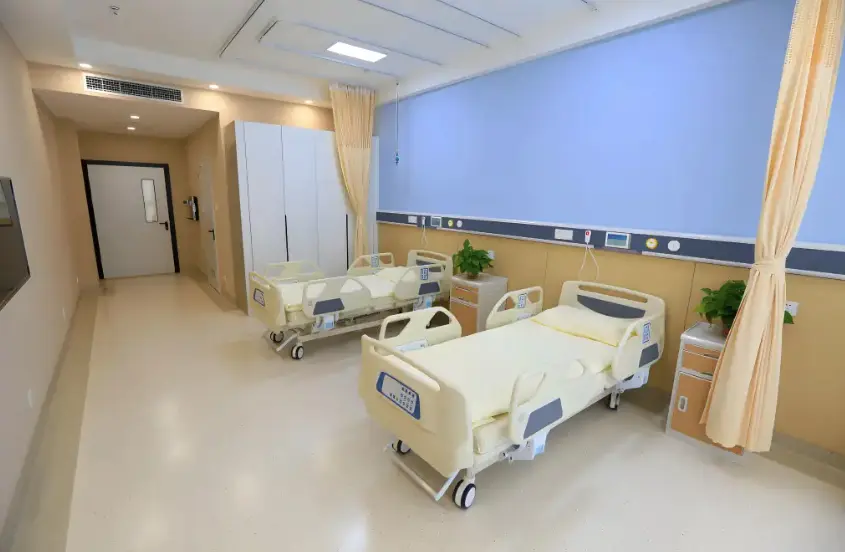
Materials and finishes should be compatible with the facility’s cleaning and infection-control procedures. The U.S. CDC’s environmental services guidance addresses cleaning and disinfection of environmental surfaces, including considerations for carpeting and upholstered furnishings. Confirm suitable cleaning methods with the supplier: an acoustic treatment may be unsuitable for the intended area if it cannot be maintained using the facility’s procedures.
Where enclosed pods may fit
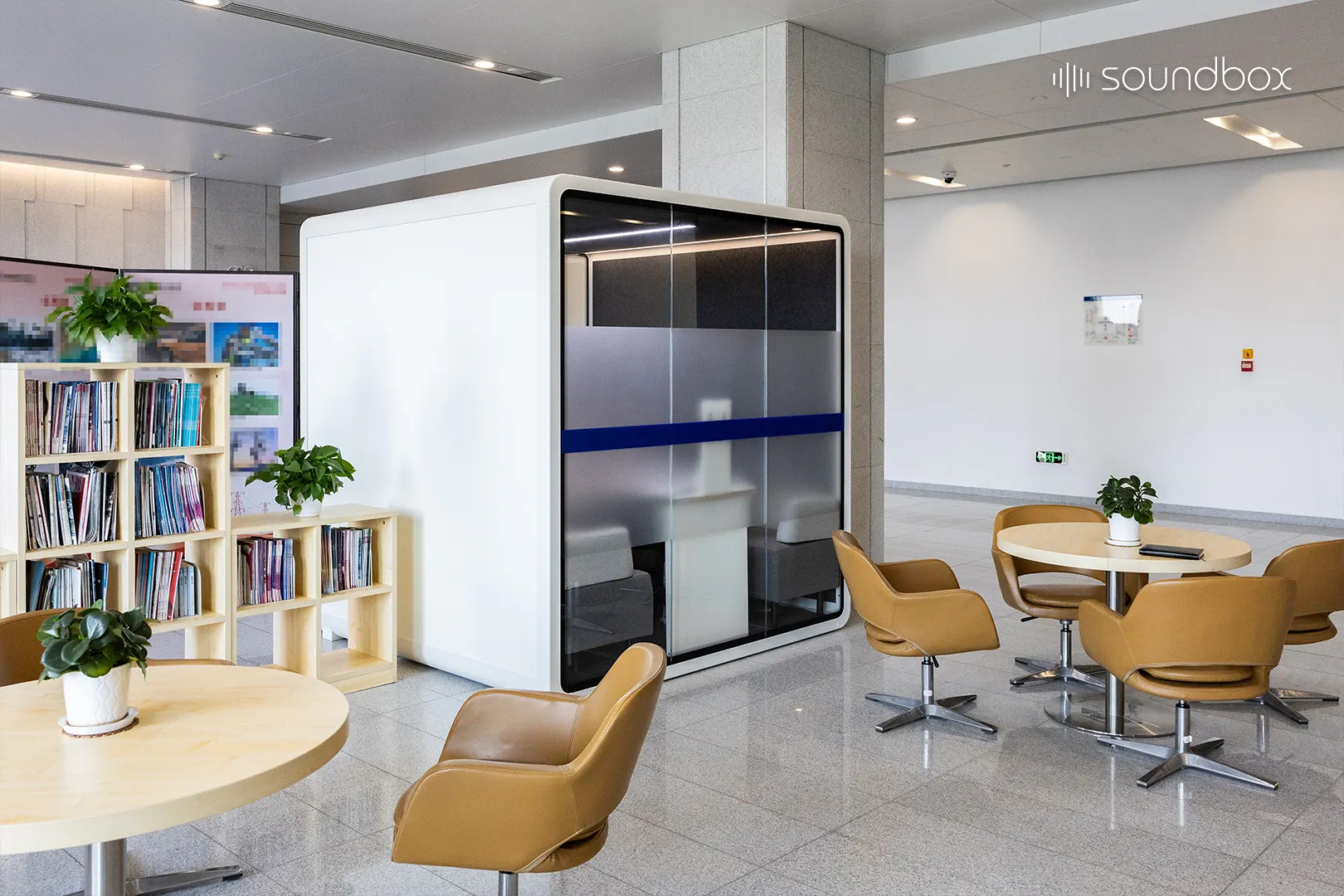
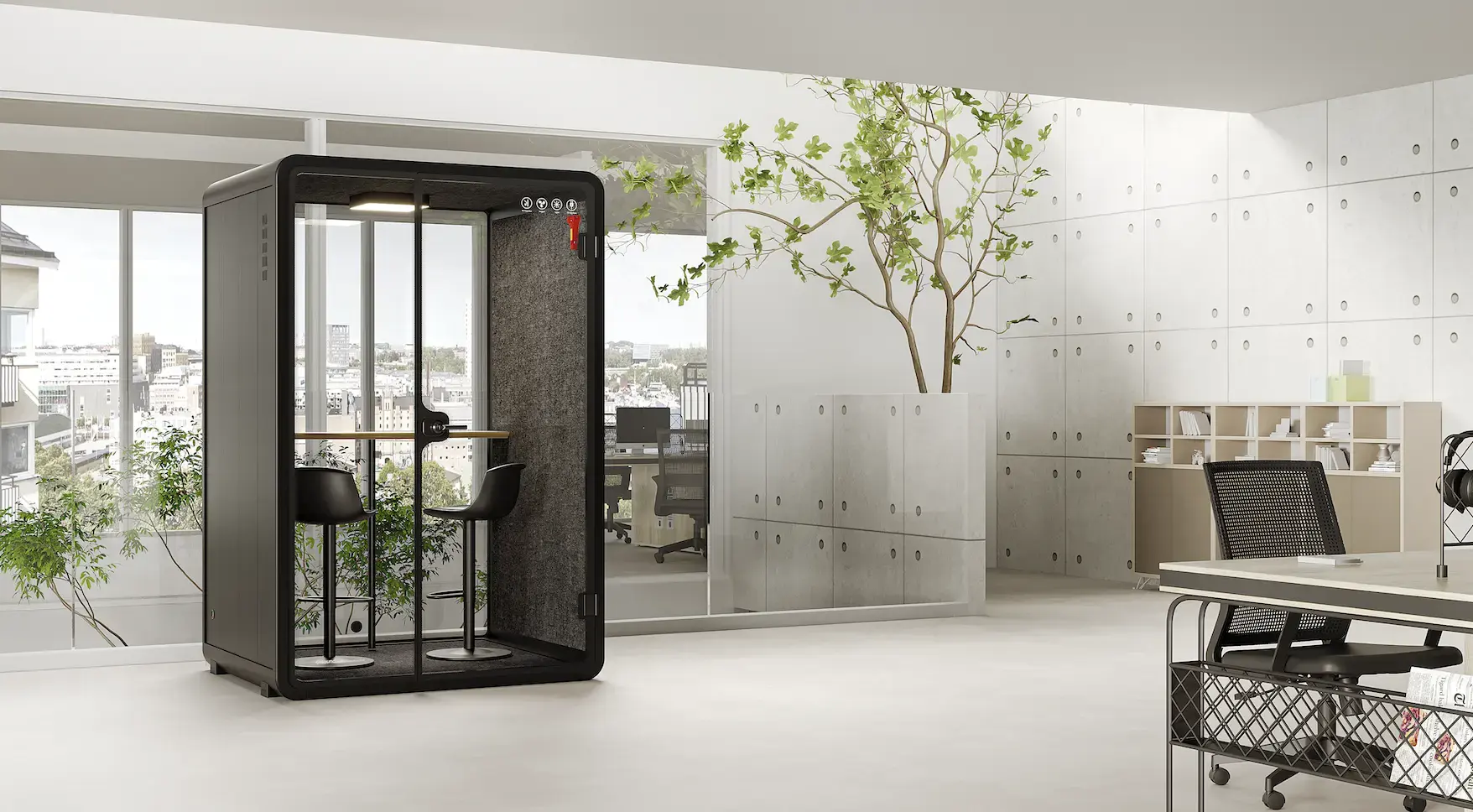
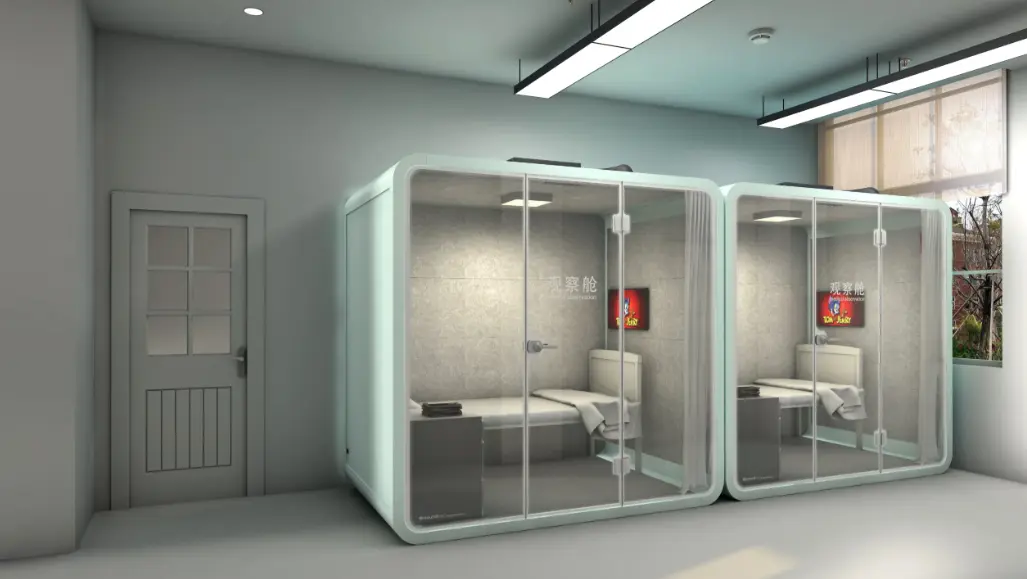
Enclosed pods may be worth considering in healthcare staff and administrative areas where existing rooms cannot accommodate recurring calls, online training or focused paperwork.
For individual work or small-group discussions, compare configurations in the Soundbox VRT series against participant numbers, seating, available space and access requirements. The aim is to provide a separate setting for these activities within a busy healthcare facility. Suitability for the proposed non-clinical use should be reviewed by the healthcare provider.
Before selection, request model-specific acoustic reports, cleaning instructions, ventilation details and installation requirements. Have the relevant teams check cleaning compatibility, accessibility, fire and electrical safety, escape routes, and any need for supervision or alarm communication. Examination, treatment and emergency uses require a separate clinical and technical assessment.
External sources accessed: September 2026