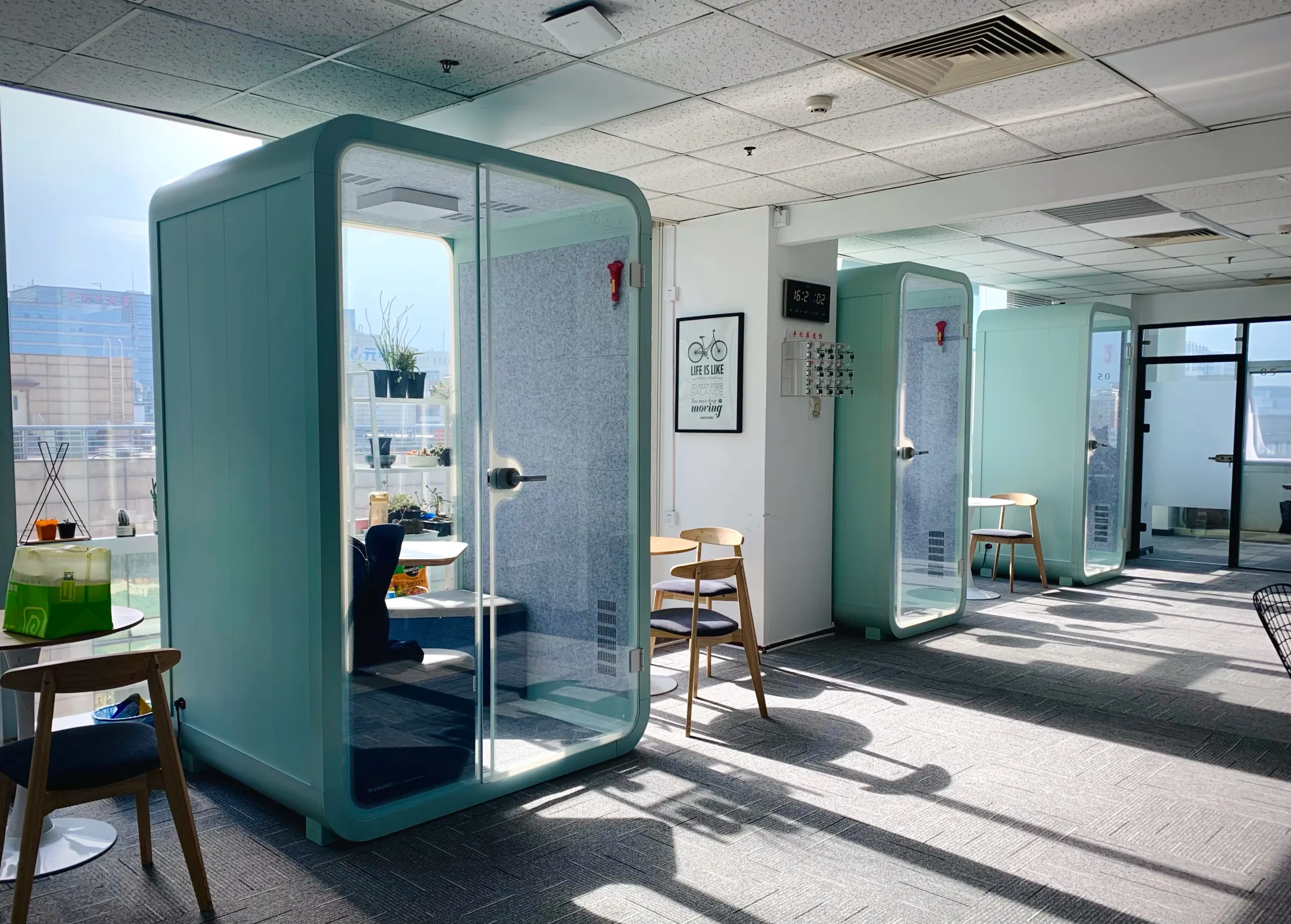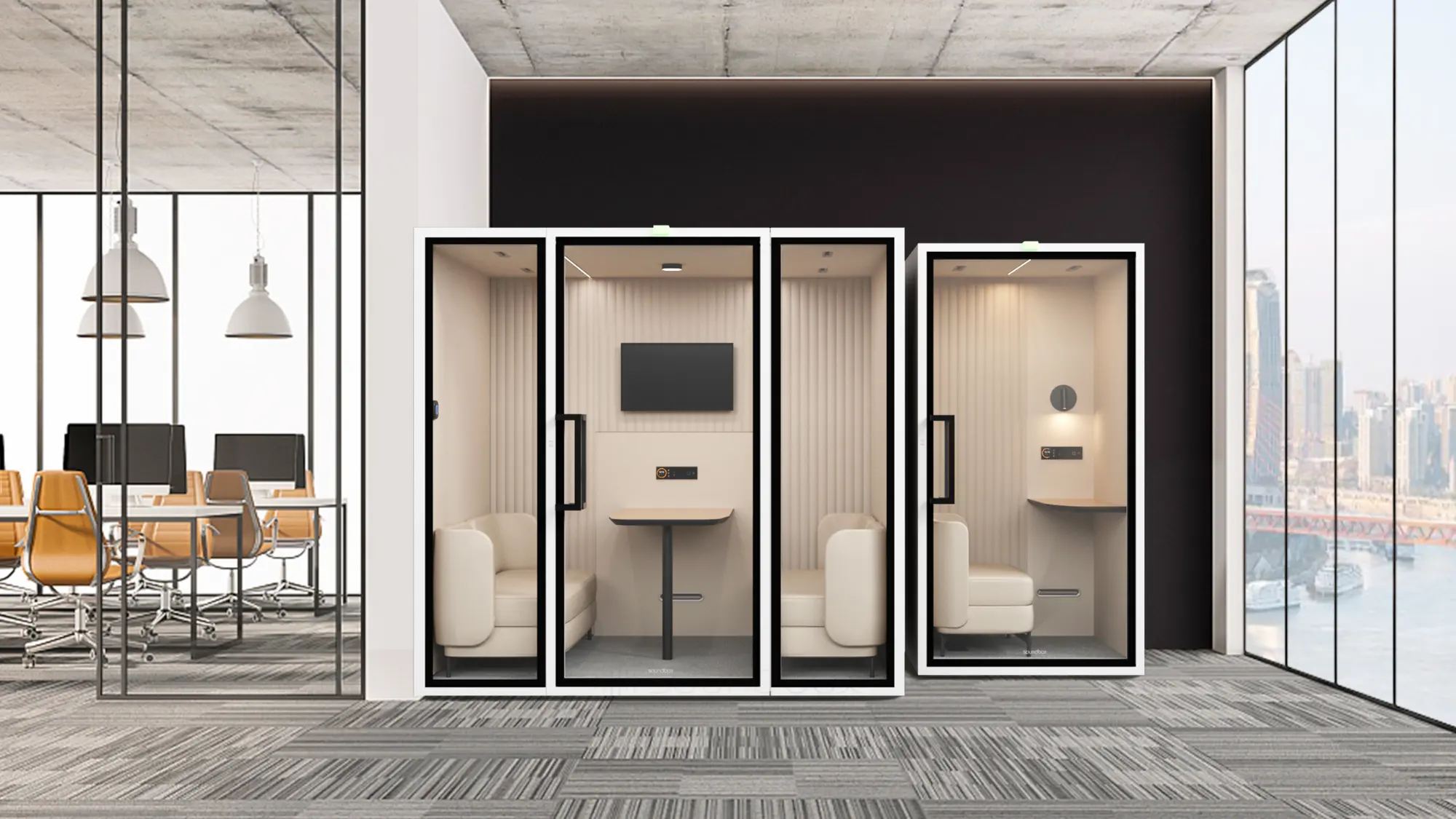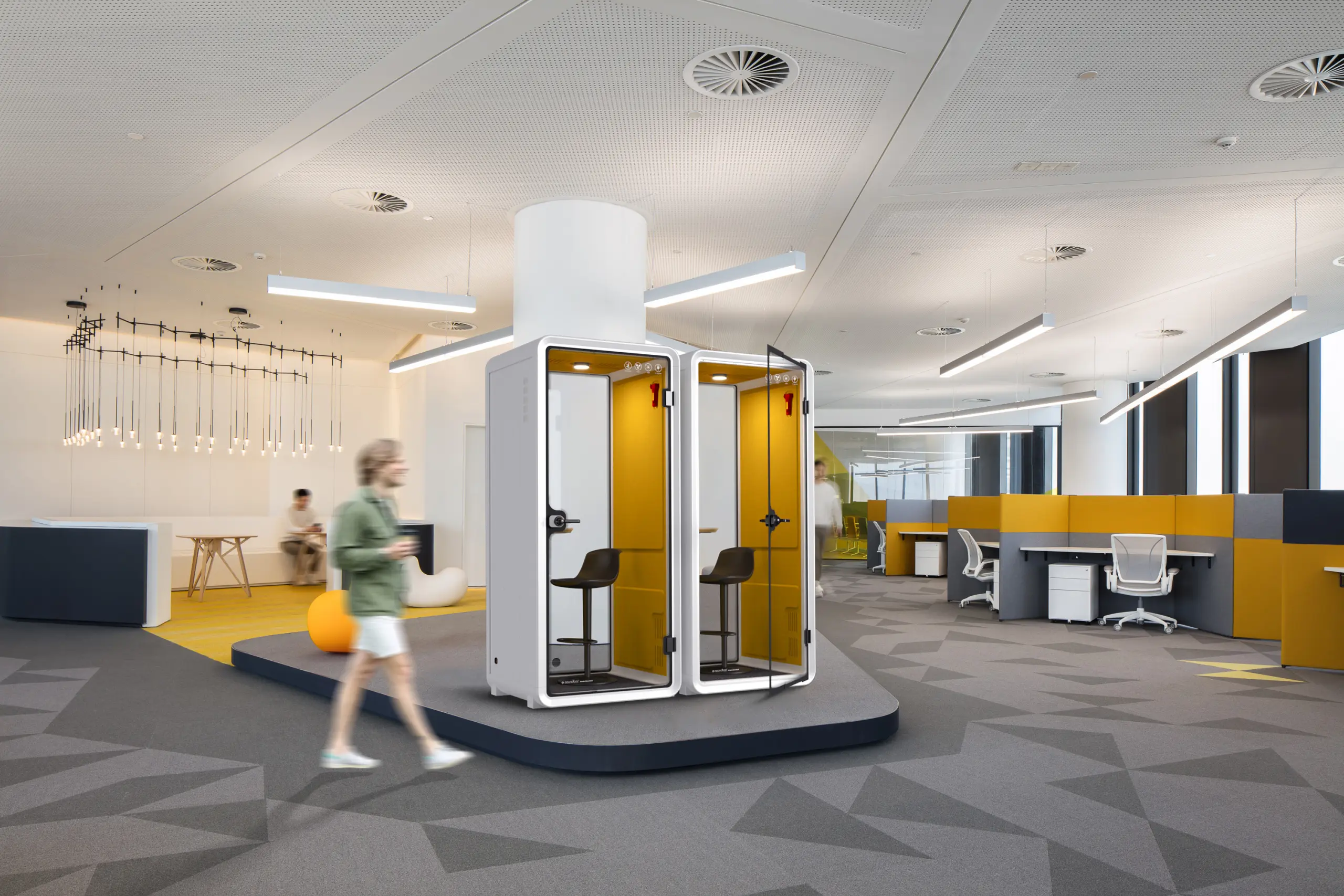
Modular elements can help workplaces adapt as teams and activities change. Pods, screens and demountable partitions each solve different problems, so the design should begin with the activity and acoustic path.
Diagnose the need
Map calls, collaboration, focused work and confidential conversations. Note the source, receiver and route of the disturbance. Screens may interrupt a direct line of sight; absorptive finishes may reduce reflection; enclosed rooms or pods may provide greater separation.
Plan the complete system
Review circulation, accessibility, sprinklers, fire and egress requirements, ceiling and floor conditions, power, ventilation and delivery access. A movable product still has to fit the building and destination-market requirements.
Compare evidence
Request model-specific acoustic tests, drawings, material and emission information, electrical documentation and installation instructions. Check whether the ordered configuration matches the test sample.
Design for change
Record components, connections and service clearances. Ask what can be repaired, replaced or relocated and which work requires trained installers. Reconfiguration should be planned and approved; “modular” does not mean every move is simple or cost-free.
Verify after installation
Inspect seals, doors, ventilation operation, power and finish quality. Observe whether the new setting supports the intended activity and review booking or usage data after an agreed period.