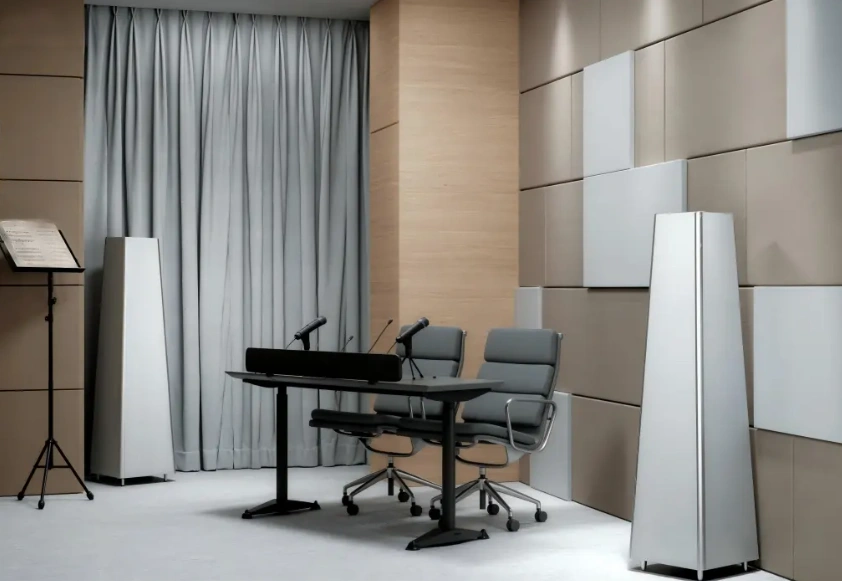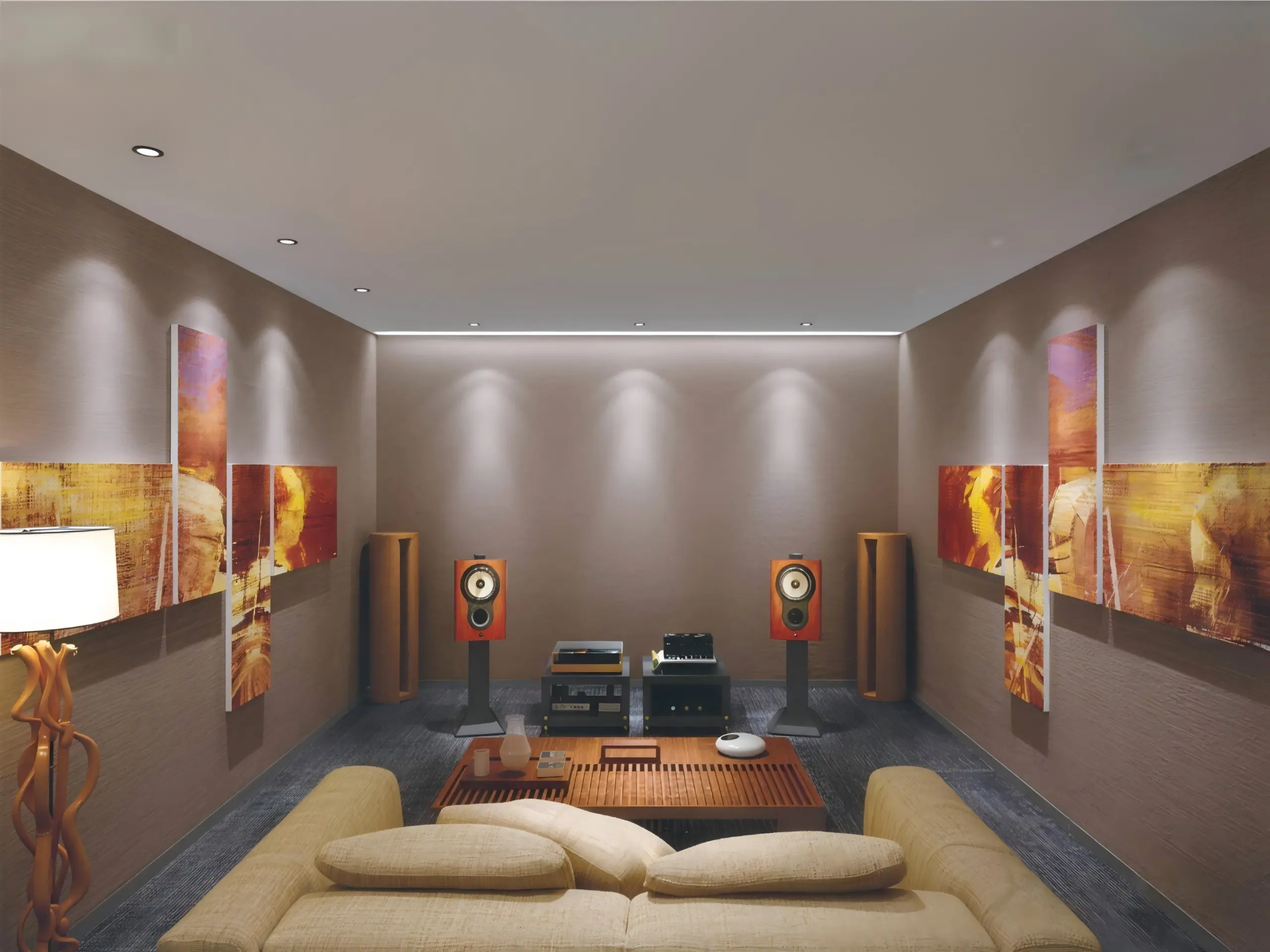
Home theaters, piano rooms and recording rooms have different acoustic goals. A listening room aims for balanced reproduction, a music room must support the instrument and listener, and a recording room needs a controlled result for microphones. Begin with the use, room geometry and measured problem.
Separate room acoustics from sound isolation
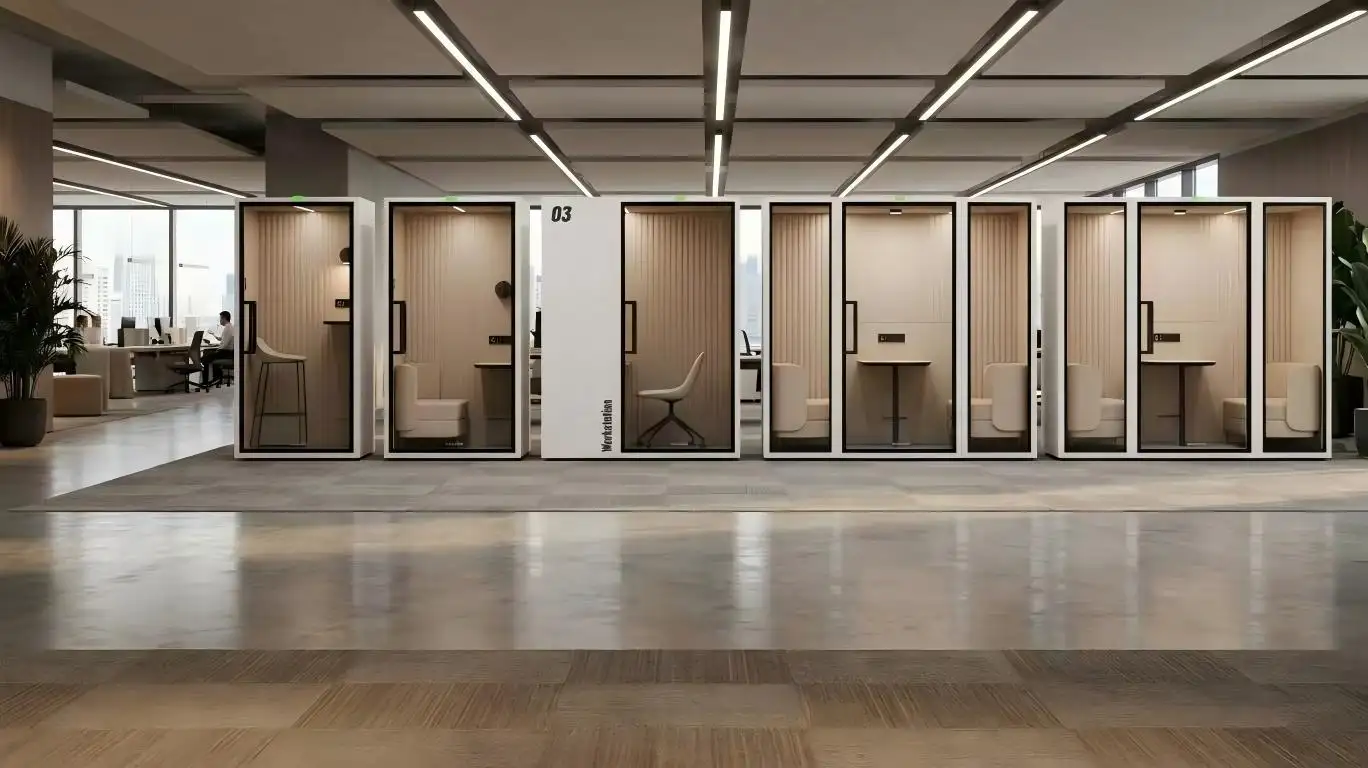
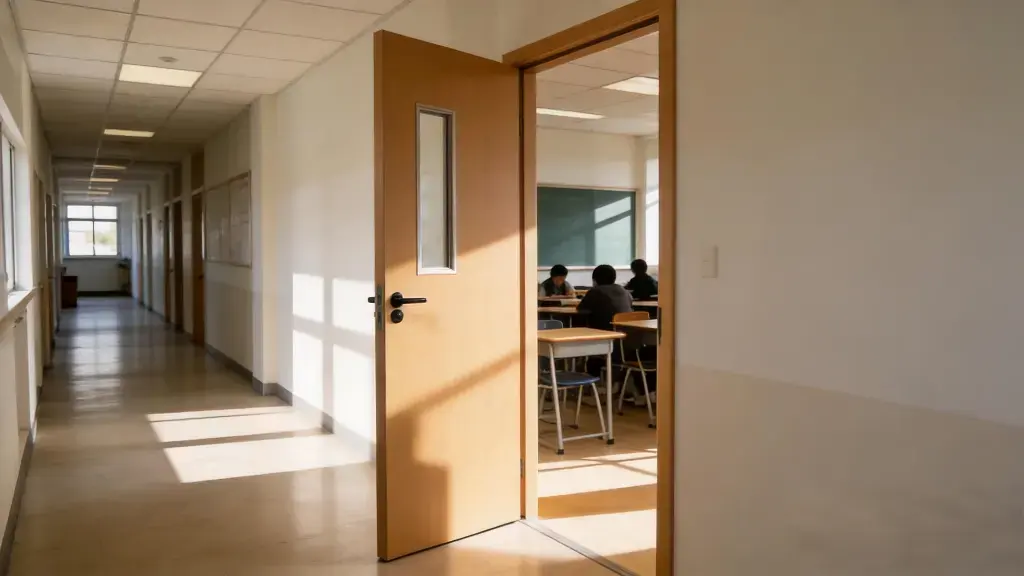
Absorbers and diffusers change reflections within a room. Sound isolation addresses transmission to and from adjacent spaces through walls, doors, floors, ceilings and ventilation paths. Adding decorative panels will not seal a weak door or structural path.
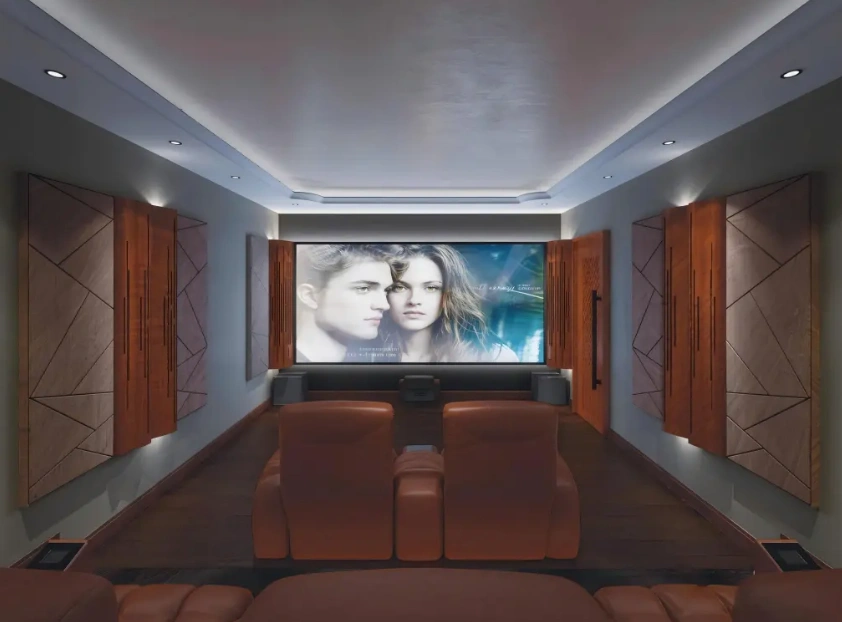
Diagnose before treating
Record dimensions, construction, openings, loudspeaker or instrument position and listening areas. Listen for flutter echo, excessive decay and uneven bass. Measurement by an acoustic professional is useful where accurate listening or recording is required.
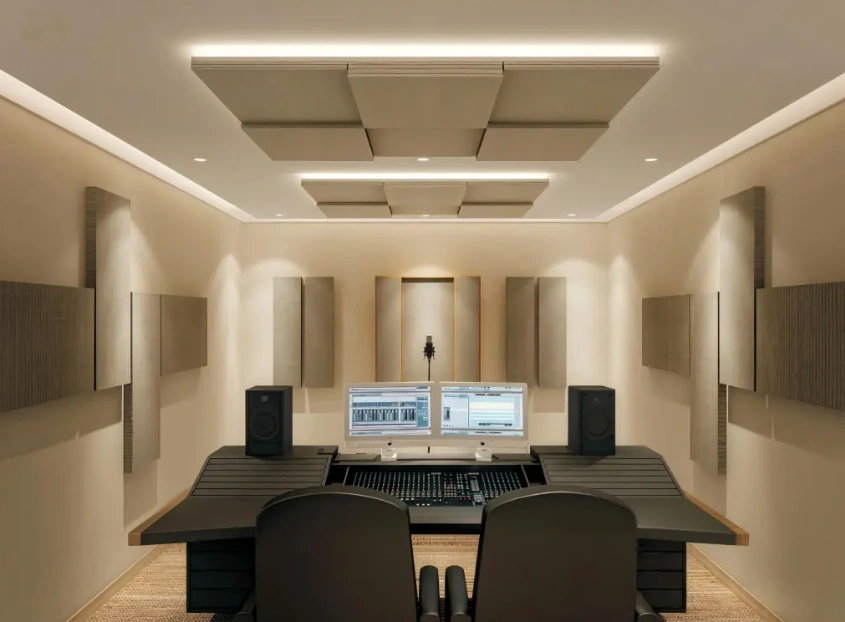
Use treatment deliberately
Absorption can control early reflections and excessive reverberation. Diffusion may help distribute reflected energy where there is adequate distance. Low-frequency problems often need position changes, tuned treatment or specialist design. More absorption is not automatically better.
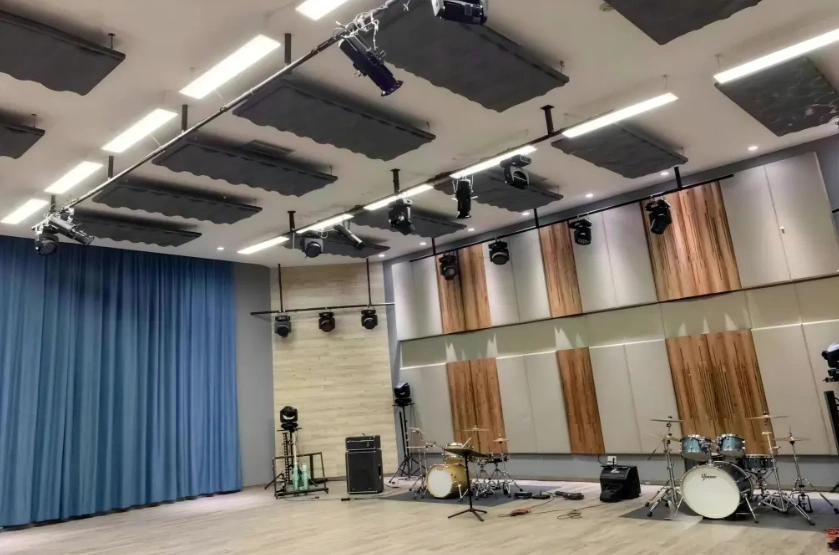
Verify with the real setup
Install and measure in stages, using the actual speakers, instruments and positions. Keep fire, emissions, mounting safety and room use in the product selection.