Office pod prices vary because the product itself is only one part of the project. Capacity, construction, glazing, furniture, ventilation, electrical specifications, technical documentation, destination, and service scope can all affect the final cost.
A listed price may refer only to a standard product at a particular location. It may exclude freight, duty, local delivery, assembly, electrical work or optional equipment. For that reason, the most useful comparison is not the lowest advertised price, but the complete cost of delivering the required configuration to the intended site.
Begin with a consistent project brief. Define the activity, typical occupancy, expected session length, location, quantity, furniture and technology requirements before requesting quotations.
Main cost components
At Soundbox, we group the cost of an office pod into four layers. The first three relate to the pod itself: its enclosure, interior, and integrated systems. The fourth covers delivery and installation at the project site.
| Cost layer | What it includes | Why it affects the quotation |
|---|---|---|
| Enclosure and acoustic construction | Pod size, frame, wall panels, glazing, door, seals and exterior finishes | Affects material use, product weight, and the construction of the complete enclosure |
| Interior fit-out | Furniture, interior finishes, lighting, outlets, charging ports, screen mounts, and cable management | Determines how the pod is equipped for its intended activity |
| Ventilation, power, and controls | Fans, air paths, electrical components, sensors, controls, and connected functions | System requirements vary by pod size, model, and configuration |
| Delivery and installation | Packaging, freight, local handling, assembly, electrical connection, and commissioning | Depends on the destination, quantity, access route, and site conditions |
Enclosure and acoustic construction. Pod size, materials, and construction all influence price. Larger models generally require more wall, ceiling, and floor structure and glazing, while panel thickness, frame design, doors, seals and finishes can also affect product weight and manufacturing requirements.
Most Soundbox pod enclosures combine 40 mm composite panels, 6.8 mm laminated acoustic glass, and an aluminum structural frame. A range of colors is available for different workplace interiors. Custom colors, fabrics, or graphics may affect the price, lead time, or minimum order quantity.
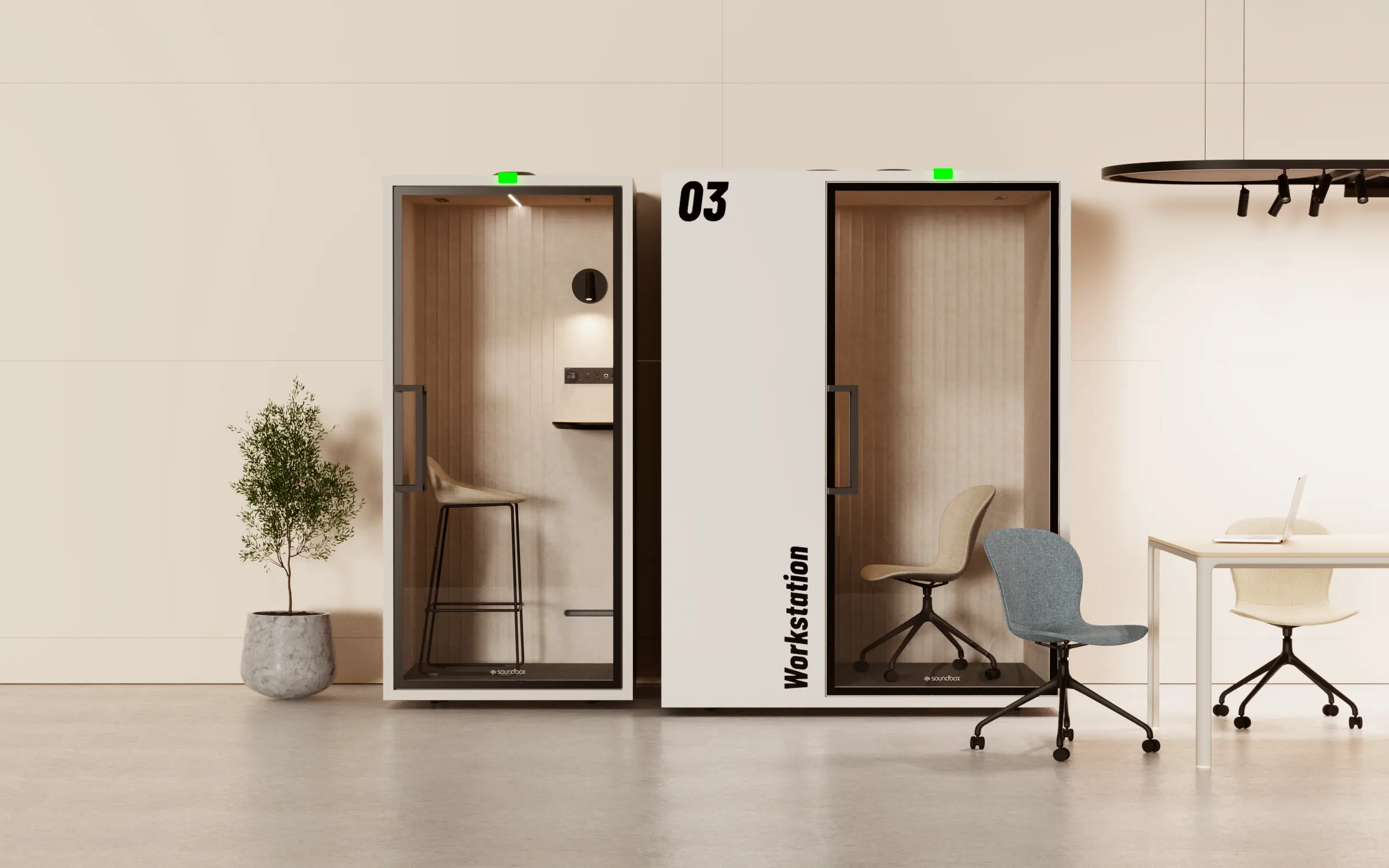
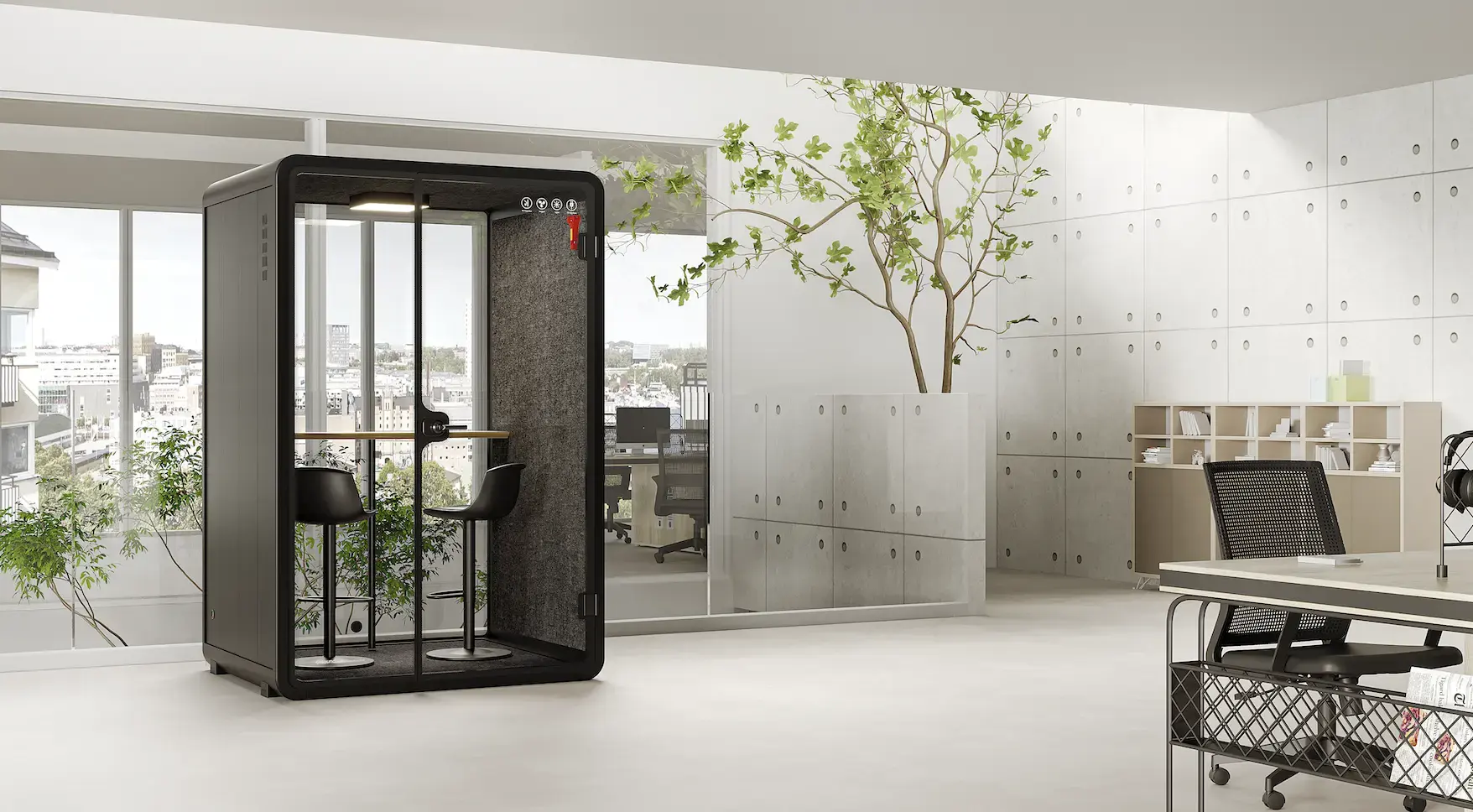
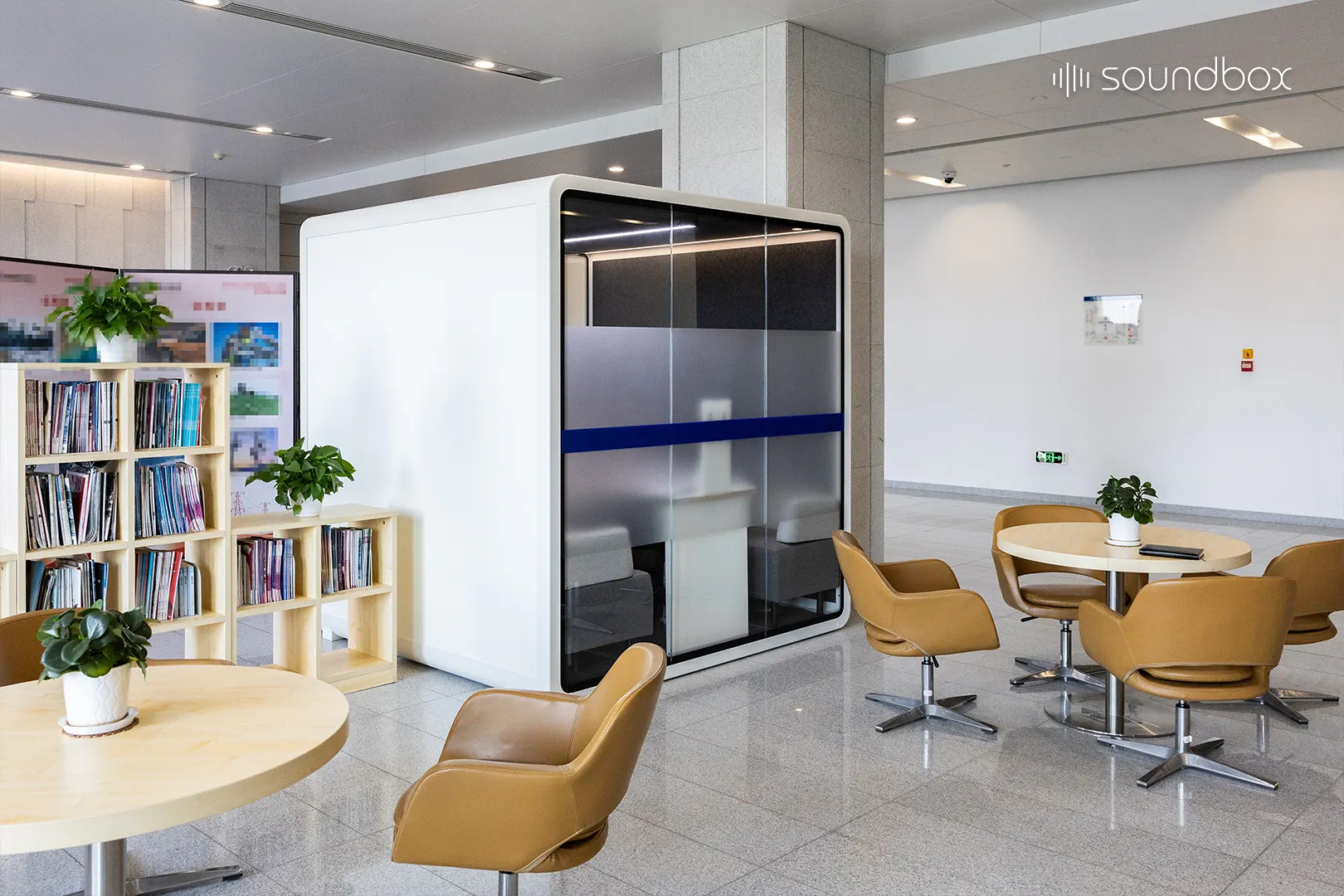
Interior fit-out. The interior should match the activity. Soundbox phone booths use compact work surfaces for calls, while focus pods can include sofa-style seating and a table for laptop work. Pods intended for one-on-one conversations or small-group meetings include seating and tables sized for their stated capacity.
Furniture, lighting, outlets, charging ports, and cable management can be integrated into the selected Soundbox configuration. The quotation should identify what is included and optional, while displays, cameras, microphones or mounting hardware should be specified separately where required.
Ventilation, power, and controls. Soundbox VRT and ART pods use a ventilation system developed with Panasonic. Selected configurations are specified at approximately 46 air changes per hour; confirm the applicable figure for the quoted model.
Soundbox pods also integrate lighting and power, with electrical specifications adapted to the destination market. Confirm the input voltage and outlet type when requesting a quotation. Smart Matrix controls, sensors and connected management functions vary by model, market and ordered package and should be identified separately in the quotation.
Delivery and installation. The installed project cost may include packaging, freight, insurance, customs duties, local delivery, unloading, assembly, electrical connection and commissioning. These costs depend on the destination, quantity and site conditions.
We use modular construction so that Soundbox pods can be delivered as components and assembled at the destination. The packaged panels and glazing must still pass through the building, and sufficient space must be available for unpacking and assembly. The quotation should clearly state the responsibilities for delivery, installation, electrical connection and final testing.
Compare equivalent quotations
To compare a Soundbox quotation with other proposals, provide each company with the same project information:
- Installation country, site address and quantity
- Intended use, typical occupancy and session length
- Proposed location and floor plan
- Furniture, electrical and technology requirements
- Delivery route and known site restrictions
- Required delivery and installation schedule
- Accessibility and other project-specific requirements
Our quotation should identify the exact model and configuration and distinguish the pod price from optional equipment, freight, delivery, assembly, electrical work, and other site services. It should also state the currency, tax treatment, validity period, lead time, delivery endpoint, and exclusions.
The supporting documents should correspond to the quoted configuration. Drawings, acoustic reports and electrical information for a different pod size, door, glazing arrangement or ventilation system may not represent the model being considered.
Avoid false precision
Online price ranges can help establish an early budget, but they may become outdated or exclude freight, import duties, installation and local electrical work. Prices can also vary between countries because of taxes, electrical configurations, documentation and service requirements.
For this reason, any Soundbox budget figure should identify the model, configuration, destination, currency, tax basis and included services. It should be treated as an estimate until the quantity, floor plan, delivery route and installation scope have been confirmed.
Evaluate whole-life value
The lowest purchase price does not always provide the lowest total cost of ownership. Whole-life value also depends on product durability, maintenance access, warranty coverage, replacement-part availability and the ability to adapt the pod to future workplace changes.
Soundbox pods use modular construction, allowing them to be disassembled, relocated and reassembled when workplace layouts change. Components can be inspected and replaced where necessary, although relocation costs will depend on the building route, local labor, packaging, and the condition of the components after disassembly. Confirm whether third-party relocation affects the applicable warranty or documented performance.
Material selection should also be considered over the pod’s service life. For projects with sustainability requirements, ask our team for the available model-specific information on material composition, emissions, recyclability, and relevant certifications.
To request an itemized Soundbox quotation, contact our team with the installation country, quantity, floor plan, intended use, and required schedule. We can confirm the relevant configuration, including equipment, warranty information, project documents, and delivery scope.