A Guide to Perfect Auditory Feast: Acoustic Design for Home Theaters, Piano Rooms, and Recording Studios
In today’s pursuit of the ultimate audio-visual experience, the acoustic environment plays a pivotal role, whether it’s for the immersive sound effects of a home theater, the pure expression of an instrument’s timbre in a piano room, or the precise capture of sound details in a recording studio. A space without acoustic optimization, even with top-tier audio equipment, can hardly realize its full potential. Poor acoustic conditions not only affect the clarity and detail of music but can also lead to auditory fatigue and even compromise the final quality of a recording. Therefore, understanding and improving the acoustic characteristics of a space is a key step in enhancing the auditory experience and creative efficiency.
Common Acoustic Problems
When creating an audio-visual or music space, many people tend to focus only on the equipment itself while ignoring the impact of the space on the sound. Here are several common acoustic “symptoms”:
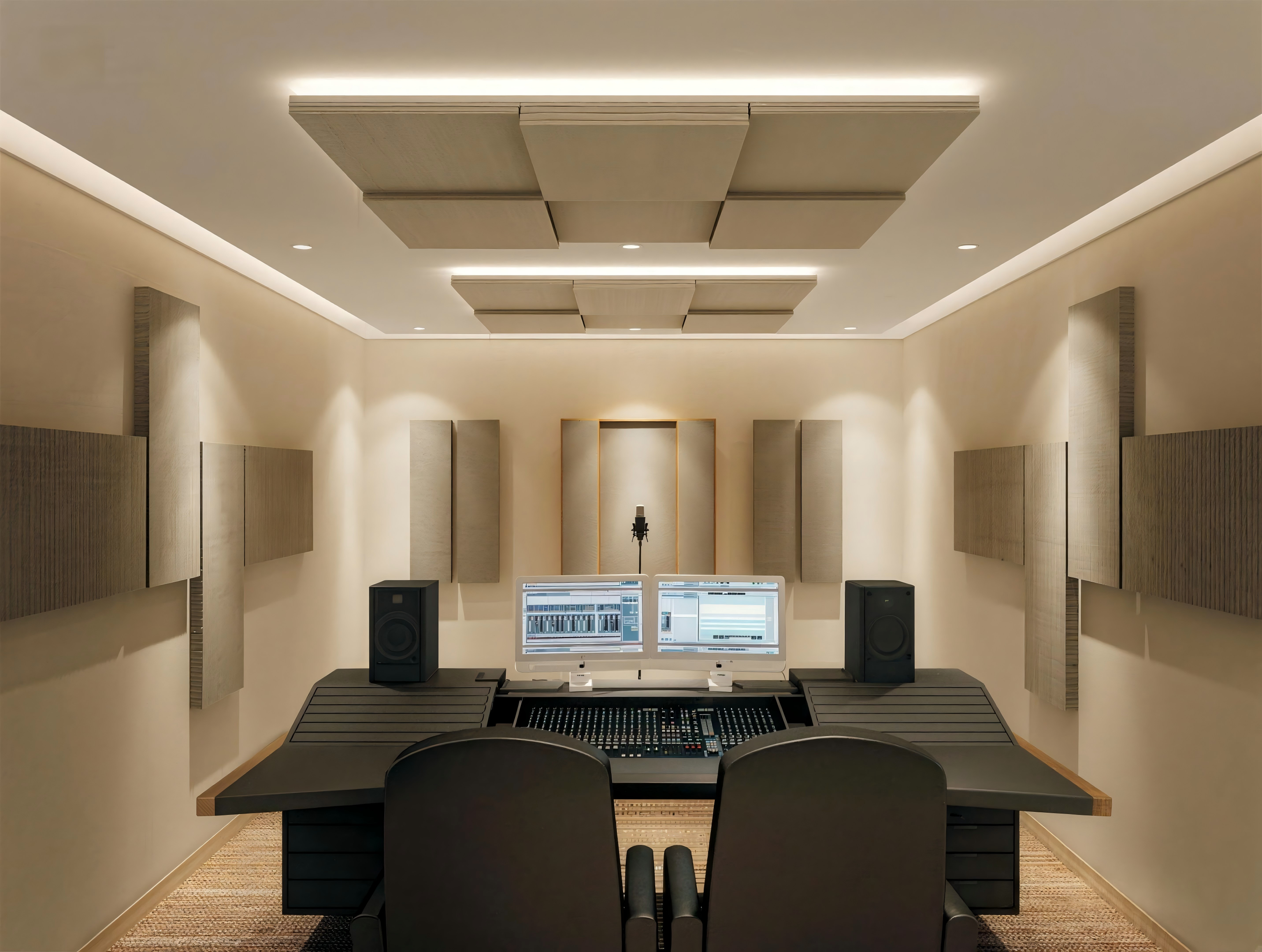
1 Echo: Echo occurs when sound is reflected multiple times between hard, smooth surfaces like walls and glass and is perceived with a delay. This can cause the sound to become blurry and severely affect the presentation of dialogue and musical details.
2 Excessive Reverberation: Similar to echo, reverberation is the phenomenon of sound persisting in a space as it is repeatedly reflected and gradually decays. If the reverberation time is too long, the sound becomes muddy and lacks layering. Especially in musical performance and recording, it can cause sounds to “smear” together, making them difficult to distinguish.
3 Uneven Sound Distribution: Due to factors like the room’s structure and furniture placement, there can be significant differences in sound pressure levels and frequency responses at various locations within the room. This results in an inconsistent listening experience for the audience in different spots, affecting the overall auditory balance.
4 Standing Waves: At specific frequencies, sound waves reflect back and forth between parallel walls, creating peaks and troughs. This leads to certain frequencies being overly boosted or attenuated, causing low-frequency booming or high-frequency loss, which severely impacts the tonal balance of the sound.
Acoustic Improvement Methods
To address the acoustic problems mentioned above, a series of scientific acoustic improvement methods can be adopted.
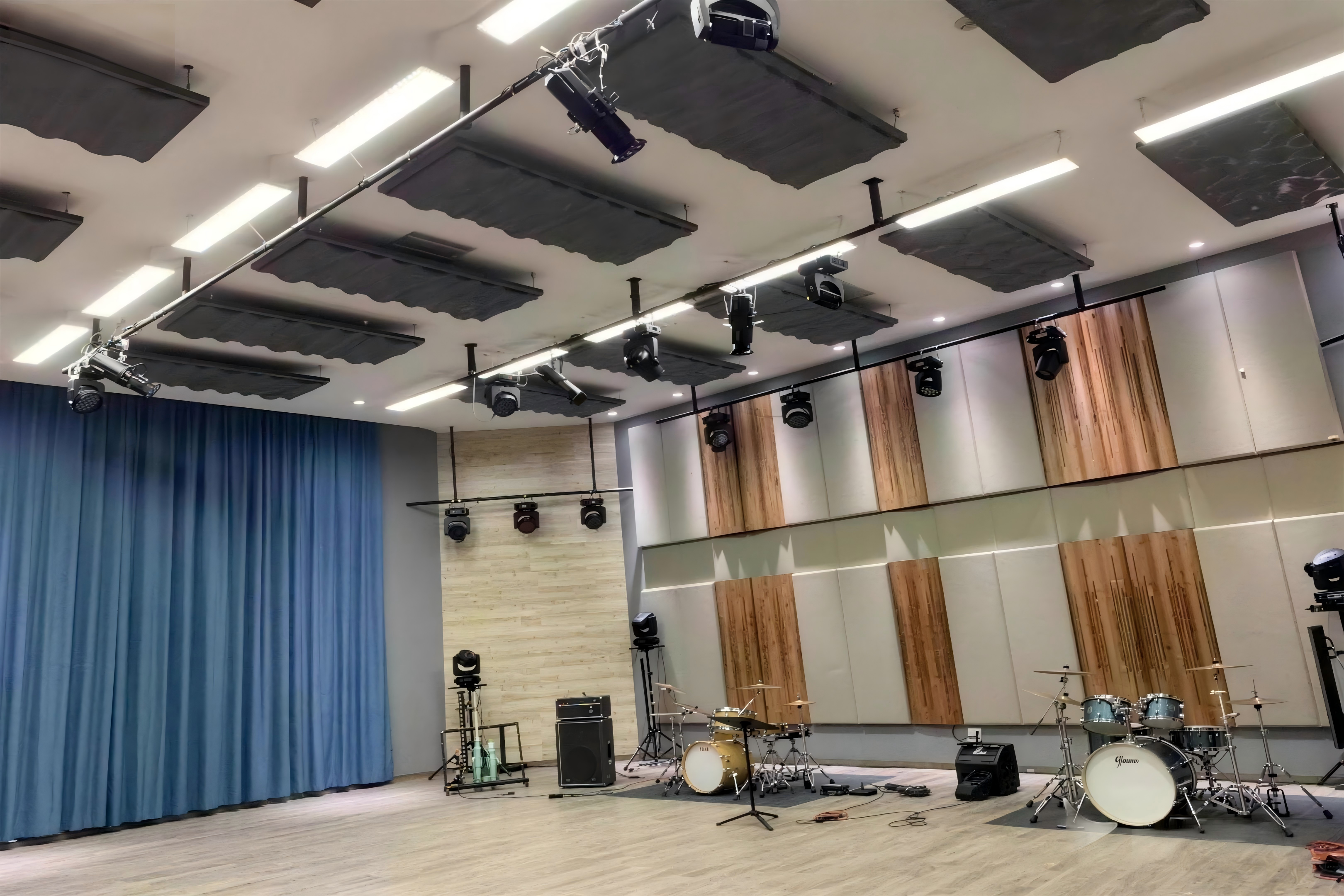
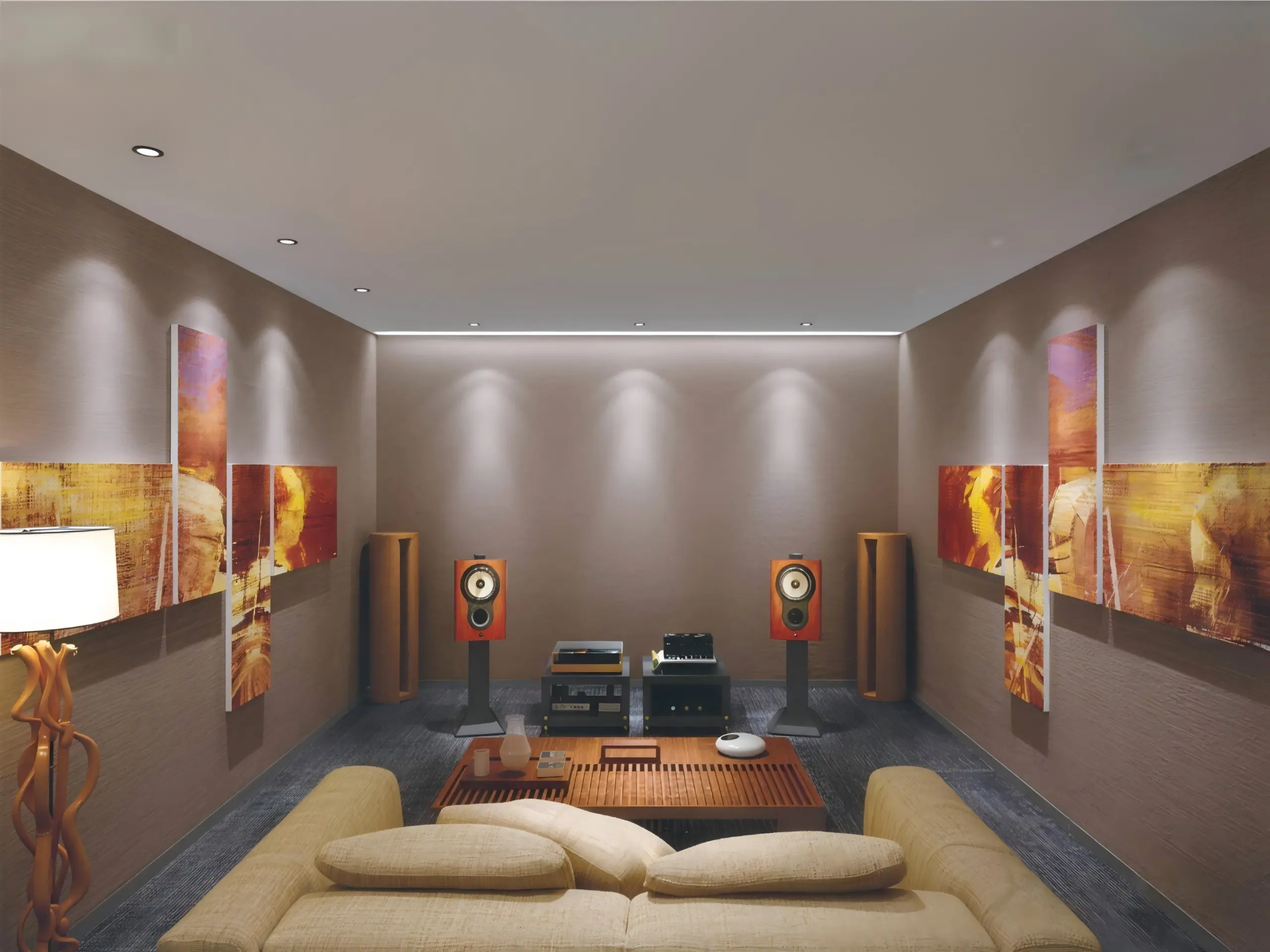
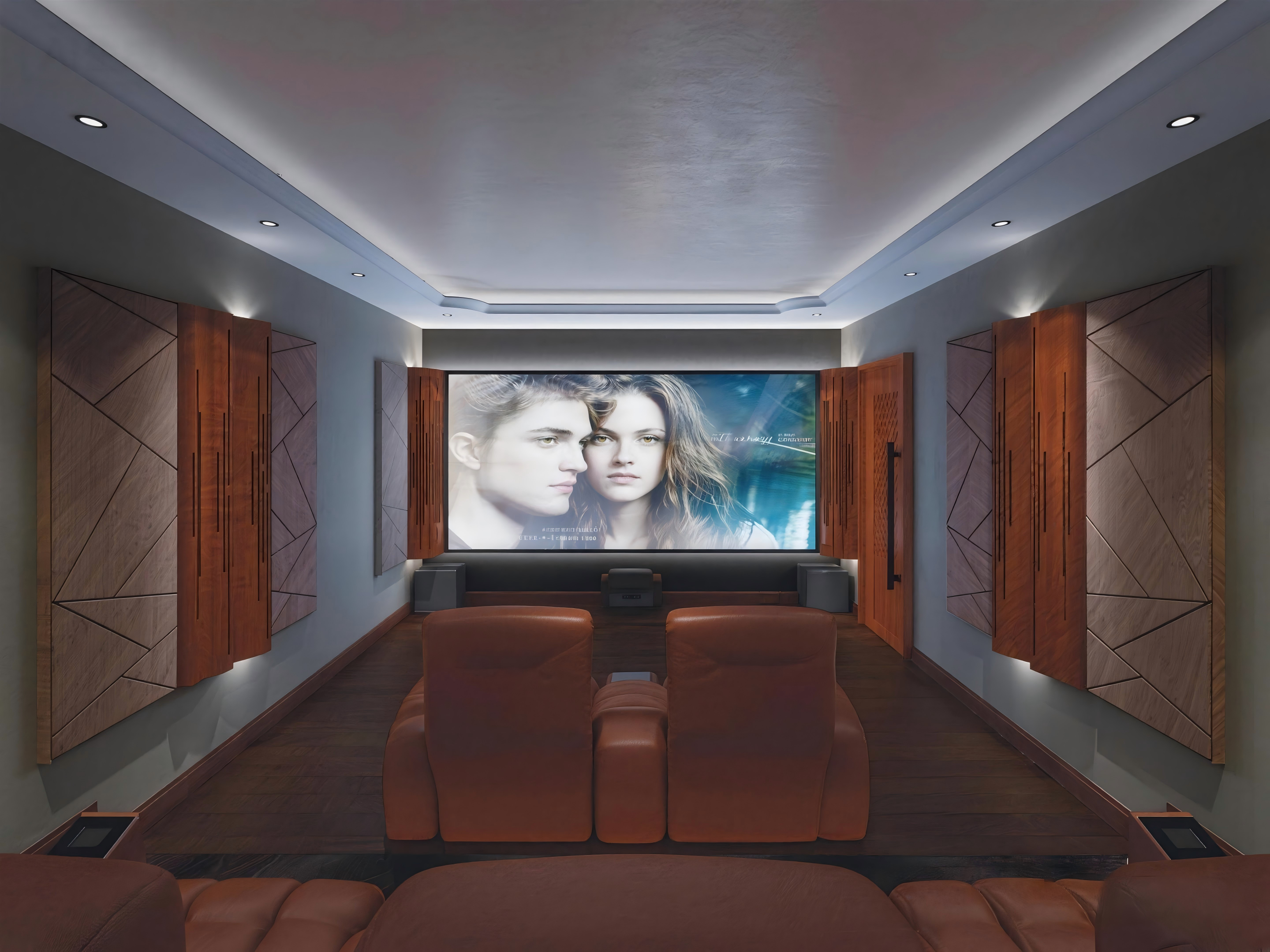
1 Acoustic panels are the core tool for solving problems of echo and excessive reverberation. They convert sound energy into heat through porous structures or fibrous materials, thereby reducing sound reflection. A reasonable layout of acoustic panels is crucial.
2 While absorbing sound, appropriately introducing diffusers can scatter sound waves, making the sound distribute more evenly throughout the space and adding a sense of “spaciousness” and “liveliness” to the sound.
3 For low-frequency standing wave issues, professional bass traps are indispensable. They are usually placed in corners or at the junction of walls and ceilings to effectively absorb difficult-to-control low-frequency energy.
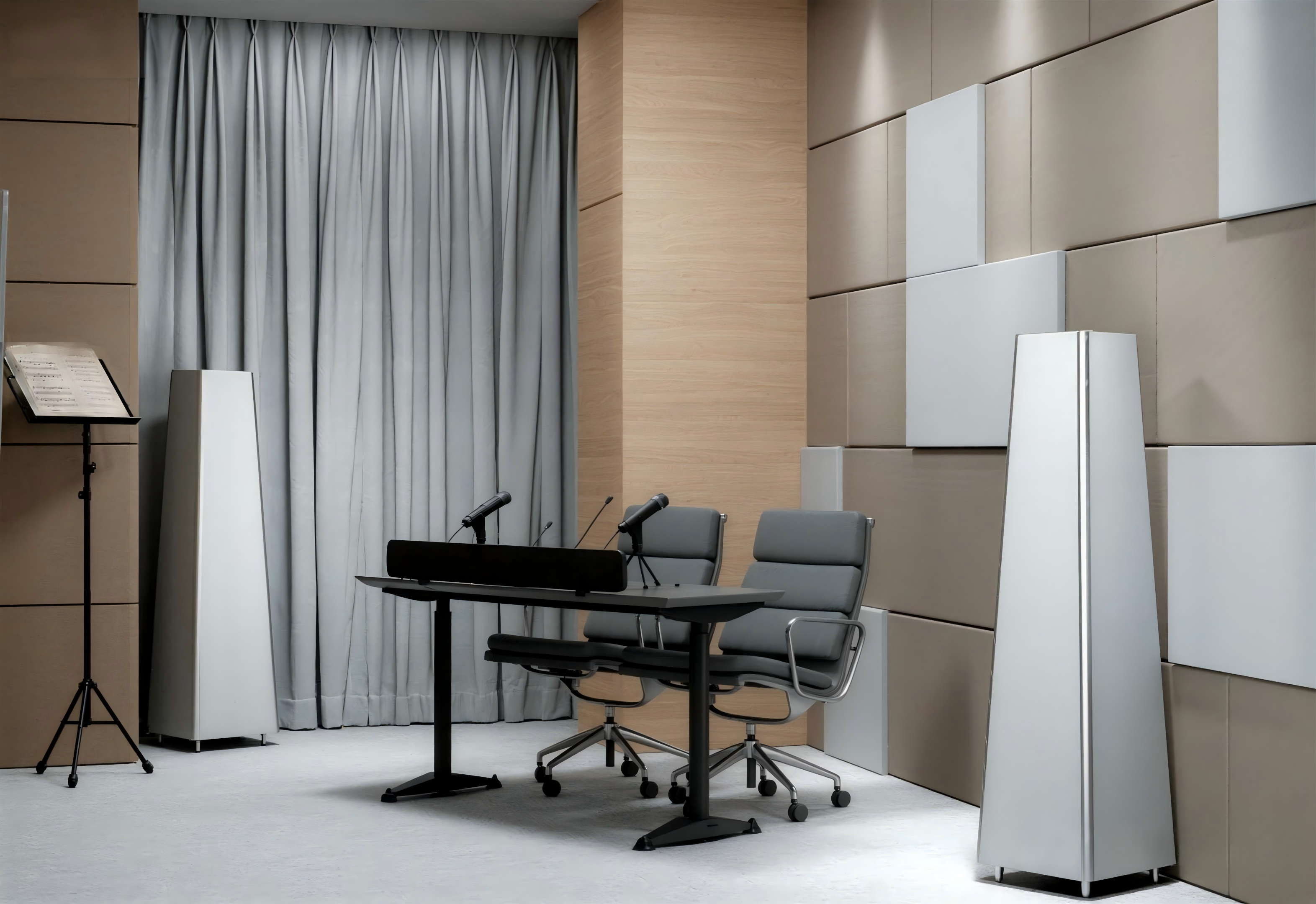
4 In addition to acoustic panels and diffusers, soft furnishings in the room such as carpets, curtains, and fabric sofas have some inherent sound-absorbing effects and can help improve the room’s reverberation. The placement of equipment like speakers and microphones also has a huge impact on the sound effect. For example, speakers should not be placed tightly against corners, and microphones should be kept away from reflective surfaces to reduce unnecessary coloration.
Conclusion
Acoustic design is not metaphysics but a practice based on scientific principles. Through reasonable sound absorption, insulation, and spatial adjustments, combined with high-quality products from Soundbox, you can create an ideal space that meets high standards of auditory requirements. Investing in acoustics is not just the “last mile” in enhancing equipment performance; it is a long-term investment in your auditory health and quality of life. Let Soundbox help you open up a quieter, purer, and more immersive acoustic world.