White Noise Machine for Office: A Facilities Manager’s Guide
To evaluate whether a white noise machine for office use can solve your team’s distraction and privacy problems, it helps to understand what the technology actually does and why it works. The explanations below are written for facilities managers and workplace planners - technical enough to support procurement decisions, plain enough to share with stakeholders.
On this page (internal links)
- How White Noise Works in the Office
- Benefits for Open-Plan Workspaces
- Evidence & Measurable Impact
- Choosing the Right White Noise Machine
- Placement & Installation Best Practices
- Integrating White Noise With Acoustic Booths & Pods
- Alternatives & Complementary Solutions
- Cost, Procurement & ROI Estimation
- How to Pilot & Measure Success
- Frequently Asked Questions
- Next Steps: Buying, Quotes, and Contact
How White Noise Works in the Office
White noise masks intelligible speech and other transient sounds by adding a controlled, continuous ambient signal that reduces the signal-to-noise ratio (SNR) of undesired sounds. In practical terms: when the background level rises in a way that overlaps the frequency bands of human speech, words become harder to pick out at a distance. That loss of intelligibility is the core tool facilities teams use to reduce distractions and increase speech privacy.
Basic psychoacoustics (plain-language)
- Humans understand speech because the ear and brain extract information from specific frequency bands (roughly 250 Hz–4 kHz). If those bands are filled with other energy, the listener needs a louder or closer voice to understand words.
- White-noise masking doesn’t make conversations inaudible; it reduces how intelligible they are beyond a short radius. For offices that want to reduce overheard conversations without creating an unnaturally loud environment, that controlled reduction of intelligibility is the objective.
Types of noise and why they matter
Different “color” noises have different spectral shapes and subjective sensations. Choosing the right one matters for comfort and effectiveness.
- White noise: equal energy per hertz. It has a bright, hiss-like quality because high frequencies carry more of the audible content. Pure white noise is rarely used in offices because many people find it harsh.
- Pink noise: equal energy per octave. It attenuates higher frequencies relative to white noise, producing a smoother, more natural sound. Many commercial office masking systems and machines use pink or pink-like spectra because it balances comfort with masking efficacy.
- Brown (or red) noise: more energy at low frequencies; sounds deep and rumbling. It can mask low-frequency HVAC rumble but is less effective for speech intelligibility, which sits higher in frequency.
Most workplace solutions use “speech-shaped” or filtered pink noise tuned to the mid frequencies where conversational energy is highest. That gives effective masking while minimizing perceived loudness and annoyance.
How masking affects speech privacy and distraction
Think of masking as raising the ambient “sound floor.” If a speaker’s voice remains the same level, increasing the background noise level reduces the relative strength of the speech signal at a listener’s ear. Two consequences:
- Reduced intelligibility at a distance: Colleagues beyond a certain radius can hear voices but not understand them, which increases perceived privacy without isolating people physically.
- Lower perceived interruptions: When background noise is steady and unobtrusive, transient sounds (chair squeaks, keyboard clicks) are less noticeable because the ear is less likely to treat them as salient events.
A simple analogy
Imagine trying to read a page of text with light shining on it. If a bright lamp is focused on one sentence (a nearby speaker), you see it clearly. If the whole page is evenly lit (masked background), that single sentence blends into the page and is harder to pick out from a distance. White-noise masking evens out the acoustic “lighting.”
Common deployment signals and what they mean
- Masking level (dB(A)): The output level you set on the machine. Too low and you get little benefit; too high and people complain. Professional systems are adjustable and typically aim for subtle increases that improve privacy without creating a noticeable hiss.
- Spectral shaping: Tunable filters or presets that emphasize the 500 Hz–2 kHz band will target speech more effectively.
- Zoning capability: Ability to set different masking levels in different parts of an open plan - important for mixed-use areas (quiet focus zones vs. social hubs).
Practical listening test facilities managers can do
Before buying, walk the space and listen from several positions:
- Have a colleague speak at typical voice level at a desk.
- Stand 2m, 5m, and 10m away and note intelligibility.
- Turn the candidate machine on and adjust levels until conversation is noticeably harder to understand at 5–10m but still comfortable at 1–2m.
These quick checks tell you whether a machine’s spectrum and max output are suitable for your floor plate.
Why some devices feel “loud” while actually being effective
People often equate effectiveness with perceived loudness and push for lower settings because they don’t like the sound. The goal isn’t to make the room loud; it’s to change the spectral content so that speech drops below intelligibility thresholds. Good systems accomplish that with minimal perceived intrusiveness by using pink or speech-shaped noise and fine-grained level control.
How white-noise masking differs from soundproofing
Masking is an acoustic strategy for reducing the intelligibility of sound in shared spaces; it does not stop sound transmission like barriers or insulation do. Soundproofing reduces the amount of sound that crosses partitions; masking makes residual sound harder to understand. For many open-plan problems, a combination of modest acoustic treatments and masking offers the fastest, lowest-disruption path to better privacy.
Quick checklist: what to verify on any candidate white noise machine for office use
- Can the machine produce pink or speech-shaped masking (not just raw white hiss)?
- Is the output level adjustable and measurable in dB(A)?
- Does it support zoning or multiple units for distributed coverage?
- Are spectral presets or tuning tools available for different room types?
- Can the device integrate with building audio/automation or work standalone?
- What are maintenance needs (filters, firmware), certifications, and warranty?
Next section will explain the measurable benefits you can expect from deploying masking in open-plan areas and who gains the most from a white-noise strategy.
Benefits for Open-Plan Workspaces
Having seen how masking works, facilities managers need clarity on what concrete outcomes to expect. A white noise machine for office environments is one part of an overall strategy to reduce office noise and improve speech privacy; when correctly specified and tuned, it delivers measurable benefits that align with FM pain points: fewer interruptions, clearer boundaries around private conversations, and better use of existing real estate.
Key measurable benefits
Below are the primary, evidence-aligned benefits facilities teams typically target when deploying office sound masking or standalone white noise units:
- Improved concentration and task performance: Steadier background masking reduces attention-capture by intermittent sounds (loud laughter, phone rings, chair squeaks). Employee surveys and time-on-task studies from deployed sites commonly show meaningful increases in perceived ability to concentrate, especially among knowledge workers.
- Increased speech privacy: Properly tuned masking reduces speech intelligibility beyond a short radius. This lowers the risk of overheard confidential conversations and reduces sensitive information leakage in open-plan offices.
- Fewer interruptions and fewer context switches: With reduced intelligibility and fewer salient acoustic events, employees report fewer voluntary interruptions (walking over to ask questions) and fewer involuntary distractions, which lowers error rates on sustained work.
- Better meeting behavior and room utilization: When people trust conversations are private, ad-hoc calls are kept private without defaulting to formal meeting rooms. That can reduce pressure on booked rooms and improve utilization of modular acoustic booths and pods.
- Reduced noise-related complaints and HR incidents: Facilities and HR teams often see a decline in logged complaints about overheard conversations and distraction once masking is introduced as part of a blended solution.
- Faster, lower-disruption outcomes than structural changes: Compared with partition builds or new meeting room construction, office sound masking is typically lower-cost, faster to deploy, and minimally disruptive - an advantage for teams managing tight project windows.
Practical, trackable KPIs for facilities managers
To make benefits actionable and defensible in procurement, measure both objective acoustic metrics and subjective user experience:
- SPL change (dB(A)): Measure ambient level before and after masking in key zones. A masking deployment may raise background levels by ~3–6 dB(A) in a targeted band - enough to reduce intelligibility without creating a loud environment.
- Speech Transmission Index (STI) or Speech Intelligibility Index (SII): Where possible, measure intelligibility reductions; even modest improvements in STI/SII translate to greater perceived privacy.
- Employee survey scores: Use pre/post surveys for perceived distraction, privacy, and satisfaction. Common baseline-to-pilot improvements reported by FM teams range from single-digit to mid-double-digit percentage points depending on site conditions and adoption.
- Help-desk or HR complaints: Track noise-related tickets or privacy incidents before and after deployment.
- Room and booth booking metrics: Monitor whether fewer ad-hoc meetings are booked into formal rooms and whether pod/booth usage increases-indicating more confidence in private options.
Who benefits most (and when to prioritize them)
Not every space or team needs the same approach. Prioritize pilots and rollouts based on use case:
- Knowledge workers doing sustained cognitive tasks: Open-plan product teams, engineering groups, analysts - they benefit most from reduced distractions.
- Hybrid and distributed workers: Teams switching between focused work and frequent virtual meetings see improved meeting audio and fewer disruptions.
- Call centers and sales desks: These need both privacy and consistent acoustic background to stabilize call quality.
- Coworking spaces and flexible hubs: High turnover and mixed-activity floors benefit from zoning and masking to provide a neutral acoustic baseline for all users.
- Legal, HR, and finance teams: Where conversation confidentiality matters, masking improves baseline privacy while booths provide secure spaces for sensitive calls.
How benefits connect to FM pain points
Facilities managers juggle complaints, room shortages, and productivity expectations. Office sound masking addresses several common pain points:
- “We don’t have enough meeting rooms”: Masking reduces the need to book rooms for simple private calls by increasing confidence that nearby conversations won’t be overheard. When combined with acoustic booths, it creates layered privacy without construction.
- “Employees complain about distraction”: Masking smooths the acoustic environment and, when tuned properly, noticeably reduces perceived interruptions.
- “We need fast, low-cost wins”: Compared to redesigning a floor or adding partitions, masking systems can be piloted in days and scaled with minimal downtime-helpful for FM teams with tight timelines.
Limitations and managing expectations
A white noise machine for office settings is not a universal cure. It will not stop loud, nearby speech or replace the need for sound-insulated rooms for highly confidential meetings. Real benefits come from correctly matching system capability to space (zoning, spectral shaping) and combining masking with behavioral policies and targeted acoustic treatments.
Actionable next steps for FMs
- Pilot in a dense, high-complaint area (e.g., trading floor, open-plan engineering zone).
- Set clear KPIs (SPL, employee survey, HR tickets) and measure baseline conditions.
- Tune spectral shaping and levels for comfort during the pilot week.
- Combine masking with one or two Soundbox pods to create layered privacy and capture comparative usage data.
- Report outcomes (SPL changes, survey shifts, booking metrics) and use results to justify wider roll-out or hybrid strategies.
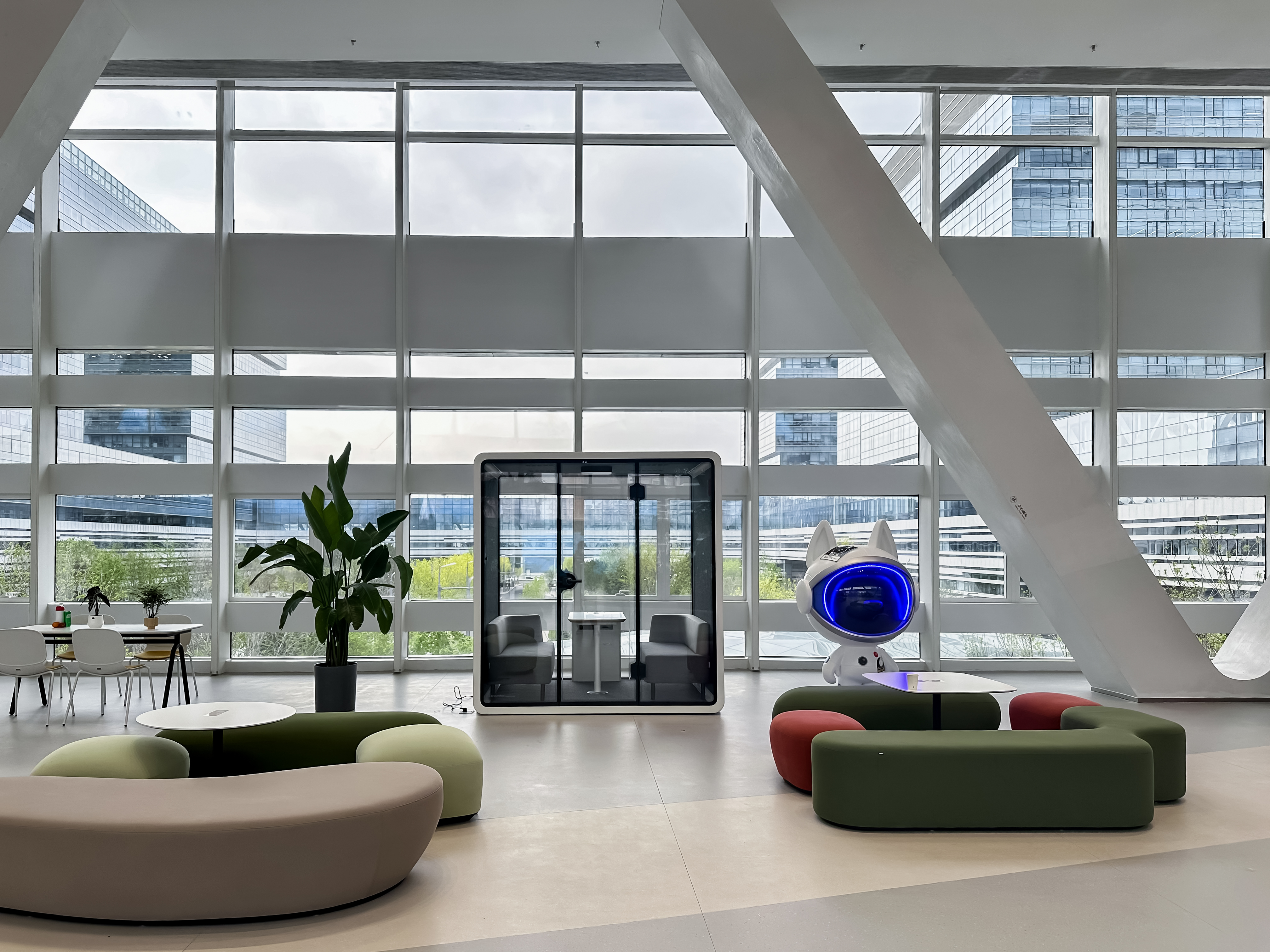
Using an office sound masking strategy-alongside modular acoustic booths-lets facilities teams reduce office noise, improve speech privacy, and achieve measurable workplace improvements with lower disruption than full-scale construction. The sections that follow explain evidence and measurement approaches, product selection, installation best practices, and how to integrate masking with Soundbox solutions.