Office Noise Solutions - Reduce Noise and Boost Productivity

Noise reduction method

December 24, 2025

Office Noise Solutions - Reduce Noise and Boost Productivity

Why Office Noise Matters For Productivity & Well-Being

Having laid out what this guide will help you do, it’s important to understand why investing time and budget into office noise solutions is worth it. Noise in the workplace isn’t just an annoyance - it measurably reduces cognitive performance, increases mistakes, degrades meeting quality, raises stress, and contributes to lower employee engagement and higher turnover. For workplace and facilities managers, the question isn’t whether noise matters, but how big the impact is and which metrics to track.

How noise affects cognitive performance and tasks

Irrelevant speech and fluctuating background sounds are among the most disruptive noise types in offices. Numerous acoustic studies show that tasks relying on working memory, reading comprehension, problem solving and concentration are especially vulnerable to speech-type noise. Classic research (e.g., Banbury & Berry) and later replications show measurable drops in accuracy and speed when people are exposed to intelligible conversation or intermittent speech.

Continuous, low-frequency noise (HVAC hum, building systems) tends to reduce comfort and sustained attention over longer periods. It causes a chronic cognitive drag rather than sudden errors, making it harder for employees to sustain focused work for deep tasks.

Reverberant spaces amplify the effect: even moderate noise becomes more intrusive when sound bounces around. That’s why open-plan areas with hard surfaces and high ceilings often feel louder and more fatiguing than their measured dB suggests.

https://oss.soundbox-pod.com/markdown/office-soundproof-pod_1766540027545.jpg

Manager-friendly metrics that link noise to business outcomes

Translate acoustic effects into the KPIs executives care about. Below are practical ways to quantify noise impact:

Concentration loss (time basis): Measure or estimate average minutes lost per employee per day due to interruptions and rework caused by noise. Even a 10–20 minute/day loss per knowledge worker adds up rapidly across teams.

Meeting effectiveness: Track the percentage of meetings that run over time, need followups because participants couldn’t hear, or where decisions are postponed. Noisy rooms increase meeting length and decrease decision velocity.

Error rate and rework: For task-oriented teams (finance, engineering, customer service), compare error/rework rates before and after noise interventions. Unclear audio or distracted attention leads to avoidable mistakes and remediation costs.

Employee satisfaction and retention: Use pulse surveys to capture perceived acoustic environment and correlate with engagement scores and voluntary turnover. Acoustic dissatisfaction is a recurring theme in exit interviews for offices where noise is unmanaged.

Concrete example (simple ROI lens)

Example

Use this quick example to show leadership the potential upside of fixes:

Assume a team of 100 knowledge workers, average fullyloaded cost $50/hour.

If noise-related interruptions cost 15 minutes/day per person, lost labor = 100 × (0.25 hours) × $50 = $1,250 per day → ~$312,500 per year (250 workdays).

Spending $40,000 on targeted acoustic treatments and small behavior changes that reclaim even 20% of that lost time would yield annual labor savings of $62,500 - a simple payback under a year.

These are illustrative numbers (adjust for your headcount and loaded labor costs), but they show how modest per-person time savings scale quickly and support mid-funnel asks for pilots or booth purchases.

https://oss.soundbox-pod.com/markdown/silent-cabin-public-area_1766540077085.jpg

Health, stress, and well-being impacts

Chronic exposure to unwanted office noise is linked with increased stress, fatigue and lower subjective wellbeing. The World Health Organization’s environmental noise guidance highlights noise as a contributor to annoyance and stress-related health outcomes; while much guidance focuses on community noise, the same principles apply inside workplaces where employees spend long hours.

Higher stress and lower job satisfaction are well-established predictors of reduced productivity, higher absenteeism and increased turnover risk. Noise management is therefore an employee retention lever as well as a productivity one.

Standards and practical thresholds to watch

Typical busy open offices measure between roughly 45–60 dB LAeq during working hours. Quiet private offices or focus rooms typically range from 30–40 dB LAeq. These are broad ranges - the perceived impact depends on the type of work and the signal-to-noise ratio (how loud speech or a call is above background).

For speech privacy and comfort, aim for a speech-to-noise ratio where background sound is low enough that normal speech isn’t intelligible at a typical distance (or install treatments that reduce speech transmission). Reverberation time (RT60) is another useful metric: long reverberation times (over ~0.8–1.0 seconds in open offices) amplify distraction.

Use simple thresholds that make sense internally: for example, flag areas above 50 dB LAeq as “hotspots” for immediate investigation, and spaces intended for concentrated work should target 35–40 dB LAeq or lower.

People + place = outcomes: why a mixed strategy is needed

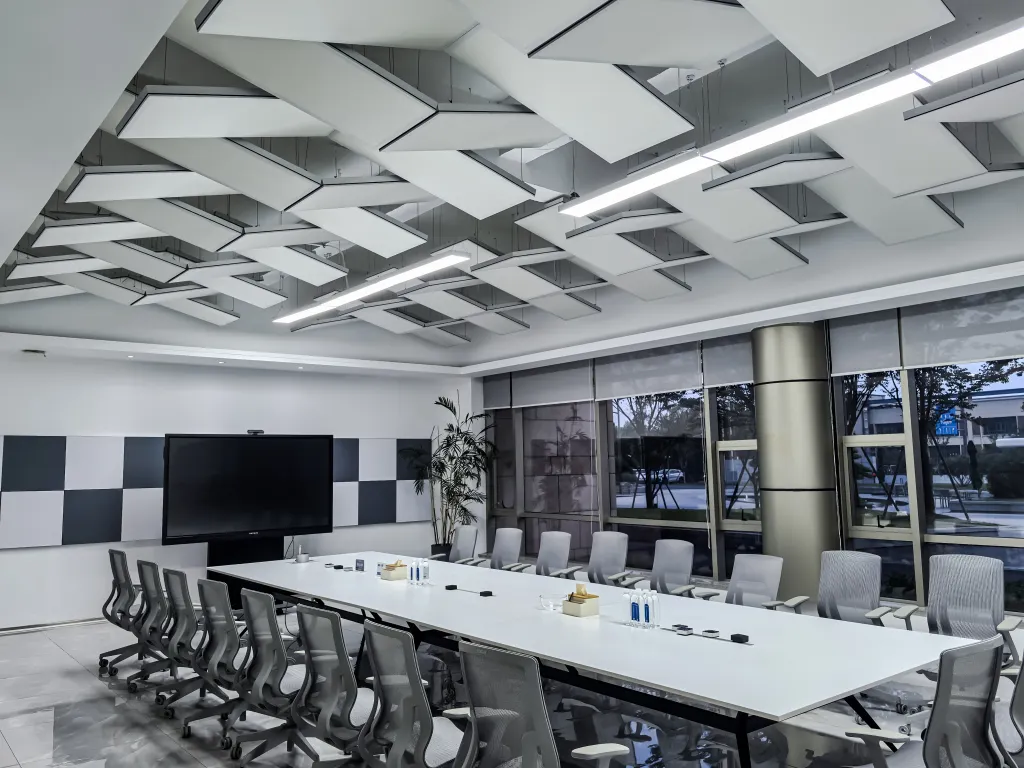
Noise problems are rarely solved by a single action. Behavioral changes (meeting etiquette, quiet zones), targeted absorption (panels, baffles), and isolation (phone booths, enclosed focus rooms) work together. The most cost-effective approach starts with measurement and targeted fixes, not wholesale redesign. That’s why the next section focuses on assessing your office noise problem: how to gather baseline measurements, map hotspots, and involve stakeholders so you can prioritize solutions that will recover real time and satisfaction for your teams.

https://oss.soundbox-pod.com/markdown/meeting-room-sound-absorption_1766540118312.jpg

Transition to next section: Assessing Your Office Noise Problem

Armed with the business case above, you’re ready to move from why noise matters to how to diagnose it in your space. The following section explains a practical, lowfriction assessment process-measurement, stakeholder mapping, and quick wins-that helps you prioritize interventions that deliver measurable benefit.