Choosing Pod Size, Acoustic Ratings, and Accessories
Now that you’ve evaluated whether privacy pods are the right tool for your office privacy strategy, the next step is matching pod size, acoustic performance, and accessory packages to actual use cases. The right specification balances user needs, code and operational constraints (HVAC, fire, ADA), and procurement realities like lead times and maintenance. Below is a practical, procurement-ready guide to help workplace and facilities managers pick the correct pod configuration.
Sizing by use case (recommended footprints and clearances) Pods must be sized both for the intended activity and for code/clearance needs around the unit. The following are field-tested recommendations; always confirm with your vendor’s CAD/BIM files and your facilities engineering team.
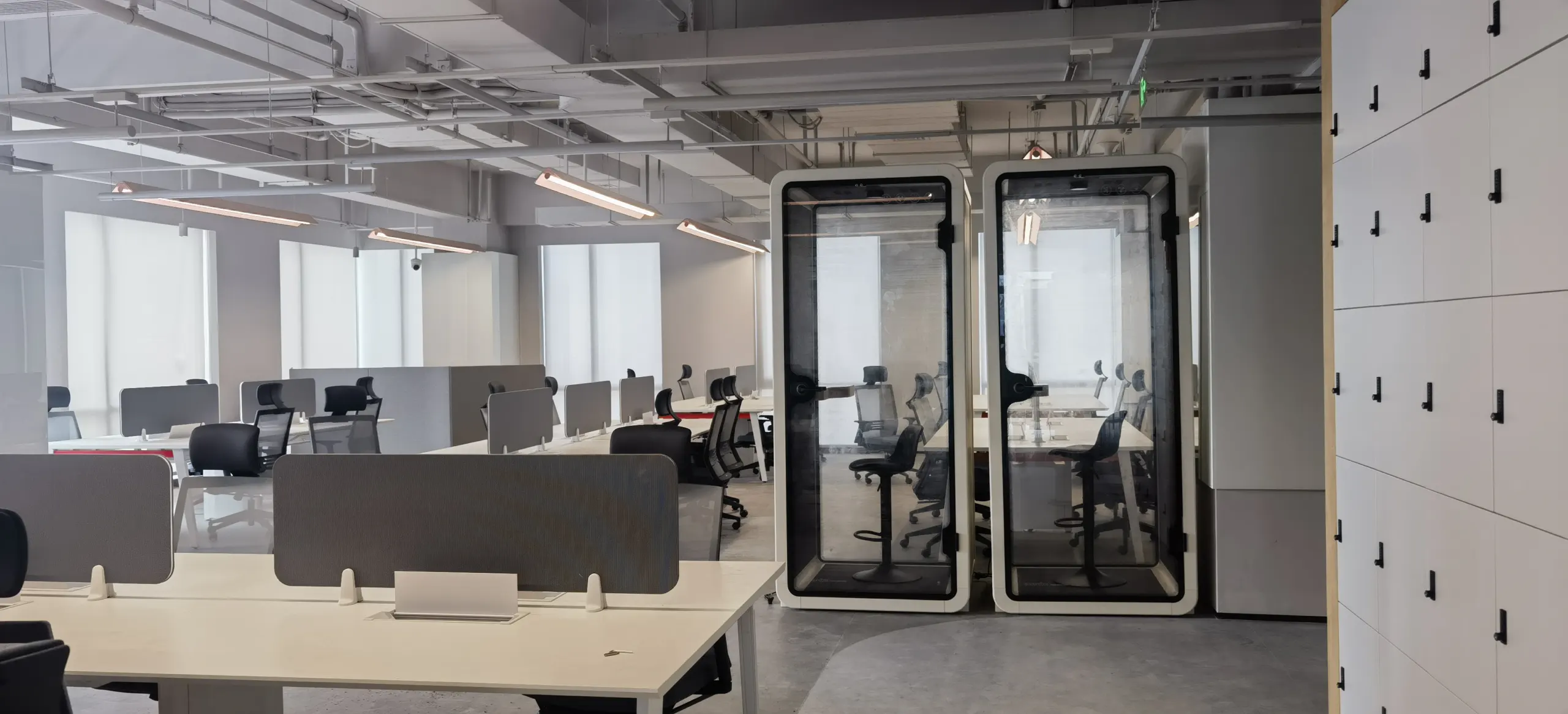
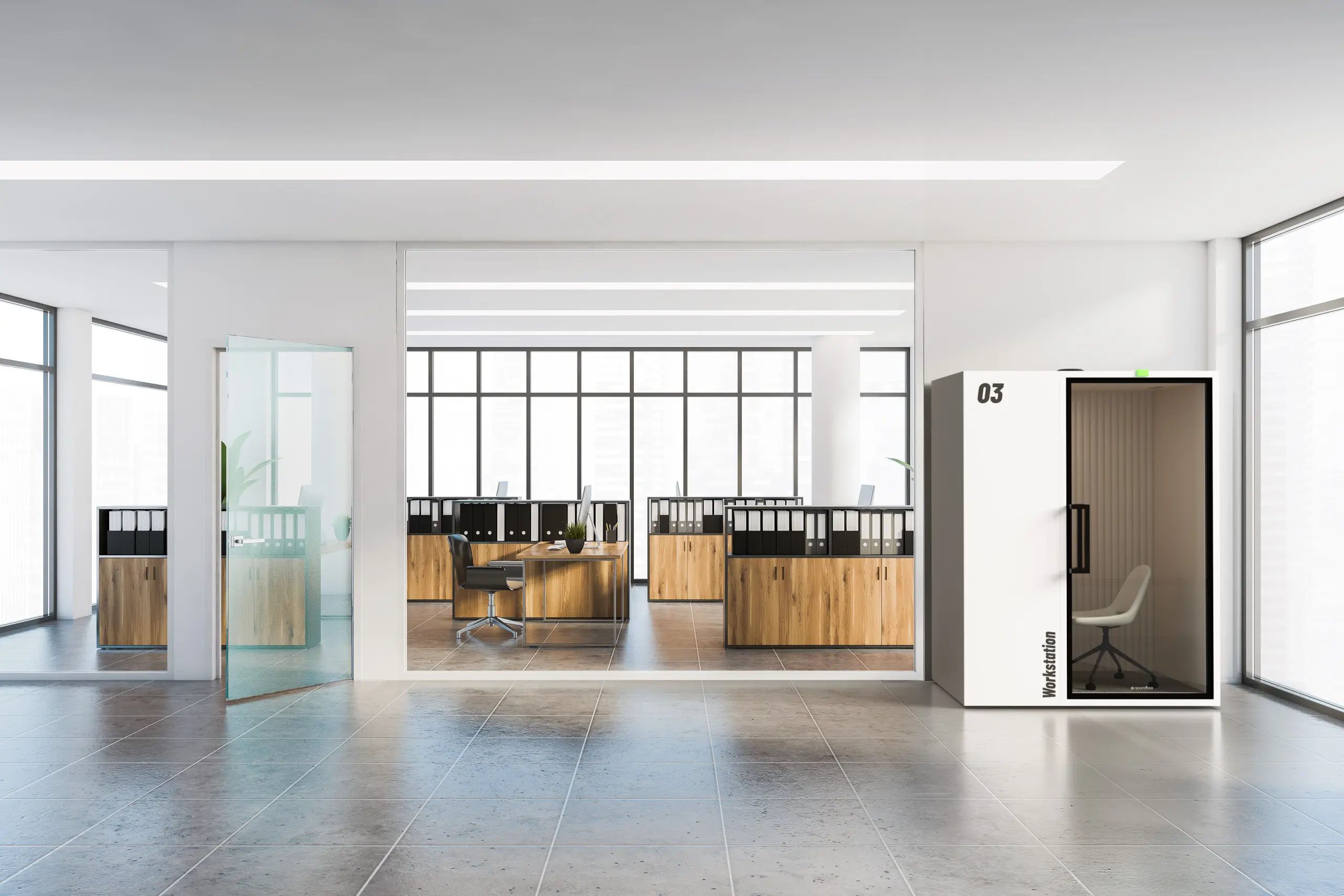
-Single-person phone/quiet booth
- Typical use: 5–30 minute calls, heads-down work.
- Typical footprint: 0.9–1.4 m² (3’×3’ to 4’×4’) with internal clear space for a stool/standing desk.
- Clearance & access: add 600–900 mm (2–3 ft) front clearance for door swing and circulation.
-Practical note: single-person booths are compact and low-cost but rarely meet ADA accessibility requirements-provide an alternative accessible room nearby.
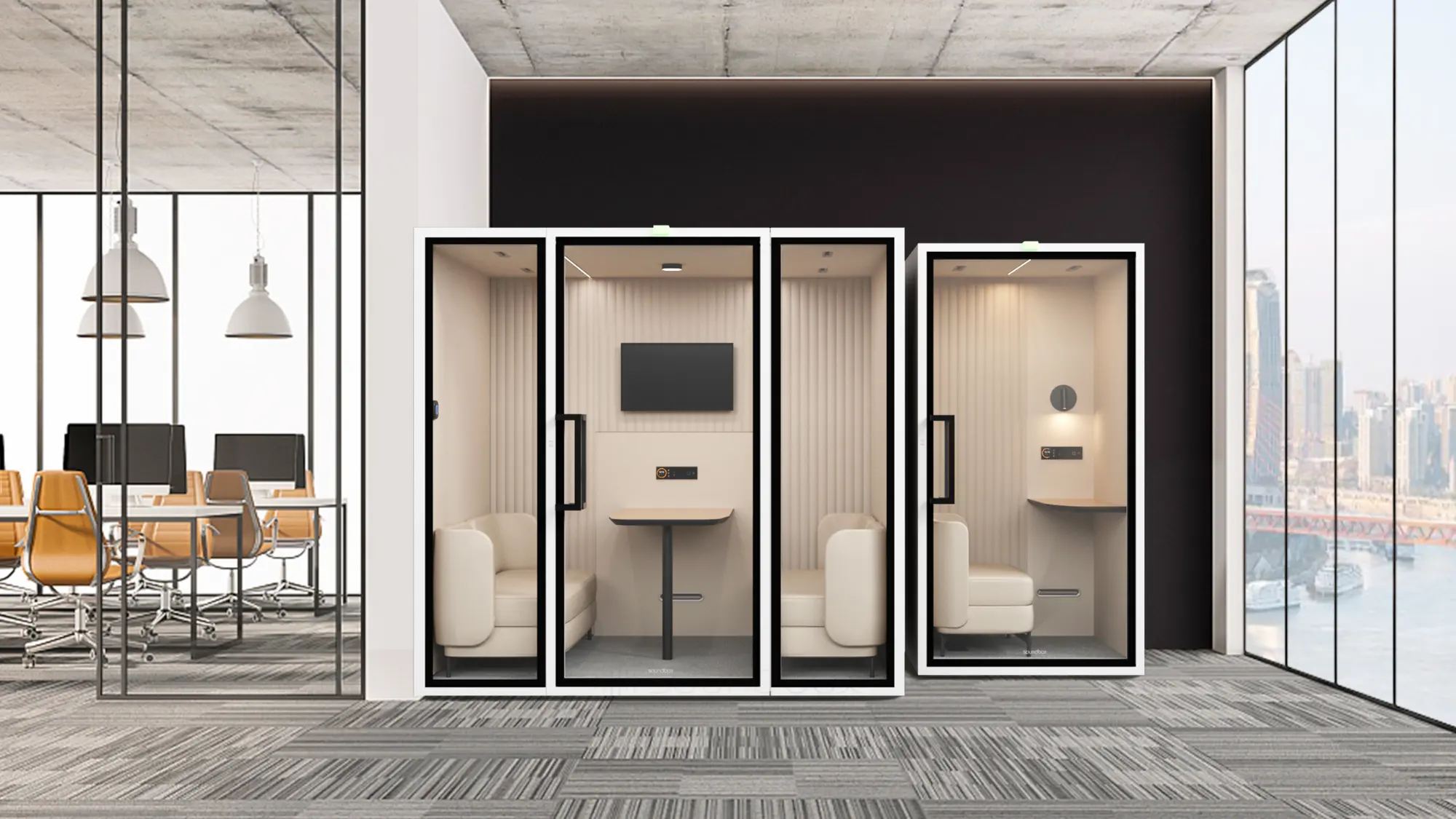
-Two-person focus pod
- Typical use: 15–60 minute 1:1 meetings, interviews.
- Typical footprint: 1.6–2.7 m² (5’×6’ to 6’×8’).
- Clearance & access: ensure path to pod without obstructing egress or aisles.
-Four-person collaboration pod
- Typical use: short team huddles, video meetings, screen sharing.
- Typical footprint: 9–12 m² (8’×8’ to 10’×12’), depending on furniture and AV.
- Clearance & access: account for seating, table, and service access to AV/power.
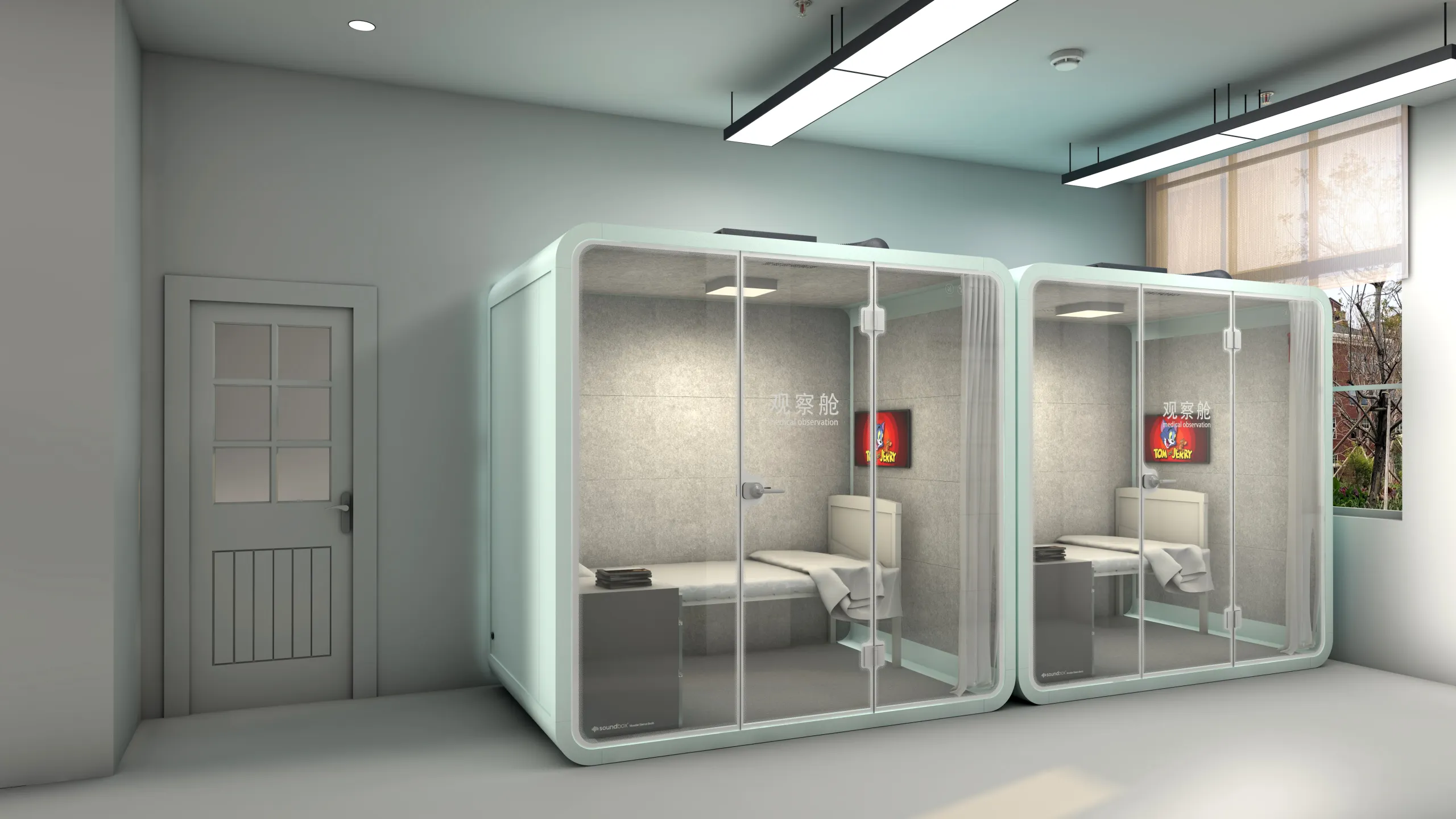
-Accessible pods / small built rooms
- When ADA compliance is required, plan for a minimum clear interior (often 1525 mm/60" turning radius) or designate nearby accessible rooms as part of the solution set.
When calculating real estate impact, add 20–40% to a pod’s catalogue footprint to account for circulation, floor loading margins, and service access.
Acoustic ratings explained in plain language (STC, NR, and what to target) Understanding acoustic numbers helps you set realistic expectations and write clear procurement specs.
- STC (Sound Transmission Class)
- What it measures: how well an assembly blocks sound transmission (higher is better).
- Plain interpretation: STC 25–30 reduces casual intelligibility of speech; STC 35+ noticeably improves privacy; STC 45+ approaches the privacy of a constructed room.
- Pod targets:
Single-person phone booth: effective STC 25–30 (typical).
- 2–4 person pods for confidential discussions: target STC 30–35+ if possible.
- For legal/HR confidentiality use cases, prefer a built room with STC 40+.
NR / dB reduction
What it measures: decibel reduction at specific frequencies or overall.
Plain interpretation: a 20–30 dB reduction at speech frequencies makes conversations much less intelligible outside the pod; vendors may report dB reduction at mid-band frequencies-ask for average speech-band attenuation.
Speech privacy
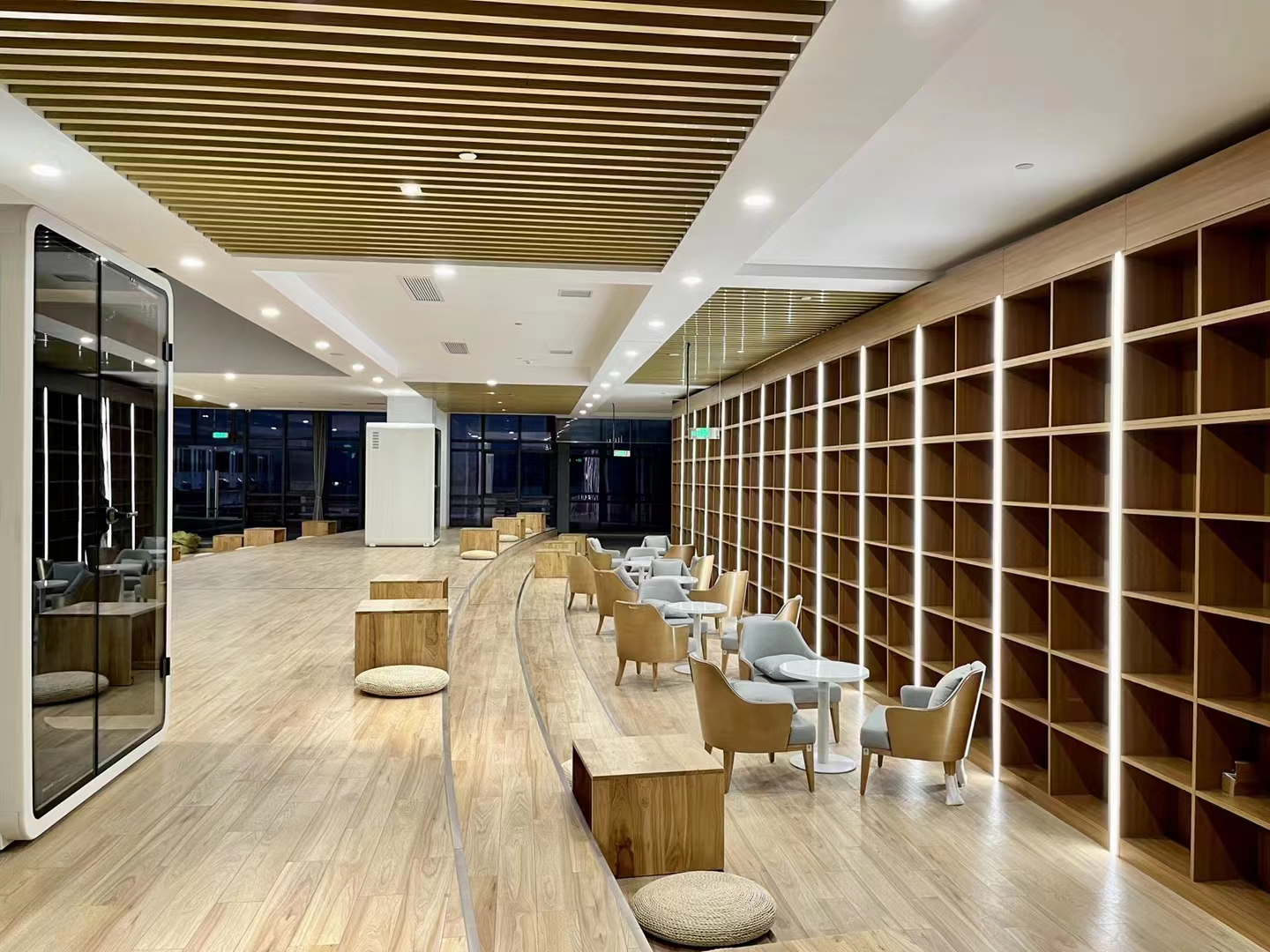
Consider both transmission through the pod and leakage at doors, ventilation, and gaps. Even a pod with decent STC will perform poorly if the door seal is inadequate or the ventilation opening is large.
Procurement tip: require third-party acoustic reports and clarify measurement conditions (in-situ vs lab). Ask vendors to demonstrate expected performance in environments similar to your target locations (e.g., open-plan office, heavy HVAC noise, near coffee bars).
Ventilation, HVAC integration, and indoor air quality Ventilation is both a comfort and code issue. Pods frequently use integrated fans rather than tying into building HVAC-specify the ventilation performance you need, not just “has a fan.”
-
Recommended minimum ventilation:
-
Single-person pod: 15–30 CFM (7–15 L/s) with fresh air intake and filtration.
-
Multi-person pod: scale to ASHRAE 62.1 recommendations (approx. 5–10 L/s per person) plus some allowance for tighter enclosures.
-
Noise target for ventilation fans: <35 dBA at normal operating speed to avoid undermining the pod’s acoustic purpose.
-
Filtration & maintenance: specify filter type (HEPA/particle filters or MERV rating), expected filter life, and ease of replacement.
-
HVAC tie-in: when code or client preference disallows self-contained fans, include HVAC integration in the spec and account for rebalancing and commissioning time.
Accessories and feature checklist (what to ask for)
-
Power & data
-
AC outlets, USB-A/USB-C PD, Power-over-Ethernet (PoE) for booking panels.
-
Surge protection and clearly labeled service points.
-
Optional UPS for short brownout tolerance if needed.
-
Lighting
-
Dimmable LED lighting with CRI 90+ for video calls.
-
Motion sensors or manual controls; specify lux targets for task lighting.
-
AV & conferencing
-
Integrated echo-cancelling speakerphone, microphone array, and camera mount or built-in camera.
-
Screen-sharing options (wired HDMI/USB-C) or wireless casting; confirm compatibility with Zoom/MS Teams.
-
Acoustic absorption inside to reduce reverberation for better call quality.
-
Ventilation & air quality
-
Integrated ventilation with specified CFM, dBA, and filter type.
-
Optional CO2 or VOC sensors for IAQ monitoring.
-
Booking & occupancy
-
Door-mounted or wall-mounted booking panel (PoE), LED occupancy indicator, or calendar integration.
-
Mobile/SaaS booking integration if your workplace uses desk/room-booking software.
-
Accessibility & safety
-
Lever handles or ADA-compliant openers, braille signage where required.
-
Fire-rated materials and certificates; optional hard-wired smoke detectors if required by local code.
-
Emergency release or push-out windows where local code mandates.
-
Finishes & ergonomics
-
Antimicrobial/cleanable surfaces in high-touch areas, cable management, coat hooks, small shelf or table, or bench seating.
Cost drivers and typical add-on price ranges Base pod cost depends on size and finish; accessories materially increase TCO.
-
Integrated ventilation upgrade: +$500–$2,000
-
AV conferencing pack: +$1,000–$5,000 depending on quality and screens
-
Booking panels (PoE): +$300–$1,000
-
Fire-rated materials/certification: variable; plan contingency for testing/inspection fees
-
Custom finishes, built-in furniture, and ADA options add further cost
Specification and procurement checklist (what to require in bids) When soliciting quotes, include the following mandatory deliverables:
-
CAD/BIM files and recommended clearances.
-
Third-party acoustic test reports and in-situ performance statements.
-
Ventilation spec: CFM, noise level (dBA), filter type, maintenance schedule.
-
Fire-material certificates and statement on code classification (furniture vs room).
-
ADA compliance statement or accessible alternative plan.
-
Lead time, installation scope, and site-prep requirements (power, floor anchors).
-
Warranty terms, spare parts availability, and SLA for repairs.
Putting it into a spec line (example)
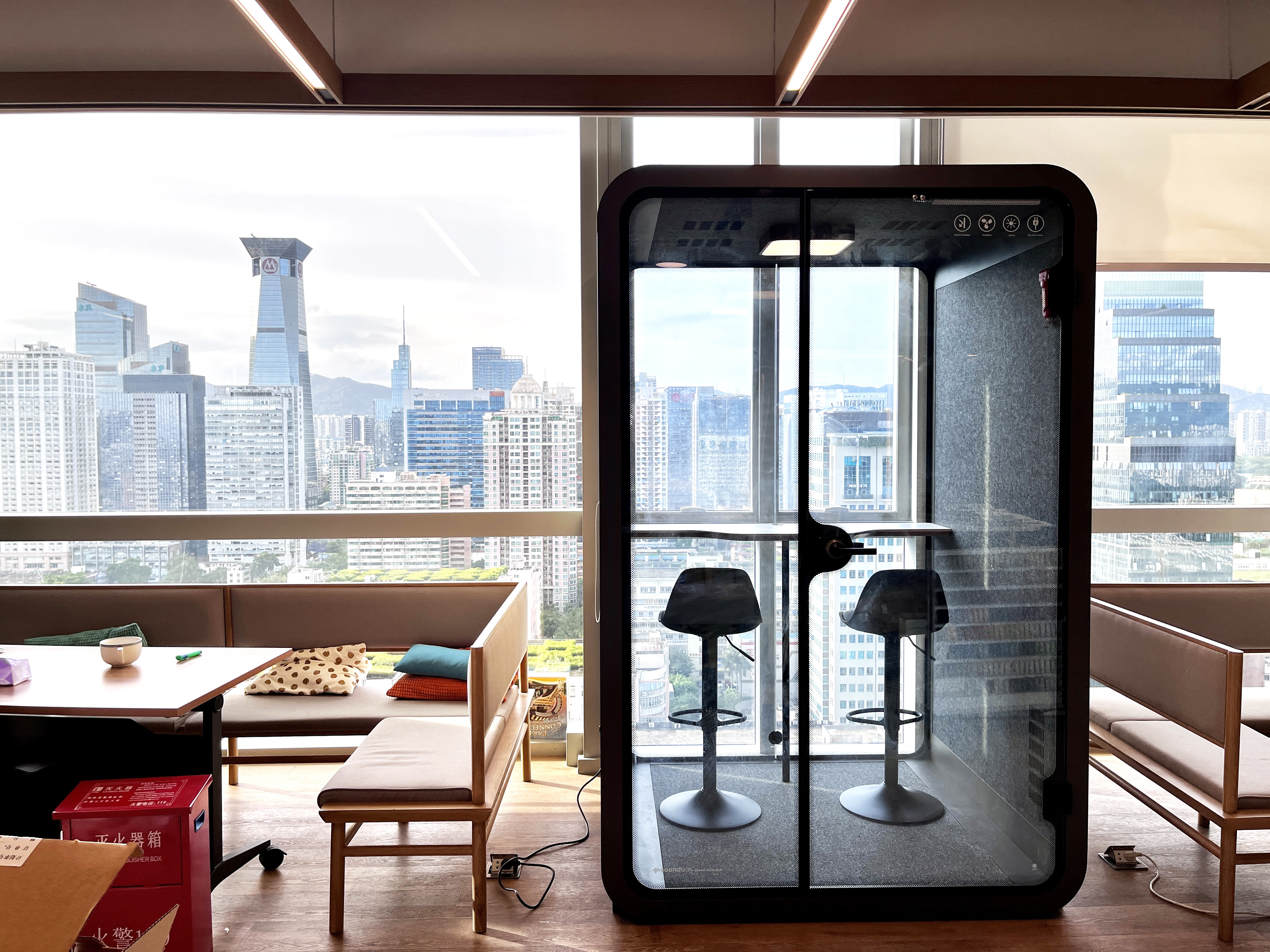
“Provide a two-person privacy pod suitable for short confidential meetings. Internal clear floor area: minimum 1.6 m² (5’×6’). Acoustic performance: effective in-situ reduction of at least 25 dB in speech frequencies / target STC ≥30. Ventilation: integrated fan delivering ≥30 CFM with ≤35 dBA operational noise, MERV XX or HEPA filter. Include dimmable LED lighting (≥300 lux), two AC outlets, two USB-C PD ports, PoE booking panel, and ADA-compliant lever handle. Supply CAD/BIM, third-party acoustic report, fire-material certificates, and 36-month warranty.”
This specification approach ensures bids are comparable, minimizes surprises at install time, and ties vendor claims to measurable performance targets.